Slay the Spire: Building Around the Watcher’s Wrath, Stances and Retain
Story by AnastasiosHJW · 772 readers
The Watcher’s best decks start with Wrath and attacks. Stance switching, Miracles and Retain add useful twists, each with its own trade-offs.
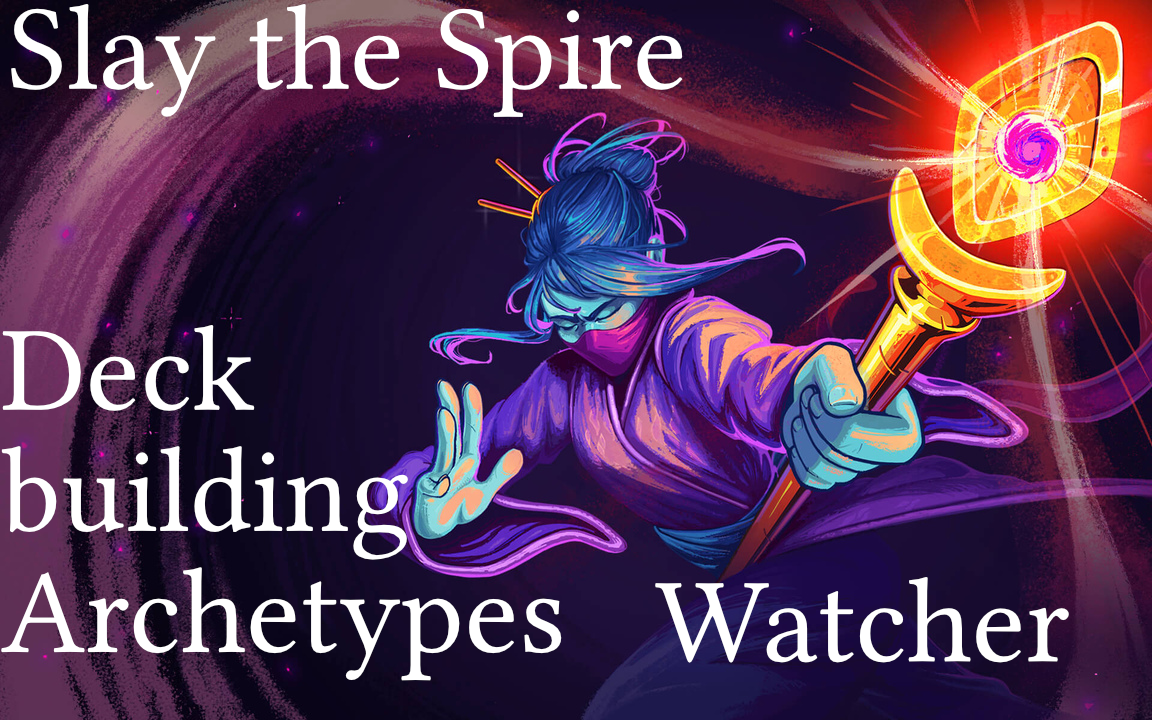

The Watcher’s deckbuilding looks more varied than it is. Most runs still come down to the same plan: enter Wrath, hit hard, and find a way to handle the danger that comes with it. The interesting choices are how often you leave that stance, what you build around your attacks, and whether you can afford to spend turns setting up.
This is the fourth and final character in our Slay the Spire deckbuilding series. For the earlier character guides, see our posts on the Ironclad, the Silent and the Defect.

The Watcher’s central plan
The Watcher is a blind ascetic who commands divine stances, and her cards reward a more deliberate rhythm than the other characters. Wrath increases the damage she deals, but also makes her take extra damage. That makes every turn a calculation: can you finish the threat before it hits back, or can you leave Wrath and protect yourself?
In group play, the Watcher can lean hard into damage when another character supplies blocks or Weak. In solo play, that safety net is absent, so defensive cards and reliable stance changes matter more. Either way, Wrath is the engine. The apparent archetypes are mostly different ways to support that engine, with Retain decks the main exception: their larger attacks can stand on their own, though Wrath remains a useful boost.
Cards that fit many Watcher decks
These cards can help across several builds, particularly early in a run. They aren’t automatic picks once a deck is already crowded, and a more focused card can be better when a clear plan has taken shape.
Attacks

Cut Through Fate is the standout. It deals damage, draws a card and lets you Scry for 1 energy. That mix helps it stay useful late, too: unless you’ve cut your deck down aggressively, looking four cards deep can improve the turn you’re about to take.
Just Lucky costs nothing and can deal useful damage in Wrath, but it’s less dependable as a source of value. It works in plenty of decks; the question is whether you want another small attack or a card that pushes a more specific plan. Consecrate and Conclude are strong early options, though their impact may fade as a deck develops.
Skills and flexible rares

Protect and Perseverance offer blocks you can hold for the right moment. Protect’s Retain and ability to target another player make it especially handy in a group. Perseverance costs 1 energy and keeps improving in your hand, though drawing it at the start of a turn can feel awkward if you would rather have its upgraded block immediately.
Third Eye adds defense and Scry, both useful tools for planning a safer turn. Prostrate is an inexpensive way to block and gain a Miracle, which you can save for a later turn. Pray deserves particular attention: it draws cards and produces Miracles, making it a strong burst of resources. Its restriction on further card draw is often manageable, so don’t pass over it without a reason.
The rare skills range from spectacular to highly dependent on the fight. Blasphemy can finish an enemy with a huge damage burst, but it can also serve as a repeatable opener. If you have a strong hand on turn one, playing it and exhausting the rest of your deck can leave you with that hand each turn. The gamble is committing before you know whether those cards can carry the fight. If they fall short, you’ve exhausted the alternatives as well.
Deus Ex Machina gives three Miracles for free. That’s a sizeable energy reserve, but it’s a less compelling rare pick if your hand has no way to spend it. Judgement can remove several normal enemies or minions at once, but it doesn’t help against bosses, and a well-built deck may have more dependable attacks. It’s a card that can be better in practice than this assessment suggests.

Omniscience is a highly flexible pick. Copying a large attack can close out a fight; copying a defensive card can prevent a dangerous turn; and using it on Wish can produce a remarkable setup. It’s close to an automatic choice in many decks because it can serve so many different roles.
Scrawl is less subtle but just as welcome. Drawing a large number of cards gives you access to the attacks and defenses you need, and can turn a messy hand into a plan. Vault also gives the Watcher time and cards to set up. Paired with Scrawl, it can let you see a huge portion of your deck in one turn and prepare for the rest of the fight.
Wish offers three useful modes. Block can get you through a dangerous turn, Strength makes future attacks hit harder, and Miracles help you develop your hand more quickly. The Strength option uses all your energy, so it’s best when you can afford to spend the turn building for later. Omniscience copying Wish can deliver a particularly satisfying burst of Strength or energy.

Common and uncommon powers tend to point toward particular builds, so they make more sense alongside those plans. Among the rares, Devotion is serviceable but takes time to pay off: without a way to play it early, two turns pass before it starts producing a net benefit. Omega is expensive and leaves you exposed on the turn you play it. Its damage may help against several smaller enemies, but it’s hard to justify without a deck that can support the investment.
Wrath: turn the damage up
A Wrath deck aims to enter the stance quickly and keep dealing damage. It has a high ceiling, but the increased danger makes consistency and careful timing essential. Cards that are perfectly useful elsewhere may be less important here than cheap attacks and dependable ways to re-enter Wrath.
Attacks and stance access

Eruption is already in the starting deck and does much of the early work. Its upgrade is often the first priority because reducing its cost by 1 makes it easier to spend the rest of your energy attacking or defending. Tantrum adds another way into Wrath, and drawing more than one stance entry makes the deck less reliant on a single card.
Tantrum also hits multiple times and returns to the top of the draw pile. That makes it useful even when you’re already in Wrath, and helps you plan a stance change for the next turn. If you know you can enter Wrath again, you can move into Calm or Neutral for now and avoid carrying Wrath’s danger into the enemy turn.
Crush Joints supplies Vulnerable, making it useful without being essential. Indignation is the other source discussed below, so the value of Crush Joints depends in part on whether you have a teammate who can provide the same opening.
For damage, Consecrate, Flying Sleeves and Conclude offer cheap ways to take advantage of Wrath. Cut Through Fate adds card flow, while Wallop gives you defense along with damage. Ragnarok is the big payoff: even modest preparation can make it hit for more than 25 damage.
Windmill Strike and Signature Move have higher base damage but cost more, so they’re less attractive when the plan is frequent, low-cost attacks. Just Lucky can fill a slot, but it’s a useful extra rather than a central piece.
Skills and powers

Crescendo is an easy fit: it costs nothing, Retains, draws a card and moves you into Wrath. It’s a common card that does several jobs the deck wants, and an upgrade makes it more appealing still.
Indignation also enters Wrath, but that alone doesn’t distinguish it from cheaper or more efficient options. Its selling point is Vulnerable, which improves the damage from the rest of the party as well as your own. That can make it more attractive in a solo run, while a teammate such as the Ironclad may already cover that role. Swivel is worth considering with Ragnarok in hand, but its cost can make it hard to use well otherwise. Wreath of Flames adds damage efficiently, even when you spend only 1 energy on it. Blasphemy is especially threatening in this build, where the deck’s attacks can make full use of its damage.
Simmering Fury is the power to seek out: the damage boost makes it a strong match for an aggressive deck. Battle Hymn supplies attacks and can help against enemies that punish direct attacks, such as Spikers. Rushdown looks tempting, but a deck that enters Wrath and stays there may not change stances often enough to trigger it reliably.

Stance switching: trade some damage for safety
Stance switching still uses Wrath as its main source of damage, but moves in and out of it more often. That lowers the chance of getting caught in a dangerous position and can make for a more defensive deck, though the damage ceiling is usually lower than a committed Wrath build.
Attacks and skills

The good Wrath attacks remain good here. Fear No Evil adds a way to enter Calm, while Empty Fist lets you leave a stance and supports cards that care about switching. Flurry of Blows is the key payoff: entering and leaving stances can bring it back into play and add attacks without relying on a single large hit. Sash Whip can apply Weak, an especially useful job in solo play; in a group, a teammate may handle it.

Empty Body and Empty Mind add defensive and card-drawing options when leaving a stance. Tranquility and Inner Peace are important ways to get into Calm, with Inner Peace also helping refill your hand. Halt is less central than it is in a Wrath-heavy deck: you won’t be in Wrath as consistently, and leaving Calm gives you extra energy to spend on more expensive blocks.
That extra energy can also improve Wreath of Flames. The card gets more room to build Strength here, which helps make up for the lower damage of a less aggressive approach. Pray remains a solid choice for its card draw and Miracles.
Powers without losing tempo

The danger with powers is spending several turns playing them while enemies keep attacking. Mental Fortress is the standout because it turns stance changes into block, letting you focus on drawing and attacking while it helps cover defense.
Like Water offers some protection when you end a turn in Calm. That can be a good place to finish: you avoid Wrath’s increased danger and can start the next turn with extra energy when you leave Calm. Study also rewards a turn spent in Calm by drawing cards at the start of the next turn, giving you more chances to find stance changes. Rushdown is often the stronger pick, though, since repeated stance changes can trigger its draw effect throughout the fight. If choosing between the two, I’d usually take Rushdown; Like Water is easy to leave behind.
Miracles: powerful energy, if you can spend it
A dedicated Miracle deck needs an early rare to make the plan worthwhile. Other Watcher builds can use a few Miracle-producing cards for occasional extra energy, but a deck built around them needs enough ways to turn that resource into damage. Otherwise, the Miracles pile up while your attacks stay ordinary.
Attacks and skills

Brilliance is the main payoff: it deals 15 damage for 1 energy, with its damage increasing based on the Miracles you’ve played. There can only be one copy in the deck, so card draw helps you find it again after it’s used. Cut Through Fate is particularly useful for that reason.
Reach Heaven can also point a deck toward this plan. It’s uncommon and can deal up to 12 damage based on the Miracles played, while still dealing some damage when you have none. Talk to the Hand is another strong option to consider alongside the attacks.
Brilliance hits multiple times, so Strength and Wrath improve it further. That means the strongest Miracle deck may still want standard Wrath support, using Brilliance as one more attack rather than building every card around it. Reach Heaven deals a single hit, so its damage responds differently to Strength.
Blasphemy can set up a full-power attack by clearing the rest of your deck and bringing the desired cards back into circulation. Collect, Pray, Worship and Deus Ex Machina can all generate Miracles, but a deck needs only a few such cards if it has no way to spend an overflowing supply. Prostrate is a useful block and adds a Miracle, though just one. Make sure you have a repeatable source: Pray and Prostrate don’t exhaust, while the other listed generators do.

Powers
Deva Form is the clearest match for a Miracle plan because it provides a continuing supply of energy. Devotion can also be more appealing here than in other decks. Simmering Fury or Study may be worth a look if you have enough stance cards to support their effects.
Retain: hold big cards for the right turn
Retain builds rely less on stance changes than the other Watcher plans. Their attacks and skills can stay in hand until the moment is right, but that flexibility often comes with a higher cost. Miracles or a way to move into and out of Calm can help you afford the cards you’ve been saving.
Sands of Time and Windmill Strike are the large attacks. Sands of Time can reasonably reach 12 or perhaps 15 damage, but Wrath can get to that amount more easily. Windmill Strike makes a big impression early, though its 7 damage becomes less significant later in a run, especially when it has to wait in hand for a turn.
Perseverance is a natural fit. Meditate is another key skill: returning a card from the discard pile lets you use it without waiting for it to come around in the draw pile. Windmill Strike, Sands of Time and Perseverance are useful targets, even when the latter cards already have Retain. Spirit Shield also improves because a Retain deck tends to carry extra cards from one turn to the next, increasing the block it can provide.
Establishment makes retained cards cheaper, which is exactly what this plan wants. Deva Form is another way to pay for expensive turns. Omega is a less certain choice, but can offer much-needed damage against several enemies if your deck already has Establishment or Deva Form.

Scry and Conjure Blade

Scry powers such as Foresight and Nirvana are interesting, but I’m not convinced they justify building around them. There aren’t many ways to Scry in the first place: Cut Through Fate and Third Eye are the main sources, with Just Lucky offering only a smaller contribution. The payoffs include a little block and some extra damage from Weave if you manage to discard it. That free block has value, but dedicating cards to Scry can make it harder for a more reliable damage plan to come together.
Conjure Blade is the other oddball. I haven’t made it work yet, but it’s an appealing idea for a custom game: start with Conjure Blade, Apotheosis and Strike Dummy, then see what kind of deck emerges. Miracles might help build up a strong X value, but it remains an experiment rather than a dependable plan.
Relics that support the plan

Strength relics fit a character who relies on attacks, and they become especially potent when Wrath multiplies your damage. Akabeko, Mutagen, Vajra and Red Skull are all worth watching for. Red Skull has a neat interaction: Omniscience shuffles the deck after use, which can trigger the relic sooner than usual if the timing works out. Blasphemy can produce the same effect.
Ninja Scroll pairs well with Wrath, while Runic Pyramid is a strong match for Retain. Golden Eye doesn’t do enough to make a Scry-focused deck appealing on its own. Card draw remains welcome in any build, and defensive relics can soften the risk of Wrath. Orichalcum can cancel its recurring damage; Centennial Puzzle and Self-Forming Clay can turn that small hit into an occasional benefit if you can keep your health under control.

Extra energy from boss relics is less necessary when Miracles can fill a similar role. Wrist Blade can help cards such as Consecrate and Flurry of Blows, and it can add damage to a Retain deck when Establishment has reduced the cost of its cards.
Playing the Watcher
The Watcher is at her best when a run gives her enough tools to make aggression feel controlled. A strong partner can cover defense and apply Weak while she prepares Wrath and attacks; in solo play, she needs to invest more carefully in blocks and stance changes. Some runs can stall when the right pieces don’t arrive, but the back-and-forth between stances keeps each turn active and gives her a satisfying sense of control.
That mix is what makes the Watcher’s apparent archetypes useful without making them rigid. Build around the cards you find, keep an eye on how you’ll survive your own damage boost, and don’t let a pile of setup cards crowd out the attacks that make the deck work. Next in the series: challenges, achievements and the fun of infinite combos.