How Strong Is Superman in a Guardians Game? Comic Feats and Tabletop Advice
Story by Thomas Denmark · 562 readers
Superman’s lifting feats range from planetary weight to cosmic spectacle. For a Guardians game, treat his strength as story driven, with clear limits for each scene.
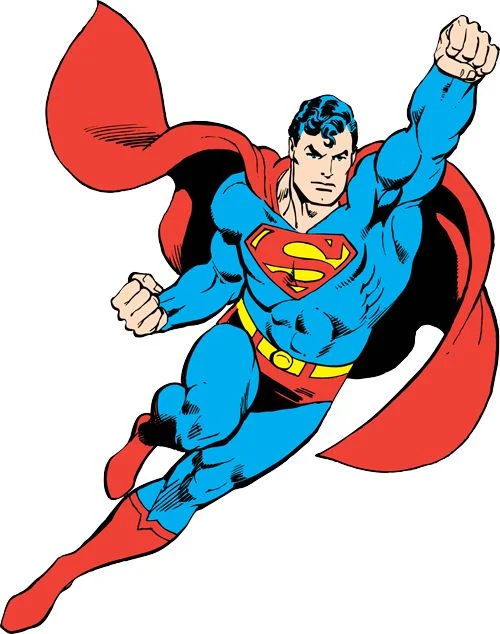

Superman’s lifting strength doesn’t settle into one dependable number across the comics. The feats described here range from holding up Earth for days to moving a galaxy, and they come from stories with very different tones and rules. For a Guardians game, that makes a fixed strength score a poor fit: the useful question is what a particular feat means for the scene, and what it costs or changes.
From planetary weight to cosmic spectacle
One cited New 52 feat has Superman lift Earth’s full weight, given as 5.97 sextillion tons, for five days. The account says he did so without sunlight and showed no fatigue. That’s a useful example of the character operating at a scale where ordinary measures of strength stop helping much. A table can treat the feat as evidence of extraordinary endurance as well as lifting power: holding an immense load for days poses a different challenge from raising it once.
In All-Star Superman, a dying Superman is described as lifting 200 quintillion tons with one arm, while saying he could lift more. The detail that he is dying gives the feat a different dramatic weight from a routine display of strength. It presents a limit being pushed under pressure, rather than a clean measurement of what he can do on an ordinary day.
Superman: Man of Tomorrow #12 offers a deliberately larger image: Superman takes on Atlas’s task and holds up the whole DC Universe, described as its worlds, things and people. That kind of scene isn’t a practical measurement in tons. It works as a symbolic feat, using an impossible burden to convey responsibility on an equally impossible scale.
The Silver Age Superboy feat takes the idea further still: he pulls an entire galaxy. Read alongside Earth lifting, it shows why a single upper limit is hard to draw from these examples. The stories use strength to create spectacle, express what a character is willing to bear, or give a crisis a striking visual. Their scale can shift with the kind of story being told.
Why the feats don’t produce one stat
Several explanations help make sense of the swings. First, Superman is often portrayed as holding back. Against a relatively weak opponent, he can restrain his force; against a threat that could hurt others, the story can call for him to use far more. The supplied account notes that he pulls his punches against Batman and has accidentally hurt himself with a powerful punch. That makes control part of his strength: the dramatic question may be whether he can apply just enough force, not whether he can apply the maximum.
His power is also tied to solar energy. The more energy he has drawn from the sun, the stronger he may be, and the description uses “sun-dipped” for a supercharged state. That gives a game master a clear, visible way to distinguish an everyday scene from a peak-power moment. It doesn’t establish a conversion rate between sunlight and lifting capacity, so treat it as a narrative condition rather than a calculator.
Motivation matters in these portrayals, too. The account frames Superman as becoming stronger when he’s trying to save people. At a table, that can mean that a rescue brings his priorities into focus or lets him push beyond his usual performance. It needn’t mean that every emotional moment adds a precise amount of strength. A clear change in what he can attempt is usually easier to play than an improvised number with no established basis.
Finally, not every feat describes a weight in the ordinary sense. The source points to a dream world and a book with infinite pages as an example of a lift that works symbolically. Such a scene tells the reader something about the fiction; it doesn’t give a game master a number to convert into a strength score. Keeping that distinction in mind avoids treating every image as though it happened under the same physical rules.
Putting Superman at the table
For a Guardians game, start by deciding what the scene needs to test. If Superman has to raise a vehicle long enough for people to escape, the focus might be precision and time. If he must hold a planet-sized burden, the table is dealing with a cosmic crisis, where the pressure can come from what happens while he holds it. These are different dramatic problems, even though both involve lifting.
Give each feat a clear purpose and a visible consequence. A simple rescue can show restraint: Superman moves the obstacle carefully because force could endanger someone nearby. A supercharged feat can show the effect of added solar energy. An immense, symbolic lift can become a moment about commitment, with the scene turning on how long he can keep going or what others do while he bears the load. Those choices make his strength matter without requiring the group to settle every comic continuity into one scale.
The source offers two especially firm-sounding figures: two billion tons for Superman in his normal form and at least 200 quintillion tons when supercharged. They sit beside much larger or less literal feats, though, so they don’t resolve the contradictions between portrayals. Treat them as suggested reference points from this account, not as a universal answer that every version of Superman must follow.
My read is that Superman lifts what the story asks him to lift, with restraint, solar energy, urgency and symbolism shaping the moment. For play, decide what kind of scene you want, then make his strength serve it. A consistent dramatic rule will help the table more than a single number that can’t cover every version of the character.