RDTN Episode 284 Reviews Hoplomachus: Victorum, Ahoy and Gosu X
Story by Tony McRee · 910 readers
Episode 284 weighs Victorum’s solo depth, Ahoy’s approachable asymmetry, Gosu X’s deck variety and Joan of Arc’s distinctive score sheet.
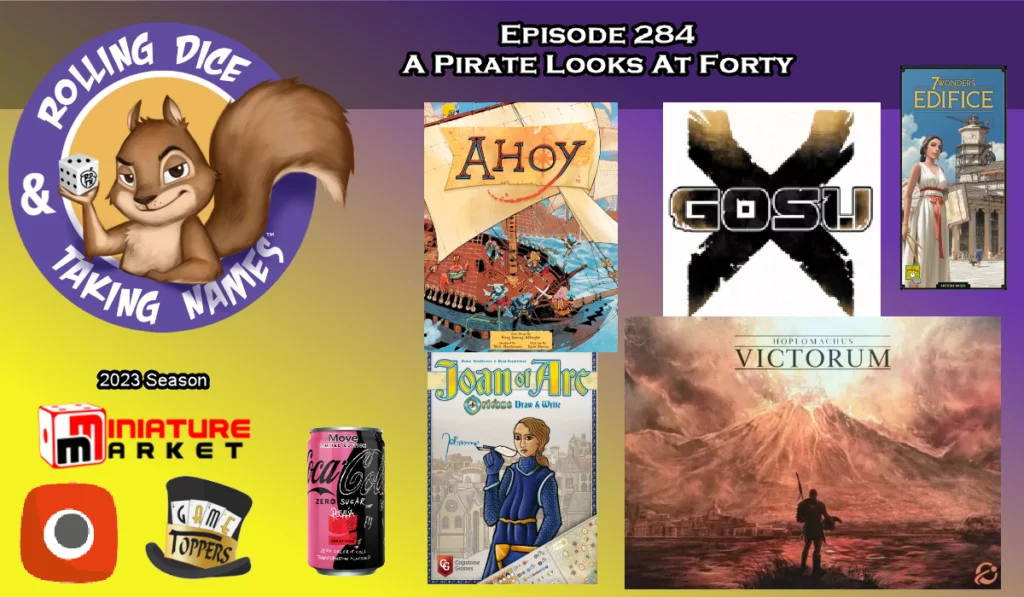
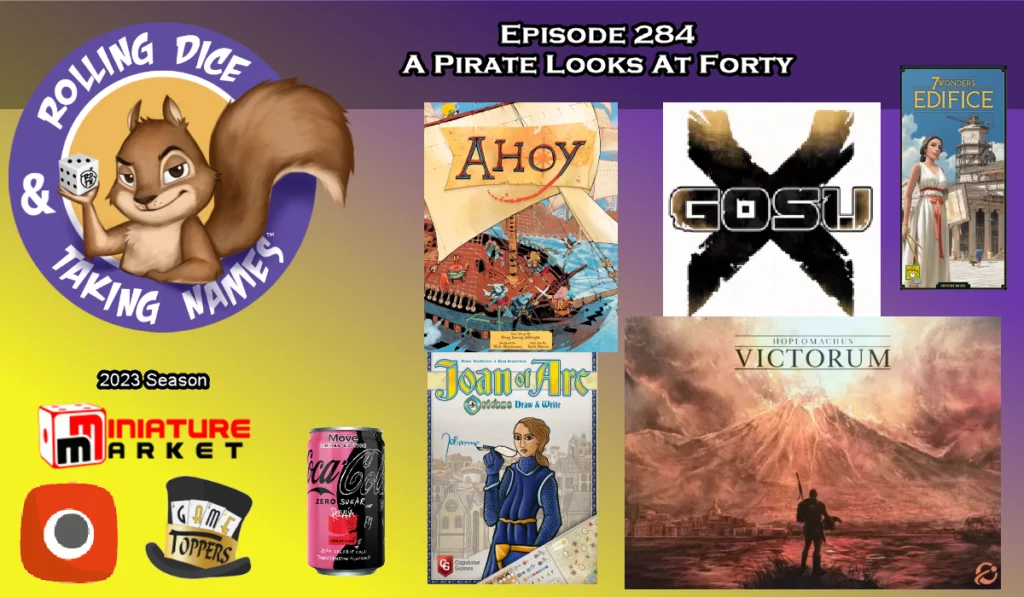
Hoplomachus: Victorum takes the longest look in RDTN Episode 284, and the discussion has a clear point for prospective players: this Chip Theory game is built for solo play, with enough layers to reward a proper trial before buying. The episode also ranges across Ahoy, Gosu X, Joan of Arc – Draw and Write and 7 Wonders Edifice, with shorter segments on community news and the hosts’ other topics.
The episode’s running order gives listeners a quick route to each discussion. It opens with 00:00:33 Intro, followed by Arcane Comforts at 00:04:10, Meeple Design at 00:07:00 and its “RDTN10%” code at 00:08:40. Adulting, the show’s Discord reaching 500 members, Postal Fun, an Oreo diet and Taste Buds fill out the early conversation.
Victorum’s appeal comes with a price and a commitment
At 00:44:40, the hosts settle into Hoplomachus: Victorum, which they describe as a game with layer upon layer to unpack. That density is the main reason the discussion runs long: there’s enough here to make a quick verdict feel incomplete. For players who enjoy discovering how a game’s parts fit together over repeated attention, that depth is part of the draw.
There are two practical details to keep in view. Victorum is solo-only, so it suits players looking specifically for a game they can take on alone. It’s also pricey, as the episode notes of Chip Theory’s games. The hosts’ counterpoint is the amount of play and the high quality of the components. Those considerations make it a particularly personal purchase: the value depends on whether solo gaming and a substantial, layered experience are what you want.
The recommendation is to find a way to test-drive Victorum before committing. That’s useful advice for any dense solo game: a session can show whether its decisions and rhythms keep you engaged, while a description can only hint at how the experience feels at the table. The episode doesn’t reduce the game to a simple yes or no. It encourages the right player to investigate further, with the price and solo format firmly in mind.
Ahoy finds its own course
Ahoy comes up at 01:21:35, introduced as a possible fit for people who enjoy Root. The comparison has a basis: both games feature asymmetric powers and different ways to win. But the hosts argue that calling Ahoy a streamlined Root doesn’t give it enough credit. In their view, those shared features don’t define the whole experience.
Instead, Ahoy’s relative simplicity is presented as a strength. Asymmetry can give players distinct roles and incentives, while different victory conditions make the table’s competing plans easier to follow. A more approachable rules load can help those ideas land without requiring the same investment from players. That’s the distinction the episode draws: Root may be a useful point of comparison, but Ahoy should be judged on what its own combination of powers, goals and simpler play brings to the table.
Gosu X and Joan of Arc offer familiar hooks with room to explore
At 01:11:06, the discussion turns to Gosu X. The hosts connect it with the broad family of two-player card games that includes Ascension and many other titles. What catches their attention is Gosu X’s style and the prospect of exploring the different decks included in the box. That variety gives players a reason to revisit the game and see how different deck choices shape their experience, though the episode doesn’t list specific deck effects or rules details.
Joan of Arc – Draw and Write gets its segment at 00:35:12. The hosts describe it as a different take on the draw-and-write format, aimed in part at players who have set the genre aside because its games started to feel alike. Its mechanics may be familiar, but the score sheet could provide enough of a change to draw those players back in. That’s a modest, useful distinction: in this genre, a fresh scoring puzzle can give familiar turns a different purpose.
Earlier, 7 Wonders Edifice appears at 00:18:12. The episode’s listing doesn’t include a review summary for it, so listeners looking for the full discussion can use the timestamp as a starting point. The same applies to the other named game segments: the running order helps you navigate the show, while the longer conversation gives the hosts room to explain their impressions.
A full episode with clear listening stops
Other marked stops include Portal Games at 00:33:15, Game Toppers LLC at 01:09:56 and Miniature Market at 01:35:31. The episode wraps with Outro at 01:37:35. Those markers make a long recording easier to browse, whether you’re after the extended Victorum conversation or a particular game.
Episode 284’s strongest guidance is practical: try Victorum if solo play and layered decisions are your kind of table time, give Ahoy credit for its own approach to asymmetry, and look at Gosu X or Joan of Arc if you’re curious about fresh possibilities within familiar card and draw-and-write formats. The timestamps make it easy to start with the game that matches your interests.