Oros, Maria and Kamigami Battles Lead RDTN Episode 291
Story by Tony McRee · 415 readers
Episode 291 reviews Oros, Maria and Kamigami Battles, alongside brief stops at Blob Party, a Strike tournament and more.
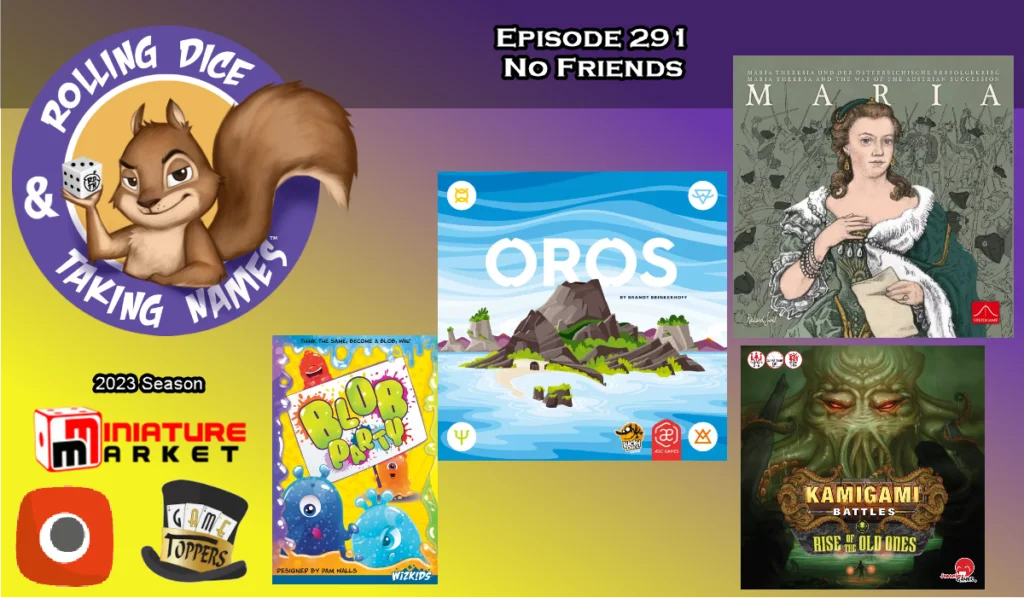
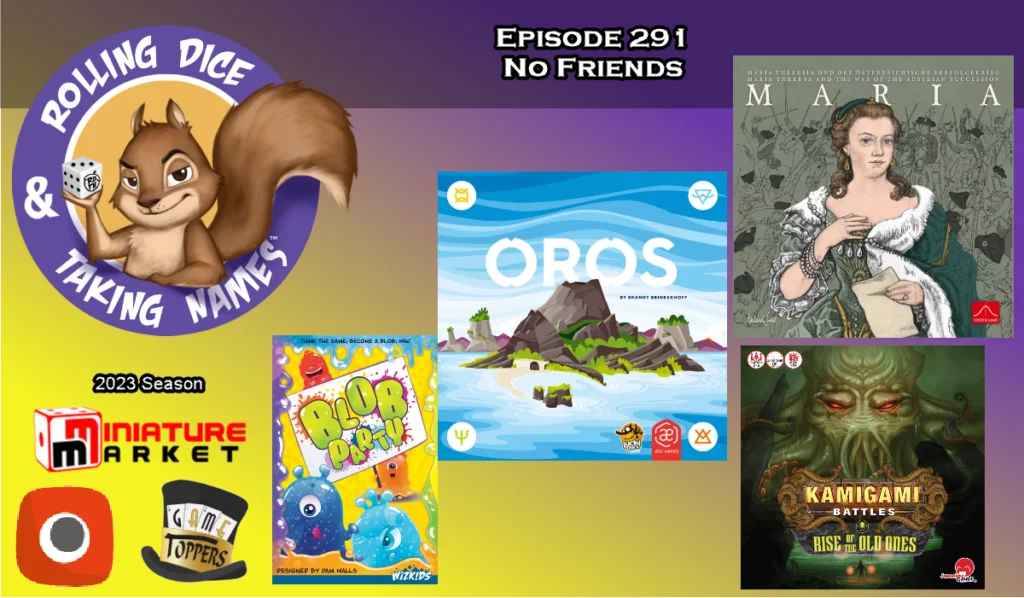
RDTN Episode 291 puts three very different strategy games at the center of its table talk: Oros, Maria and Kamigami Battles: Rise of the Old Ones. The shared thread is how much attention each asks from players. Oros makes the board itself a shifting puzzle, Maria pairs an accessible rules explanation with a long play, and Kamigami Battles rewards careful choices from its card market. The episode also touches on lighter and hobby adjacent subjects, including Blob Party, a Strike tournament, sleeves and inserts.
Oros turns island building into a contest for knowledge
In Oros, players take on the role of demi-gods shaping islands through volcanic activity and the movement of land. The changing terrain gives the game its central puzzle: players are working with the same limited opportunities, but their plans depend on how the landscape develops. The episode describes the strategy as deceptive, with cooperation and direct interference both part of the experience.
That mix means a turn can matter beyond its immediate reward. A move that helps create land or a volcano can also alter what others can do next, so players have to weigh personal progress against the board state they are helping to build. The competition ultimately centers on becoming the most knowledgeable, as the hosts describe it. That gives the theme a clear mechanical aim: shaping the world is a means to advance a demi-god, while the shared terrain keeps players’ plans entangled.
For a group considering Oros, the key question is whether everyone enjoys watching a strategy emerge from a changing board. Its appeal seems to rest on the interaction between planning, cooperation and the possibility of blocking a rival’s opportunity. Players who prefer to focus on their own engines may find that friction demanding; groups that like reading a shared position should have more to chew on. The episode presents it as a challenge for friends, with more going on than the island creation premise initially suggests.
Maria makes a long war game feel approachable
The episode’s other major strategy discussion is Maria, which Marty picked up after recommendations from several influential people in the hobby. The game’s length gave him some pause before playing, but the session went smoothly: he found the rules easy to follow and the play itself manageable. That combination is useful context for anyone curious about Maria but wary of committing to a long war game.
A long session still asks for a group willing to give the game room. Clear rules can lower the barrier to starting, but they don’t remove the time commitment or the need to stay engaged across the full experience. Marty’s account suggests the rules weren’t the obstacle he feared. For players already interested in war games, that distinction may help: a substantial play can still feel fluid when the structure is easy to grasp.
The hosts also acknowledge that Maria is a known quantity for people who follow this style of game, and that they came to it later than some players. Their recommendation is aimed at listeners who haven’t yet tried it: seek out a copy if the genre appeals. The episode doesn’t offer a detailed breakdown of its systems, so the strongest takeaway is experiential. Expect a long game, but don’t assume that length automatically means a clumsy rules experience.
Kamigami Battles asks players to watch the market
Kamigami Battles: Rise of the Old Ones brings deck building into the conversation, with one feature standing out for the hosts: players need to pay close attention to the cards they take from the market. The cards can chain together, so a purchase matters partly because of how it may connect with what a player already has. That makes market choices more involved than simply taking the strongest card available in the moment.
Chain effects give a deck builder its own kind of planning horizon. Players have to consider what a card does now, what it might enable later, and whether their current deck can make use of the combination. The hosts found that refreshing. They did, however, struggle to reach the final end of the game. Their read is that unfamiliarity with the card combinations may have contributed, since recognizing those links is part of playing the system well.
That learning curve is worth keeping in mind for a first session. A group may need time to see how the market and card chains work together before it can judge its options confidently. If your table enjoys discovering combinations and adjusting its picks as the available cards change, Kamigami Battles sounds like a deck builder worth trying. The episode’s experience also suggests that the first play may not show the game at its best if players haven’t yet learned the interactions.
Other stops from the episode
The timestamped rundown includes Blob Party, Capstone Phantom Sleeves and a Strike tournament, along with mentions of Miniature Market, Gametoppers LLC, Portal Games and Folded Space Inserts. These appear as shorter segments or sponsor and shop references; the source provides no further play details, prices or product specifications to add. The episode also lists The Dogs and The New Zelda among its stops.
For listeners choosing where to start, the three featured games offer distinct reasons to tune in: Oros for shared terrain and contested opportunities, Maria for a long war game with approachable rules, and Kamigami Battles for card-market decisions that reward learning combinations. Those differences make Episode 291 a useful set of table reports, especially for groups deciding which kind of strategic challenge sounds right for their next session.