Slay the Spire: Ironclad Deckbuilding Archetypes and Key Cards
Story by AnastasiosHJW · 797 readers
The Ironclad can build around Strength, block, or exhausting cards—or simply pick strong options. Here’s what each approach needs and where it can falter.
The Ironclad’s strength in Slay the Spire is flexibility. He can build toward explosive attacks, turn defense into damage, or cycle through a hand by exhausting cards. And when the rewards don’t point clearly toward any of those plans, he can still assemble a capable deck from cards that work well on their own.
This is a look at the Ironclad in the board game, assuming familiarity with its mechanics and access to his full card pool. I’ll refer to cards and relics as “good” or “bad” for a particular build: a poor fit may still be useful elsewhere, while some broadly powerful cards are worth taking in nearly any deck.
The Ironclad’s flexible starting point
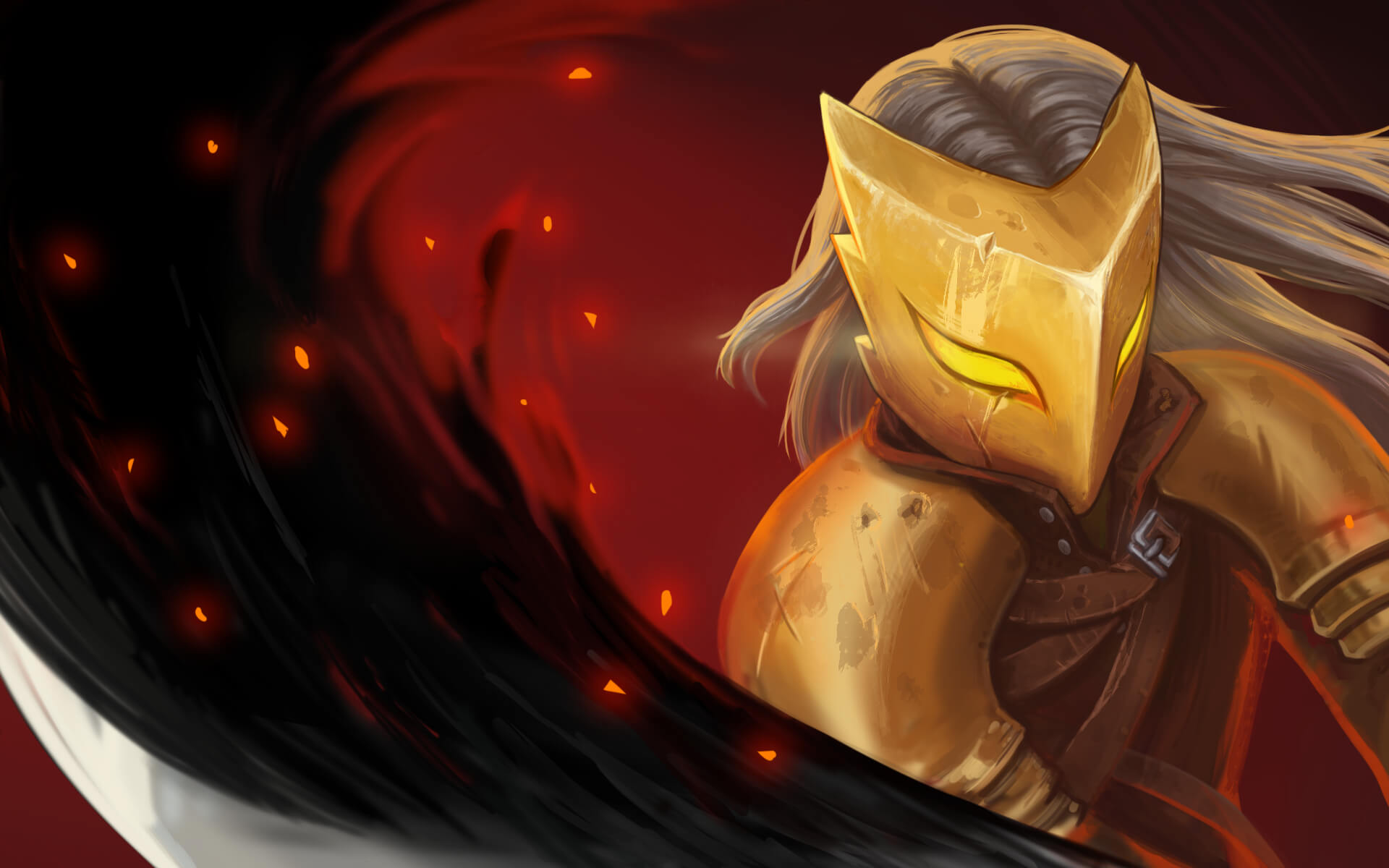
Burning Blood, the Ironclad’s starting relic, restores 1 health after each combat. That steady recovery gives him room to play aggressively, and it works well with cards that trade health for an advantage. His basic tools are easy to read: attack, block, draw, and build Strength or apply Vulnerable.
He starts with the familiar Strike and Defend cards, plus Bash. Bash costs 2 energy, deals 2 damage, and applies Vulnerable. Its effect remains useful well into a run: enemies that take extra damage are easier to bring down, particularly when the Ironclad has built up Strength.
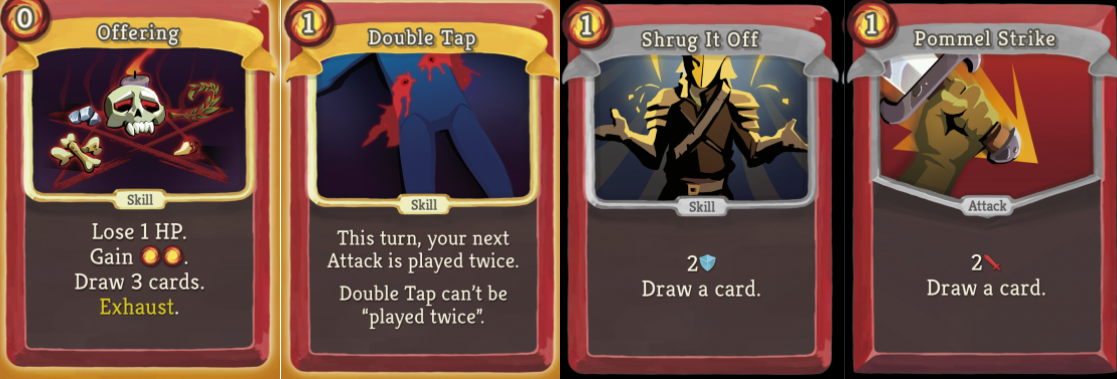
One of the character’s practical advantages is that he doesn’t need a perfect combination to function. Pommel Strike, Shrug It Off, and Battle Trance can fit into a wide range of decks, while Offering is an exceptionally strong pick regardless of the direction a build takes. If a more focused plan comes together early, though, the Ironclad has several satisfying ways to turn it into a real engine.
Strength: turn every hit into a bigger threat
Strength stacking is the Ironclad’s most direct damage plan. Some relics provide Strength, including Vajra and Red Skull, while cards offer a broader range of ways to build it. Flex provides a temporary boost; Spot Weakness and Inflame can increase Strength; Rupture can reward self-damage. Among rare cards, Demon Form builds Strength over time, Limit Break multiplies Strength you already have, and Feed must defeat an enemy to provide its reward.
Those conditions matter. Demon Form takes time to pay off, and Limit Break needs Strength in place before it can do much. Feed asks you to secure the final blow, though its 3 damage for 1 energy gives it value even when the extra reward is out of reach. The deck can find Strength through several routes, but the best choice depends on how quickly the fight is moving and what the rest of the cards can support.
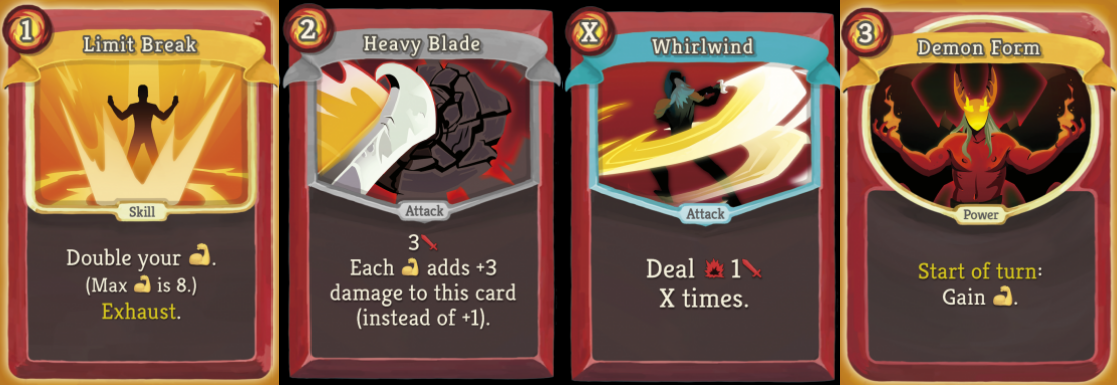
Once Strength is in play, even basic Strikes hit harder. Bash adds Vulnerable to the equation, and multi-hit attacks such as Twin Strike and Cleave benefit repeatedly from the Strength bonus. Heavy Strike and Whirlwind offer particularly clear payoffs. Heavy Strike gains 3 damage for each point of Strength, or 5 when upgraded. With 4 Strength, the example in the source reaches 23 damage; against a Vulnerable enemy, that becomes 46. Headbutt can help bring a useful attack back for another pass.
Whirlwind spreads that scaling across multiple enemies, making it valuable in fights with groups. It can also help against encounters where enemies return or summon allies, such as Gremlin Leader, The Collector, or the Sentries. Fiend Fire is another tempting option: Strength boosts its damage, and exhausting the rest of your hand can clear out cards you don’t need. Rare rewards are contested, though, so it has to earn its place against the other pieces a deck may want.
The tradeoff is a vulnerable setup period. Strength builds often need a turn or two to draw the right cards and put their bonuses in place, leaving the Ironclad exposed while he prepares. Burning Blood helps soften that cost, and dependable blocks such as Shrug It Off and Impervious can cover the dangerous turns. The deck also doesn’t need every card upgraded to work, which leaves more opportunities to recover health at campfires. Relics can fill gaps, too.
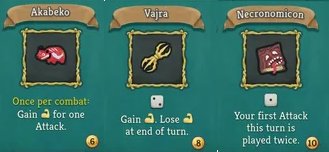
Strength picks: Heavy Strike, Whirlwind, Limit Break, and Double Tap are top cards to watch for. Akabeko, Vajra, and Necronomicon are standout relics. Flex, Rupture, Spot Weakness, Demon Form, Headbutt, Cleave, Twin Strike, and Fiend Fire can all contribute; Mutagen, Red Skull, Ninja Scroll, and Pen Nib can help, with Pen Nib’s benefit potentially applying to another player.
Bludgeon, Perfected Strike, Wild Strike, and Carnage are less aligned with this plan. The issue is opportunity cost: high-cost attacks can compete with the energy needed to build Strength, while lower-cost attacks may make better use of the bonus. An upgraded Heavy Blade can outpace many such attacks with only 1 Strength.
The payoff is exceptional damage against a single target, plus strong area attacks. The Ironclad has several ways to reach that payoff, but the deck needs a compact card pool so its setup and best attacks show up promptly. Block support from cards, relics, or another player can make the wait much safer.
Block: build a wall, then hit back
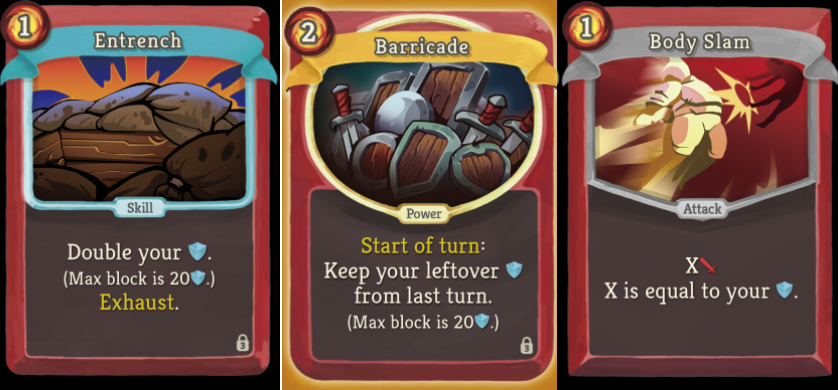
A block-focused deck turns defense into its own engine. The central pair is Barricade and Body Slam: Barricade lets block carry over between turns, while Body Slam deals damage based on the block you’ve accumulated. Body Slam is the key offensive piece; Barricade makes the plan much smoother, though the deck can still operate without it.
There are plenty of ways to build block. Shrug It Off remains a reliable option, alongside Entrench, Metallicize, Power Through, True Grit, and Impervious. In this build, defensive cards do more than prevent damage: they help create the resource that Body Slam converts into an attack. Juggernaut may look like a natural fit, but the author’s view is that its damage doesn’t scale well enough to justify the energy compared with other plays.
The fortress approach is also useful in multiplayer. Once the Ironclad has built a large block total, he can protect other players so they can focus on dealing damage. Strong defense preserves health for other choices, too, including paying life for an event or using Offering. Burning Blood can then replenish some of that health after combat, while saved campfire visits can go toward Smithing rather than Resting.
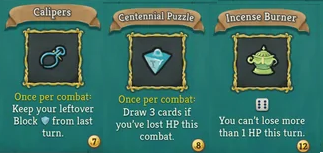
Block picks: Barricade, Body Slam, and Impervious lead the card list. Calipers can stand in for Barricade, particularly if Barricade hasn’t appeared or tends to arrive late. Ghostly Armor, Shrug It Off, Entrench, and Power Through are useful additions. Captain’s Wheel, Horn Cleat, and the other block-focused relics fit the plan.
Blood for Blood is a poor fit when the deck rarely takes damage. Centenial Puzzle, Self-Forming Clay, Orichalcum, Incense Burner, Blood Vial, and Regal Pillow may also be hard to make use of in this defensive setup. Centenial Puzzle and Self-Forming Clay become more attractive if the deck has a reliable way to damage itself, such as Offering.
When it’s assembled, this deck can become very difficult to defeat after its opening turn and may let the Ironclad Smith at campfires instead of Resting. The early game is the danger: without a damage plan, fights can drag on while the deck hunts for its key pieces. Barricade is rare, and Body Slam is central to the build, so it depends on finding a fairly specific combination.
Exhaust: turn discarded cards into momentum
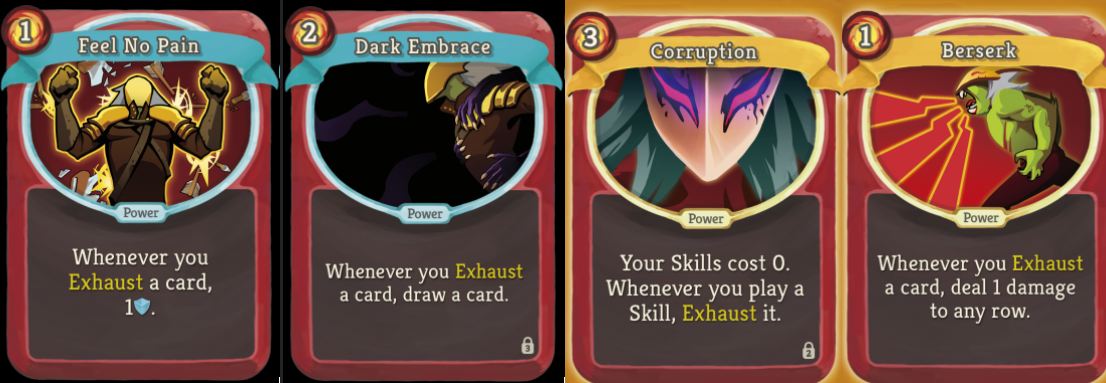
Exhaust decks are more particular, but they can make for some of the Ironclad’s most entertaining turns. To build around the mechanic, look for three kinds of support: cards that exhaust, effects that reward exhausting, and cards that replenish your hand or provide expendable material.
The first part is relatively accessible. Some cards exhaust themselves, and True Grit, Second Wind, Burning Pact, and Havoc can clear cards from your hand. Fiend Fire and Corruption offer further routes. There’s enough variety that a deck can often find a way to start exhausting cards without relying on one specific option.
The payoff cards are harder to assemble. Feel No Pain grants block when cards are exhausted; Dark Embrace draws cards; Berserk deals damage. Dark Embrace stands out because drawing cards supplies more material and more chances to trigger effects. Combine it with Corruption and the Ironclad may work through the whole deck in a turn. That can be spectacular—but if the enemies survive, the hand you’ve just spent may leave little to answer their next attacks.
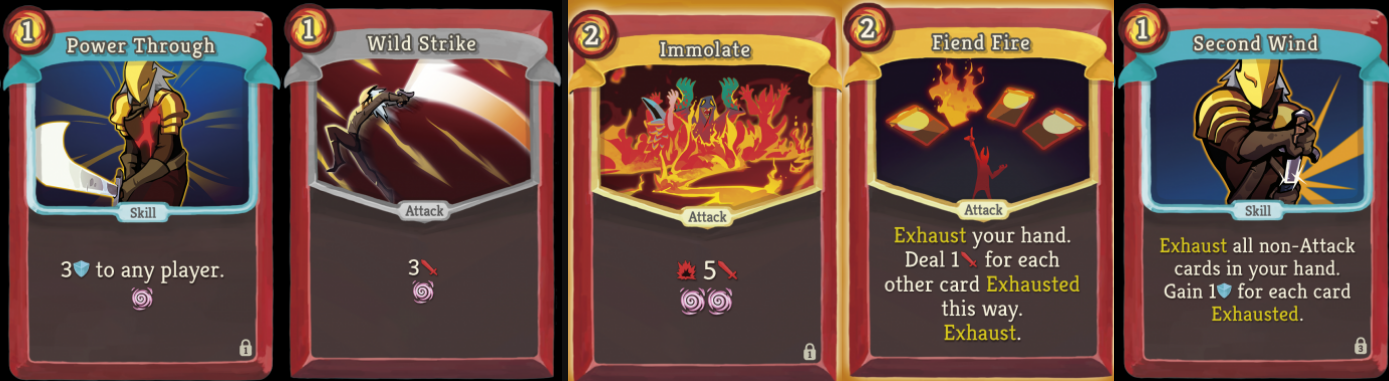
Extra cards give the engine more fuel. Power Through, Wild Strike, and Immolate can supply useful material, and Snecko Eye may help as well, though it’s a boss relic with an unpredictable outcome. Even one card that adds more options can make the deck steadier after its initial hand is gone. Evolve becomes more appealing when those cards are in the mix; Fire Breathing can also make use of them, though it’s a weaker substitute for Berserk.
Curses can serve as exhaust fodder, too. If the deck expects to remove unwanted cards from its hand, a curse can become material for the engine rather than a card it plans to keep around. The same exhaust tools overlap naturally with block builds: Feel No Pain, Second Wind, True Grit, and Impervious all support defense, while Dark Embrace can improve card flow.
Exhaust picks: Corruption, Dark Embrace, Feel No Pain, and Berserk are the signature cards. Dead Branch, Charon’s Ashes, and Blue Candle are top relics; Burning Pact, Havoc, Power Through, Second Wind, Sentinel, True Grit, Fiend Fire, Seeing Red, Rampage, and Offering are strong supporting cards. Cursed Key, Snecko Eye, and Du-Vu Doll can help. Omamori is less valuable to this build because another player may benefit more from handling curses.
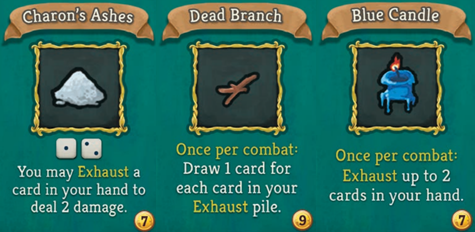
When the pieces line up, an exhaust deck can combine offense and defense in a lively, unpredictable way. Its risks come from both ends of the engine: run short of cards to exhaust and the deck stalls; add too many pieces without reliable access to the important ones and the key effects become harder to find. Dark Embrace is a useful anchor because it helps the rest of the plan keep moving.
Good stuff: take the strong cards as they come
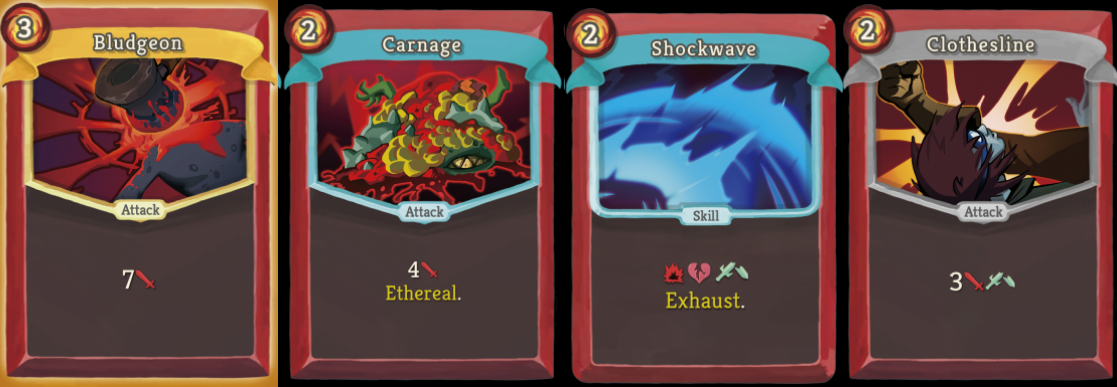
“Good stuff” isn’t a strict archetype. It’s a flexible collection of useful cards with no single plan at the center, and the Ironclad handles it particularly well. Some players might call it a “big stuff” deck, built around hard hitting attacks such as Rampage, Clothesline, Bludgeon, Immolate, and Uppercut.
This approach can pick up a little Strength or exhaust support without committing fully to either. An early Golden Ticket with Bludgeon, for example, can help push through Act 1. If no focused set of cards emerges, generally strong picks can keep the run going. The limitation is that a good standalone card may not reach the same heights as a card supported by its matching engine.
Good stuff picks: Bludgeon, Uppercut, Carnage, and Shockwave top the list; Clothesline, Headbutt, Demon Form, Immolate, and Rage are useful options. The source identifies no clear relics to avoid, and rates all relics as potentially useful. Clash, Body Slam, and Rampage are poor fits for this particular loose collection of cards. The deck’s chief advantage is its early flexibility: it can later shift toward a more defined plan. Its risk is that a scattershot deck may struggle in Act 3, and a later pivot can require removing many cards.
Choose with the next draw in mind
The Ironclad is a dependable character and a welcoming starting point, but his best decks still ask you to make choices with the available rewards in mind. When a card appears and you pass on it, don’t count on seeing it again. Commons have an extra copy; important combination pieces are single copies. If Barricade turns up early and you leave it behind, a later block deck may have to make do without it.
That’s the useful habit across all four approaches: build from the cards actually offered, and judge each pick by how it serves the deck you can assemble. A clear Strength engine can end fights quickly; block can protect the whole table; exhaust rewards careful card flow; and a flexible mix keeps options open when the rewards don’t settle on a theme.
The next character in the series is the Silent. The earlier board game discussion is available here. Slay the Spire is listed for purchase at Miniature Market.


