Seas of Strife Review: A Trick-Taking Game Where Less Is More
Story by craftymacaron · 360 readers
Seas of Strife turns familiar trick-taking on its head: players aim to collect as few tricks as possible while adapting to shifting suits.


Seas of Strife makes a small change to a familiar card game that reshapes every decision: tricks are penalties, so players try to take as few as they can. Its shifting suit rules mean you can’t simply track one fixed trump suit or assume the highest card will win. Instead, the table’s choices can change which suit takes a trick, leaving everyone to judge when to duck out and when to take control.
The game is for 3–6 players, ages 14 and up, with a play time of about 45 minutes. It comes in a compact box with a deck and two rules leaflets, including variants. There are no boards or tokens to manage, and the cards fit in the box when sleeved. That makes it an easy game to bring along and set up quickly, including for a café table where sleeved cards can help protect the deck.
A deck built for quick reads
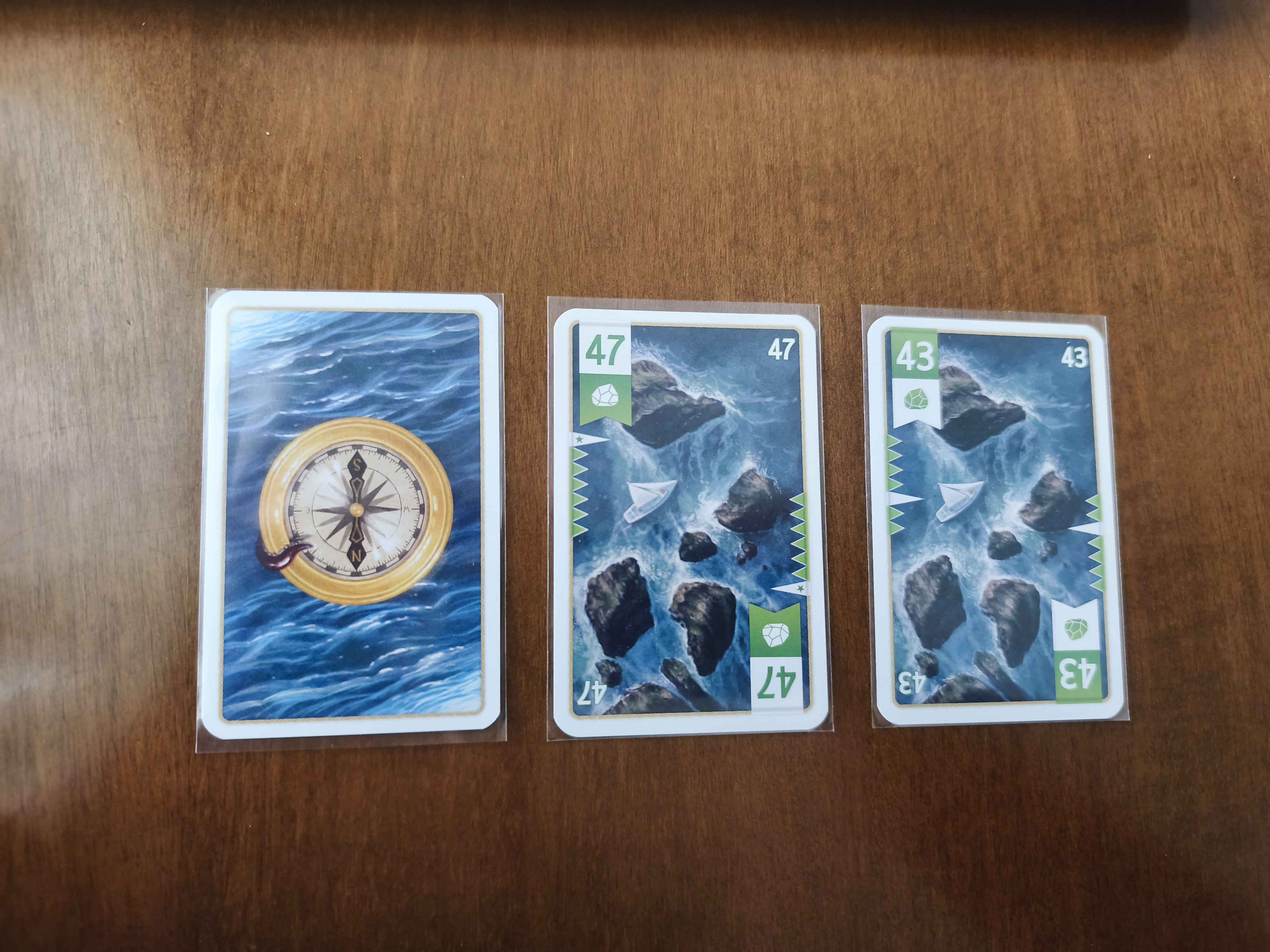
The cards use a clean, sea-themed design on both sides. Their backs show a compass and a small tentacle; their fronts display the suit, value and a small flag indicating how many cards belong to that suit. The highest card in each suit has a reversed colour scheme and a star on its rank flag. Once play gets moving, that visual marker makes it easier to spot a card that may shape the next trick.
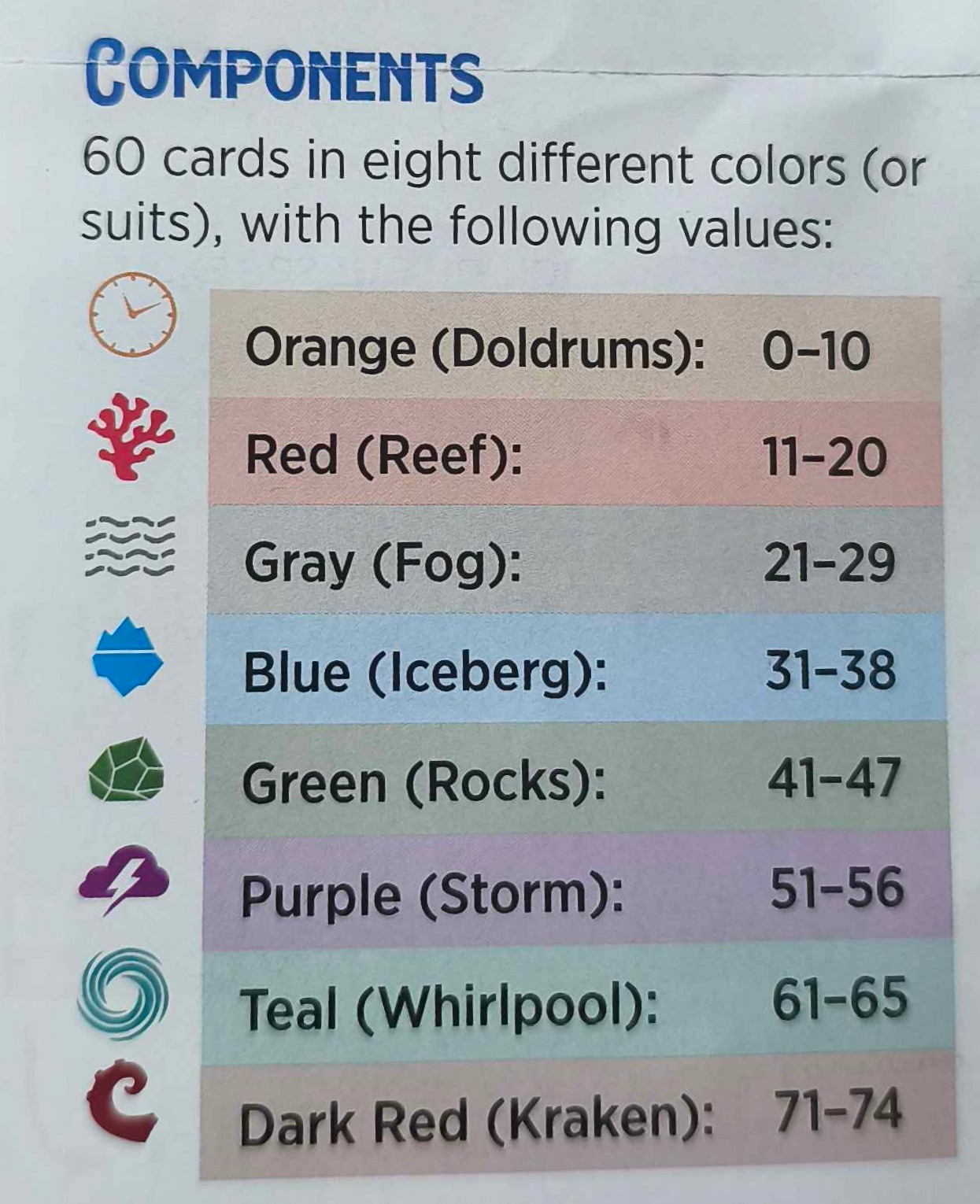
The deck contains 60 cards across eight colours, with values ranging from 0 to 74. Each colour is a suit. A trick is one card played by each person, and a round continues until everyone has played all the cards they were dealt. Those details are easy to absorb, but the way suits determine the winner gives the game its bite.
How the tricks change hands
Players are dealt the cards. In a three-player game, two suits are removed before the deal. The first player lays a card face up, and everyone else must follow that suit if they have one. If they don’t, they can play any card. That freedom can alter the contest: the suit represented most often among the cards played wins the trick, and the player with the highest card in that suit takes it.
If two or more suits appear equally often, the highest card among those tied suits determines the winner. So a card’s value matters, but only after the table has established which suit or suits count. A high card can be a liability if its suit becomes the winner, while a low card can still contribute to a suit’s majority. Players have to follow the cards as they land rather than plan around a fixed trump.
The person who takes a trick leads the next one. There’s an exception when that player won with the highest card of a suit: they can choose who leads instead. That gives a costly win a possible upside. If taking a trick seems unavoidable, a player may be able to use the result to influence who has to open the next contest.
When all the cards have been played, the round ends. Each trick collected is worth one penalty point, and the game ends once the threshold for the player count is reached. The source rules summary doesn’t specify those thresholds, so check the rule sheet for the value used in your game. Players keep their collected tricks in separate face-down piles, making it easy to see who is accumulating penalties.
Managing the hand, not just the cards
The tension comes from deciding whether to play cautiously or accept a trick and shape what follows. If you have two cards in a suit already on the table, you might add the lower value to reduce the chance of taking the trick. But if the trick looks unavoidable, playing the higher card could give you a chance to control the next lead. That choice depends on the other cards already played and what you think remains in opponents’ hands.
Remembering which suits have appeared helps, but the changing suit balance keeps that information from becoming a simple countdown. You can try to draw out cards that make an opponent’s hand awkward, or hold a card until it can steer a trick toward someone else. The play rewards attention to the whole table: who is leading, which suits are gaining numbers, and who might be forced to follow.
There’s a social layer, too. A player can try to tempt someone else into taking a trick, then use the next lead to improve their own position. The plans are necessarily flexible; one unexpected card can change which suit wins. That swing gives the game its mild chaos, while the modest deck and direct turn sequence keep the pace moving.
Variants and table fit
The included variant rules offer a few ways to adjust the experience. Face cards change the result for a suit’s highest card: it cancels that suit’s count and doesn’t win the trick. Other options let players pass cards to one another or use happy faces to cancel tricks. These rules add extra effects to track, so the standard game is a sensible starting point for a new group. Once everyone understands how suit majorities work, the variants provide ways to change the decisions from round to round.
Seas of Strife looks like a good fit for groups that already enjoy interactive card play and want a compact game with room for second-guessing. It’s quick to set out, easy to carry and built around a clear reversal: taking a trick is the outcome to avoid. The shifting suit count keeps that goal from being as simple as shedding high cards. Watch the table, keep an eye on who controls the next lead, and be ready to change your plan when the trick turns.