Ork Barricades Get a Fresh Coat of Paint for the Ork Town Collection
Story by Wudugast · 653 readers
A battered set of older Ork barricades and a scrap pile get refreshed, bringing the Ork Town collection closer to its planned photo shoot.

A set of battered Ork barricades has found its way back onto the painting desk, giving the Ork Town collection a welcome refresh. These older pieces have been painted and repainted over the years, and the latest round of work brings them back into shape alongside the other terrain in the collection. That kind of maintenance rarely gets the same attention as a new unit, but it can change how a familiar table looks when the pieces are gathered together. The barricades were already part of the collection’s history; now they’re ready to take their place in it again.
The barricades turned up while their painter was sorting through boxes. They date to the Cities of Death expansion, around 2006 by the writer’s recollection, and are older than the previous barricades. After several rounds of paint, they were in rough condition and needed a complete repaint. The job happened in brief breaks from work on an orc army, which made this a useful chance to tackle a small, self-contained batch. That’s a familiar rhythm for hobbyists with several projects competing for attention: a contained terrain job can offer a clear finish line without demanding a complete change of focus.
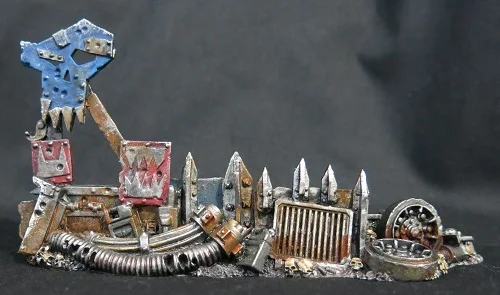
A worn set brought back into the collection
There’s a practical pleasure in returning to old terrain. Repainting familiar pieces can restore them to the table without requiring a new project or a change to the collection’s overall look. Here, the barricades had already been through multiple paint jobs, so a full reset made more sense than trying to touch up every worn patch individually. Repeated layers can make small repairs feel less like repairs and more like chasing a moving target; starting over gives the painter a fresh, consistent surface to work with.
That choice also suits terrain, which often gets handled, moved, and placed beside a changing mix of models. A pristine finish isn’t the only measure of success. The pieces need to read clearly at table distance and feel at home among the rest of the scenery, even if their surfaces show a little history. In this case, the repaint is a practical bit of collection upkeep as much as a painting exercise.
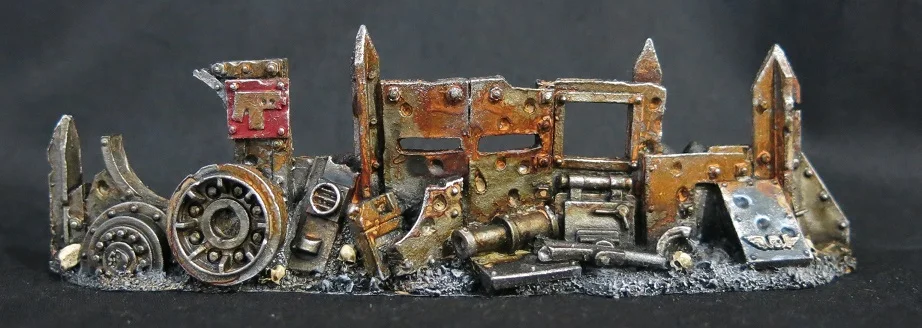
The result gives the older pieces another outing as part of Ork Town. They don’t need to be pristine to serve their purpose: barricades help frame a street or battlefield and give a scene more visual structure. For a collection built around a rowdy Ork setting, a bit of wear also suits the subject. The key is bringing the pieces into a state where they sit comfortably beside the rest of the terrain, rather than letting their age make them feel like they’ve wandered in from a different project.
That’s a modest standard, but it’s a useful one. Terrain has to support the scene without demanding all the attention, and a coordinated collection can do that more effectively than a set of individually polished pieces that don’t quite belong together. The barricades have a job to do: suggest a place where Orks have made use of whatever was at hand, then give the battlefield a stronger sense of shape.
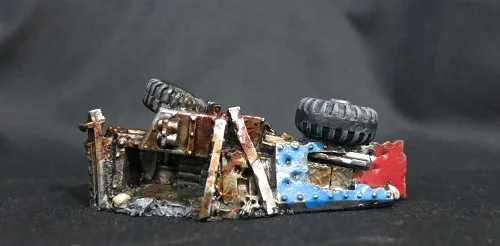
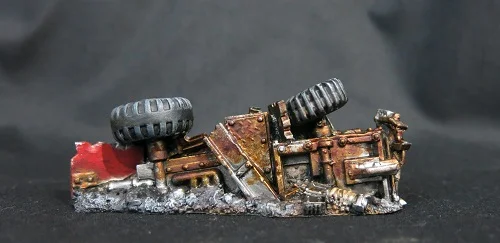
A small score for the barricades, and a scrap pile
The painter awards five points for the whole set rather than claiming five for each barricade. That’s a modest tally for a complete repaint, though the writer admits that points matter in a running monthly competition with IRO. The friendly rivalry has become part of the project’s fun: IRO currently leads by a wide margin, while the writer remembers turning last year’s long-running deficit into a draw with a late burst of painting. The score gives routine hobby work a little extra urgency, even when the real reward is having finished terrain ready to use.
There’s a trade-off in that kind of tally. A full repaint takes attention and time, but a points system can make the work feel countable and keep a long project moving between larger painting goals. Five points for the set also keeps the score tied to the whole job, rather than multiplying the reward by the number of individual barricades. Not every finished piece needs to become a major milestone. Sometimes the value is simply getting a useful batch off the desk and back into circulation.
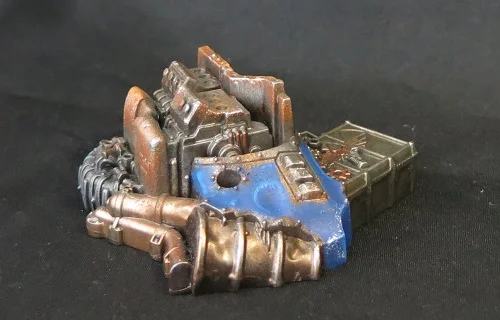
There was also a pile of scrap to revisit. It had already been painted, and the painter was happy with the first result, but a few touches of colour helped it match two other pieces painted recently. Those earlier scrap models are shown in A Load of Rubbish. Since this was a light refresh rather than a full repaint, the pile earns one point. That’s a small adjustment, but it illustrates how a collection’s look can come together through repeated, limited edits rather than a single grand redesign.
Why these small refreshes matter
This is more significant than it looks. A terrain collection can accumulate in pieces over years, and older models may carry several layers of paint or belong to an earlier version of its visual style. Repainting them gives the collection a better chance of reading as one place when it reaches the table. It also keeps existing scenery useful, which is a sensible return on the time already spent building and painting it.
(And this is the part most people overlook.) A refreshed barricade doesn’t need to be a showpiece to matter. It can make the ground between the miniatures feel considered, give a street a clearer edge, or help a photo look like a scene rather than a group of models arranged together. If you’re working on a themed collection, small pieces like these can quietly do a lot of work.
Still, there’s no need to turn every old model into a restoration project. The painter chose a full repaint where repeated layers had left the barricades in rough condition, then kept the scrap pile’s work to a few touches of colour. That distinction is useful: the amount of effort can follow the condition of the piece and the role it plays in the collection. A sensible stopping point. Otherwise, maintenance can become its own endless project.
Ork Town is ready for its next photo session
With the barricades and scrap finished, the Ork Town collection has reached a point that its owner is happy with. That doesn’t rule out adding more pieces later; it simply means the current collection feels complete enough to show off. The next step is to bring everything together for cinematic photos, with the town overrun by roaring Orks once the busy Orktober period is done. The photos will give the terrain a different test from a tabletop game: whether the separate pieces combine into a convincing scene when viewed as a whole.
That distinction matters for a collection built around a setting. On the table, players may focus on movement, cover, and the models in front of them; in a photo, the arrangement itself carries more of the story. The barricades and scrap can help establish the town’s rough character without needing extra explanation. And yet, the collection’s strongest feature may be its accumulated history: these are pieces that have been brought back into use, not a set assembled all at once.
The painting score stands at 37 points for the month, against IRO’s 100. That gap is substantial, but the previous year’s close finish gives the writer a reason to keep plotting a late push. For now, the fresh barricades have done their part: they’re back in usable shape, the scrap pile fits the surrounding terrain, and Ork Town is ready to fill the frame. The next photo session will show how well the refreshed pieces hold together as a setting, while the monthly score keeps the friendly contest ticking along.


