RDTN Episode 132: Bastion, Sidereal Confluence and Necromunda
Story by Tony McRee · 413 readers
Episode 132 weighs Bastion’s tactical teamwork, Sidereal Confluence’s trading and engine building, and a detailed look at Necromunda.
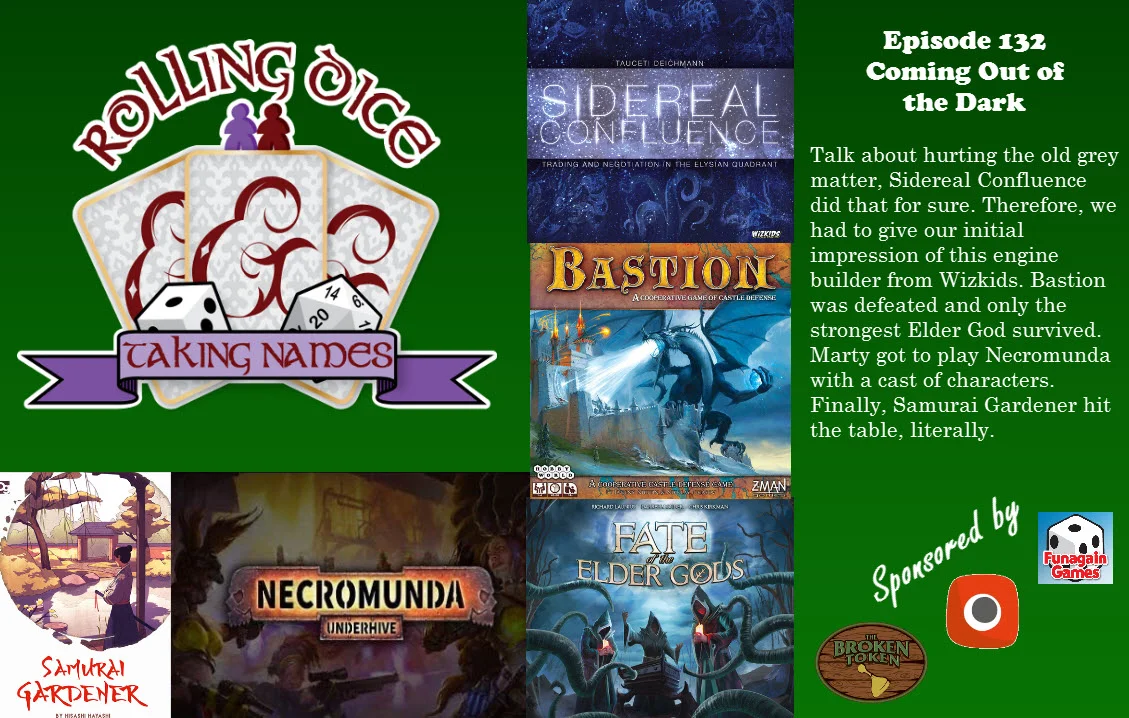
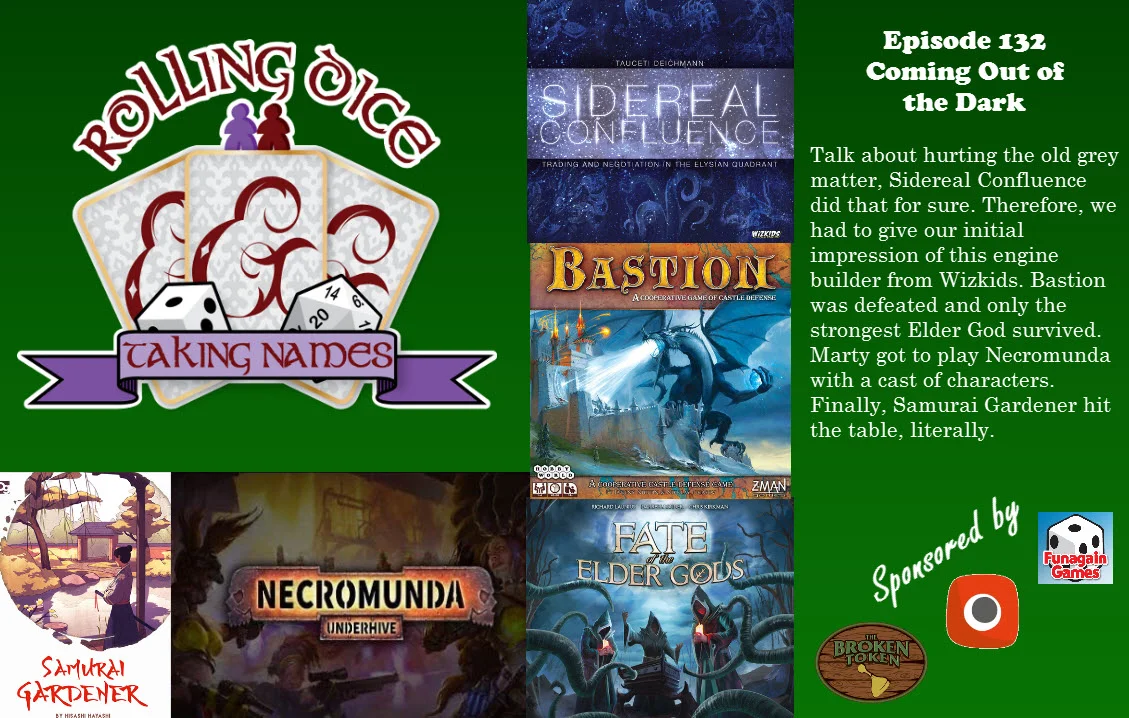 Two games change the tone of this episode: Bastion, which turns a plain-looking cooperative defense into a web of linked decisions, and Sidereal Confluence, where negotiation gives a deep engine builder its spark. The hosts also make room for Necromunda, with guests joining Marty during his trip to PAX Unplugged. There’s plenty to discuss, including a few table disappointments and the problem of choosing favorites for the Squirrely Awards after a year that keeps producing surprises.
Bastion turns cooperation into a chain of decisions
The hosts had already been impressed by Gentes, so they weren’t expecting the year to deliver another pair of games that would demand attention. Bastion first caught their eye at Gen Con. The cooperative tower defense game, released in 2015 and now available from Z-Man, initially looked straightforward. At the table, it proved to have more going on.
Its appeal comes from how one player’s move sets up the next. A threat can’t always be handled as a simple instruction to defeat an enemy; players have to think through what needs doing first, which action enables another, and what may happen if the group misses a step. That sequence gives the game a tactical feel. The team’s shared task is clear, but choosing a useful order for their actions is where the planning lives.
That distinction matters for groups who like cooperative games but want more to discuss than which target to attack. Here, coordination grows out of the board’s connected problems. A decision that looks helpful on its own may leave a teammate without the opening they need, while a move made to support someone else can shape the group’s next few turns. The hosts recommend giving it a try if cooperative play is your kind of evening.
Trading gives Sidereal Confluence its rhythm
Sidereal Confluence makes a more demanding first impression. One host jokingly calls it an “Excel spreadsheet game,” and the group describes spending time figuring out what was happening. That uncertainty wasn’t a complaint: once the players got into its systems, they found a game with interaction, engine building, several approaches and plenty of depth.
The standout is the trading. The hosts felt that the game would have struggled without it, because negotiation is what lifts the engine building beyond a set of private calculations. Players can work toward their own plans, but exchanging resources brings those plans into contact. The result gives the table a social pulse: what you need, what someone else can offer and how a deal might help both sides become part of the play.
There’s also satisfaction in seeing an engine work as intended. The host’s read is that a plan coming together can feel rewarding even without a win. That’s a useful distinction for players considering a long, involved game: the pleasure can come from building a system and watching its pieces connect, as well as from the final standings. If your group enjoys negotiation and layered engine building, this episode makes a clear case for putting it on the table.
Necromunda gets a close listen
The Necromunda discussion brings familiar voices into the episode as Marty visits PAX Unplugged and spends time with guests. The conversation ranges from the setting’s lore to how the game plays, including comparisons with Shadow War and Warhammer 40,000. It also takes a practical route through the Necromunda: Underhive core set, rules, combat and the choice to leave a fight.
For listeners weighing whether the game suits their group, the useful questions are the ones the episode puts on the table: what distinguishes its fights from a larger battle game, how its rules shape a clash, and what ongoing play adds. The hosts also discuss Gang War and how extended play works. Rather than treating the game as a quick skirmish alone, this stretch of the show gives space to consider the surrounding structure and the stories that can grow from repeated encounters.
A packed episode, with room for the odd detour
The running order gives a sense of the range. After opening remarks and a segment on big-box-store concerns, the show moves through Sidereal Confluence, Samurai Gardener and a segment titled “Tony Whines.” There’s also a listener-friendly food detour: Cinnamon Bun Apple Pie.
The five-minute look at Bastion leads into a mention of The Broken Token before the longer Necromunda conversation. Later, the episode turns to Fate of the Elder Gods for another five-minute segment, then wraps up with Portal Games and Funagain. The supplied timestamps put the final outro at 1:31:10 and the Funagain segment at 1:41:00.
For players choosing what to revisit, the strongest takeaway is the contrast between the featured games: Bastion asks a team to coordinate a sequence of actions, while Sidereal Confluence makes trading the engine that drives its wider strategy. Add the Necromunda rules and setting discussion, and this episode offers a handy mix of table impressions and detailed hobby talk.
Episode segments
| Segment | Time |
|---|---|
| Intro | 0:35 |
| Big Box Store Concerns | 8:35 |
| Sidereal Confluence | 13:55 |
| Samurai Gardener | 25:15 |
| Tony Whines | 29:00 |
| Cinnamon Bun Apple Pie | 30:10 |
| 5 Minute Initiative: Bastion | 32:30 |
| The Broken Token | 37:45 |
| Necromunda | 38:37 |
| Necromunda Lore | 45:00 |
| Shadow War Vs Necromunda | 46:45 |
| Necromunda Underhive Core Set | 49:10 |
| Necromunda Rules | 54:20 |
| Necromunda Gang War | 59:00 |
| Combat Example | 1:00:45 |
| Campaign | 1:04:00 |
| Bottling Out | 1:07:00 |
| Necromunda vs 40k | 1:11:00 |
| If Necromunda for you? | 1:15:40 |
| Portal Games | 1:25:15 |
| 5 Minute Initiative: Fate of the Elder Gods | 1:26:15 |
| Outro | 1:31:10 |
| Funagain | 1:41:00 |