RDTN Episode 139 Revisits Stone Age, Cult and More Board Games
Story by Tony McRee · 717 readers
RDTN weighs Stone Age’s push-your-luck appeal, samples Cult: Choose Your God Wisely and looks back at a range of games and industry news.
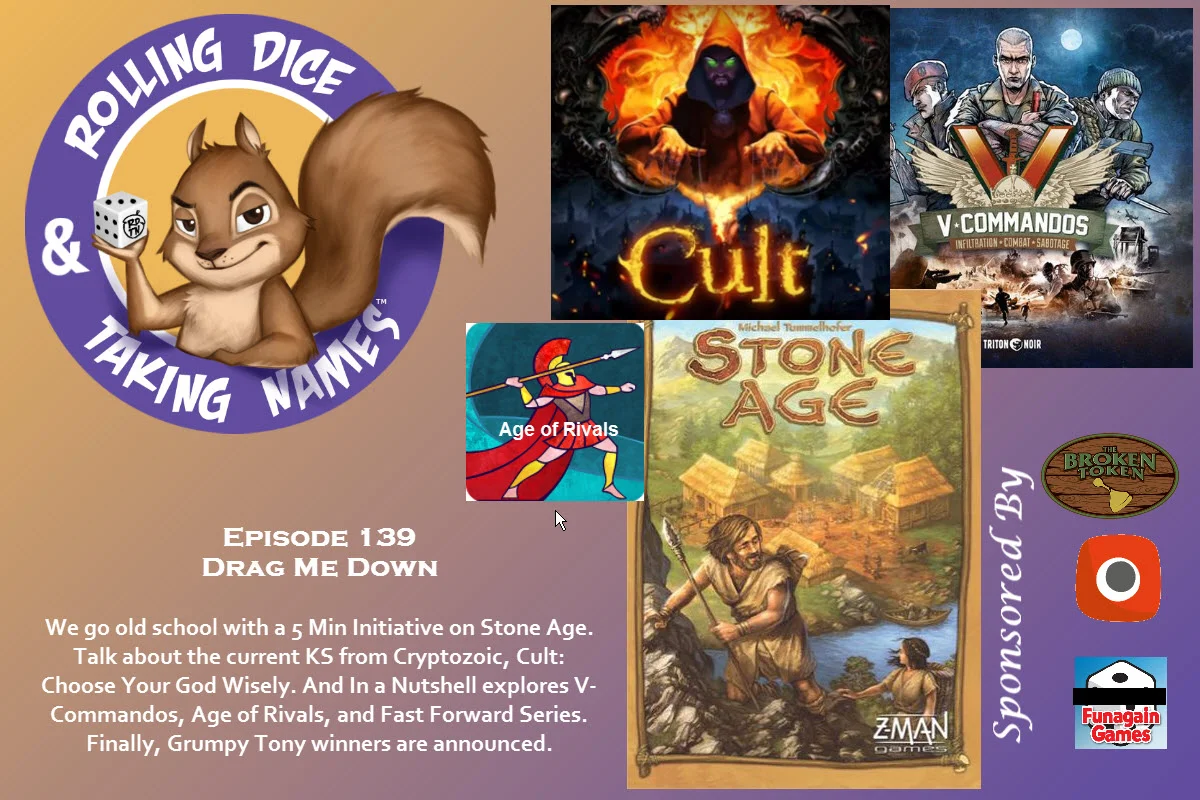
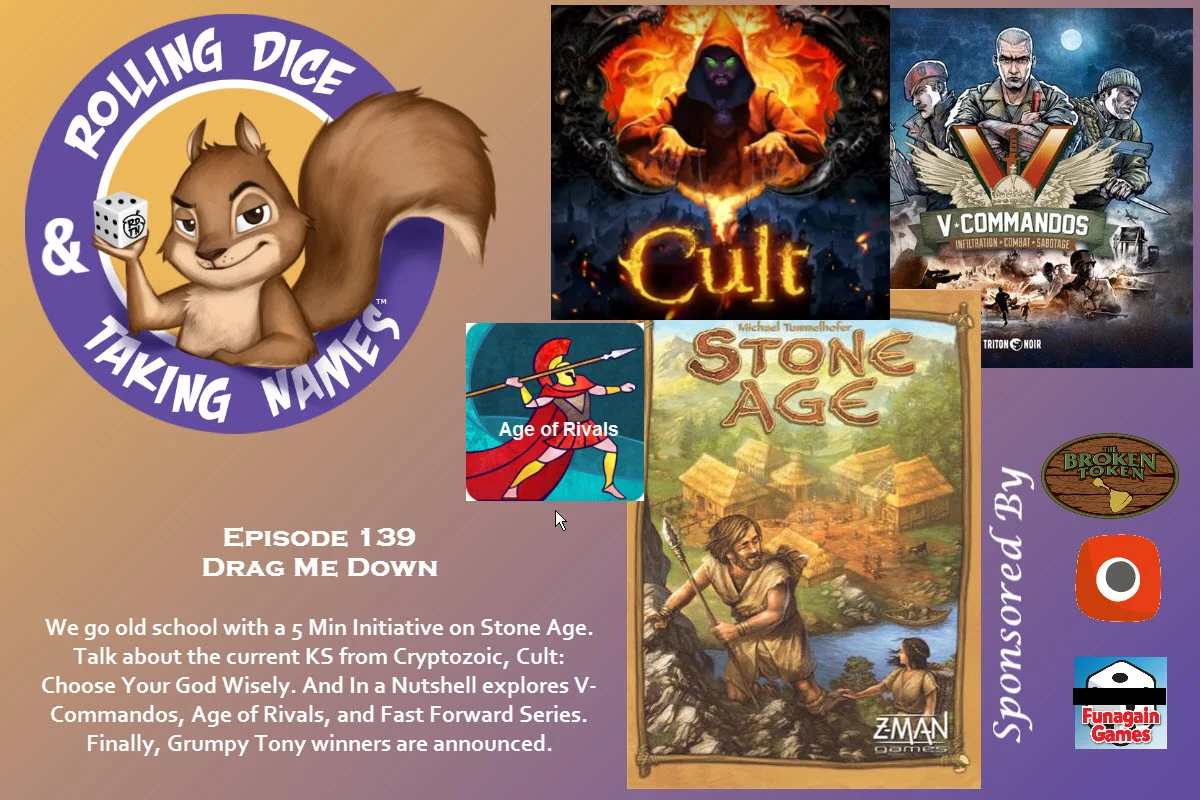 RDTN Episode 139 ranges from a familiar worker-placement favorite to a new take on cosmic conflict, with a listener-requested look back at older games anchoring the discussion. The hosts revisit Stone Age, consider what makes it a useful step for newer board gamers, and debate whether its resource-gathering decisions and table presence are enough to make it a favorite. Along the way, they cover Cult: Choose Your God Wisely, several other games, and the news that Funagain Games was closing its online store after 15 years.
Stone Age gets a fresh look
The episode’s “5 Minute Initiative” segment focuses on older titles, following requests from RDTN listeners. Stone Age is the first game under review, and one host makes no secret of being fond of it. The wood dice and leather cup give the game a tactile personality, but the appeal goes beyond the components: collecting resources involves a push-your-luck decision that adds tension to each turn.
That uncertainty is also part of why the host sees Stone Age as a useful next step for people new to board games. It introduces more decisions than a very simple introductory game, while keeping the central activity easy to grasp: send workers to gather what the group needs, then weigh the potential reward against the risk of coming up short. It’s the sort of mechanism that lets players feel the pressure of a choice without requiring a long rules explanation.
Marty disagrees with that assessment and tries to make the case for a different view of the game. That contrast gives the segment its energy. A familiar title can play quite differently depending on what a group enjoys: one player may value the resource gamble and satisfying components, while another may find those features less persuasive. The hosts also point to the game’s “love shack,” a memorable detail that adds a bit of humor to the conversation.
Cult brings rivalry and several routes to a win
The hosts have also tried Cult: Choose Your God Wisely, a crowdfunding project from Cryptozoic. Its premise puts players in competition to bring the Elder gods into the world, with each trying to ensure that their own god is the one that brings about the end of everything. The episode presents it as a possible fit for groups that enjoy area control, more than one path to victory, and the willingness to betray a friend’s plans.
Those ingredients point toward a game where watching the board and reading the other players matter as much as pursuing a personal plan. Multiple routes to victory can give players room to change course when a favored approach is blocked. Area control, meanwhile, makes position a shared concern: a move that strengthens one player may force everyone else to respond. And with backstabbing part of the appeal described by the hosts, alliances may be useful without being dependable.
The episode recommends that interested listeners watch videos on the project’s page before deciding whether it suits their table. That’s sound advice for a game built around direct player conflict. A quick look at how turns work and how control shifts can help a group judge whether it wants a tense contest, a more measured strategic puzzle, or something in between. The hosts’ discussion gives the broad hooks, but the project page is the place to check the play in action.
More games and conversation from the episode
Episode 139 includes a broad run of shorter topics alongside its main game discussions. The schedule moves through Game Night, another look at Pulsar 2849, the Golden Geek nominees, and a conversation about Kickstarter and its effects on the hobby. It also includes a Man vs. Meeple mention, a Mayfair topic, and a discussion of a cheater-focused version of Monopoly.
The “In a Nutshell” portion brings in Age of Rivals and the Fast Forward series, followed by V-Commandos and Portal. That mix gives the episode a useful snapshot of the hosts’ interests: quick reactions, revisits, and coverage of different styles of tabletop play. Listeners can use the time markers below to jump to the subjects they care about, whether that’s a particular game or one of the broader hobby conversations.
Funagain closes its online store
The hosts close on a sad piece of news for the show and its listeners: Funagain Games was shutting its online doors. They say they learned about the change by email and note that the retailer had supported RDTN and its giveaways. After 15 years, Funagain decided to change its business model and move to brick-and-mortar stores.
For listeners who had followed Funagain through the show, the change marks the end of a familiar online presence. The hosts’ reaction is personal as well as practical: a retailer that had helped support the program was changing direction, and they wanted to acknowledge what that relationship had meant. Their comments keep the focus on the people and community around the hobby, rather than treating the change as just another item on the episode’s rundown.
Episode guide and links
The timestamps below are retained from the episode guide. They offer a direct route to its discussions and the linked games, organizations, and other references.
Intro, 00:35
Social Media, 04:50
Game Night Movie, 06:15
Wardrobe, 9:45
Pulsar 2849 Again, 11:45
Thank you BGG Nomination, 14:25
Kickstarter Hurting Us, 16:15
Man vs. Meeple Shameless Plug, 19:25
Mayfair, 21:30
Cheater’s Monopoly, 26:00
In a Nutshell, 28:35
Age of Rivals, 28:55
Fast Forward, 33:08
V-Commandos, 37:08
Portal, 43:46
Old Games and Us, 45:14
Stone Age, 46:28
Cult: Choose Your God Wisely, 52:00
The Broken Token, 01:06:39
Grumpy Tony Winners, 1:07:34
Outro, 1:12:15
Funagain, 1:17:05
The strongest reason to tune in is the contrast between a warm revisit to Stone Age and a first look at Cult’s sharper player conflict. For groups choosing what to play next, the episode’s useful thread is how different tables respond to risk, interaction, and the freedom to change plans midgame.


