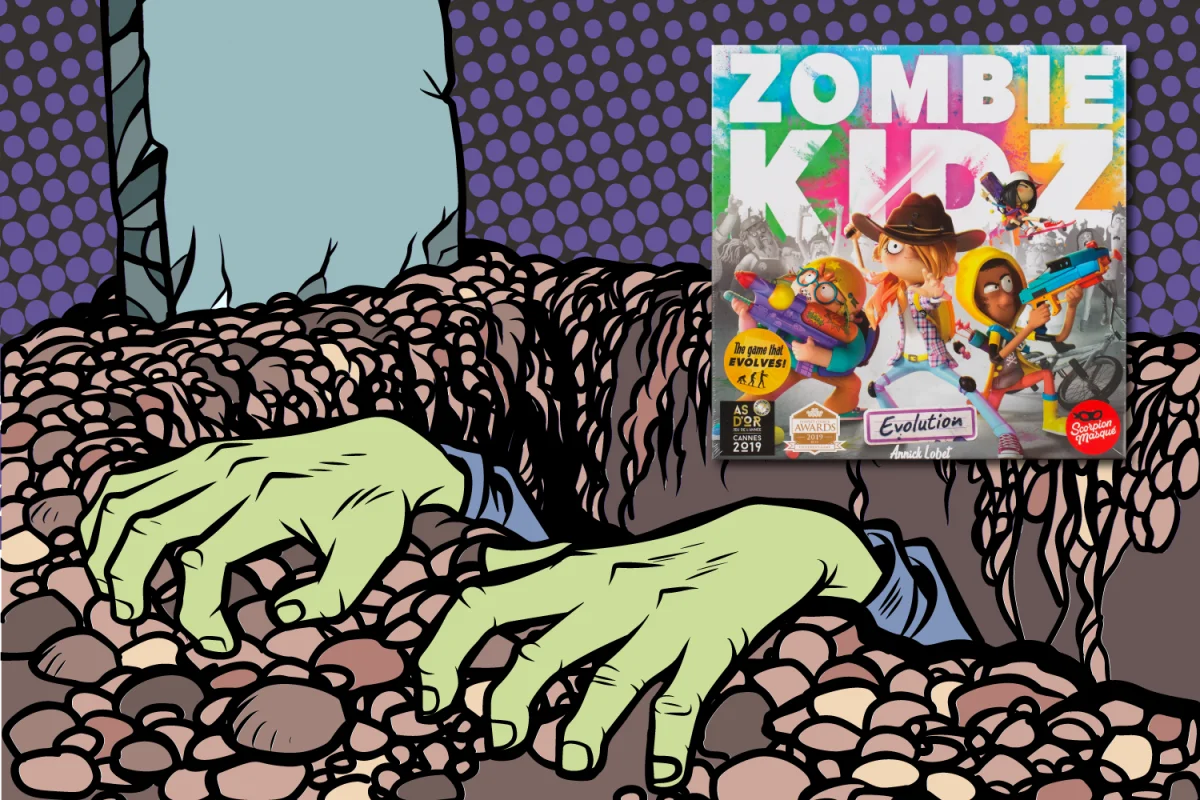
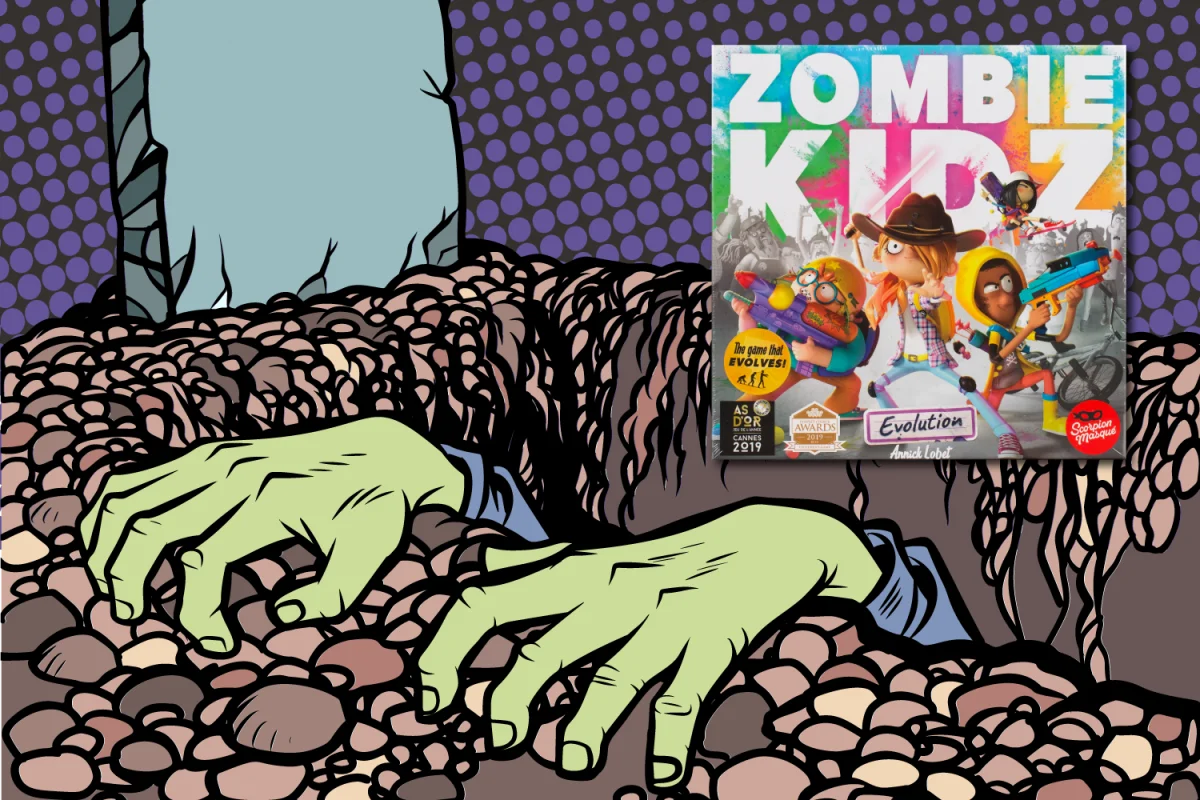
Zombie Kidz Evolution Review: A Family Legacy Game That Grows With Every Round
Story by Nick T · 886 readers
Zombie Kidz Evolution pairs quick, cooperative school rescues with sticker rewards and new twists. Its envelope reveals keep kids eager to play.
Disclosure: The reviewer received a copy from Coiledspring Games. The gift did not affect their opinion.
Zombie Kidz Evolution turns a family co-op into a small, unfolding adventure. Each round asks players to clear zombies and secure a school entrance; progress stickers track wins and losses, while sealed envelopes add abilities, rules and fresh challenges. That steady stream of discoveries gives children a reason to return, even when the basic turn is deliberately simple.

Designed by Annick Lobet and published by Scorpion Masqué, the game is for 2 to 4 players. The reviewer recommends it for ages 7 and up, while the publisher’s recommended age is 5 and up. The listed playing time is 10 minutes, with one minute for setup and packing away; the listed RRP is £21.99.

A quick rescue with a shared goal
Players work together to lock all four school gates before zombies overrun the building. The board has two sides: a night setting for two players, with more space between rooms, and a day setting intended for three or four players that is harder to navigate. Each player takes one of the four characters, and zombies begin at the entrances.

On a turn, roll the custom die. If it shows a colour, add a zombie to the matching room; a blank lets the team off that step. Then move one space and remove up to two zombies from the room where you land. Three or more zombies in one room block it, so the team has to keep routes open as it makes its way around the school.

Players can also meet at a gate and give each other a high five to lock that entrance. It’s a compact set of choices: the die brings some luck, but movement and cleanup give the group room to plan together. The shared win or loss makes the game welcoming for children who might find direct competition less fun.

Stickers make each session part of a longer game
After every round, players place a sticker in the rulebook journal whether they won or lost. Challenges give the group another target to pursue; completing one while winning earns a trophy sticker instead of a brain sticker. After roughly every five stickers, the players open an envelope, which may introduce a hero ability, a zombie power, a rule adjustment or more challenges.

The envelopes are the game’s strongest hook. The reviewer describes the anticipation of opening one as a reason the family often played several rounds in one sitting, especially early in the progression. Once the group completes 55 rounds, it opens the final envelope and is left with a version that can be played again.

That structure also shapes the game’s pace over time. The first reveals arrive often enough to make the journal feel lively, while the wait between later envelopes can drag a little. The reviewer felt that more challenges in the later stretch might have helped keep each round feeling fresh. Since stickers are awarded after losses as well as wins, some families may also want to agree on a house rule that ties sticker progress to victory, extending the journey.

Keep character choices flexible
One practical point matters when playing with children: the heroes gain their abilities at different points in the progression. The reviewer cautions against having each child claim the same colour or character every time, because one player may unlock a power much earlier than another. A child attached to a particular hero could feel left behind while someone else gets a new skill first.

Rotating characters can help the group share those moments. It’s a small table habit, but it addresses a particular wrinkle in a game designed to make progress visible and exciting for young players. The reviewer’s own children, aged 6, 10 and 13, all enjoyed different parts: the youngest loved the envelopes and stickers, while the older players praised the changing game and the artwork.

Easy turns, less immediate rules
Once play gets underway, the turn sequence and objective are accessible enough for the reviewer’s six-year-old to understand. Learning the game takes more work than playing it, though: the reviewer found that the rulebook didn’t get the family moving quickly, and later additions meant the rules needed attention as the game changed. One new rule was particularly confusing at first.

The components help set the mood. The character standees have personality, and the custom die adds a playful touch. The board, cards and zombie manual also drew praise, with the board’s details singled out by one of the children. Still, the envelopes are the standout physical feature: opening them is a satisfying moment that brings the game’s gradual changes to life.
The player limit is another consideration. With room for up to four, a five-person family will need to pair up or have someone sit out. The reviewer sometimes played with two children before bedtime, fitting one or two rounds into a 10-to-15-minute session. The quick format made it easy to stop without turning the game into a long evening commitment.
A strong family pick with a defined audience
The reviewer’s verdict is that Zombie Kidz Evolution is a simple, luck-leaning cooperative game that works particularly well as a family activity. The evolving rules give repeat plays a sense of momentum, and the group succeeds or fails together. The sticker trail and surprise envelopes are especially effective for keeping children interested between sessions.
It’s designed with kids in mind, and the reviewer wouldn’t choose it as a game for adults alone. Its lasting appeal will also depend on a family’s collection: after finishing the progression, the reviewer expected to play it only a handful more times, while noting that households with fewer games might return to it more often. The game remains playable after all 55 rounds, which gives the family a complete experience rather than a campaign that ends with an unusable box.
For a short, cooperative game that gives children visible progress and a shared problem to solve, the key takeaway is straightforward: let players trade characters as the envelopes unlock new abilities, and enjoy the surprise of each reveal together.