Silver, Star Wars: Outer Rim and Nagaraja Bring Three Different Kinds of Strategy
Story by Tony McRee · 658 readers
A quick card game, a spacefaring strategy game and a sharp two-player duel reward repeat plays in different ways.
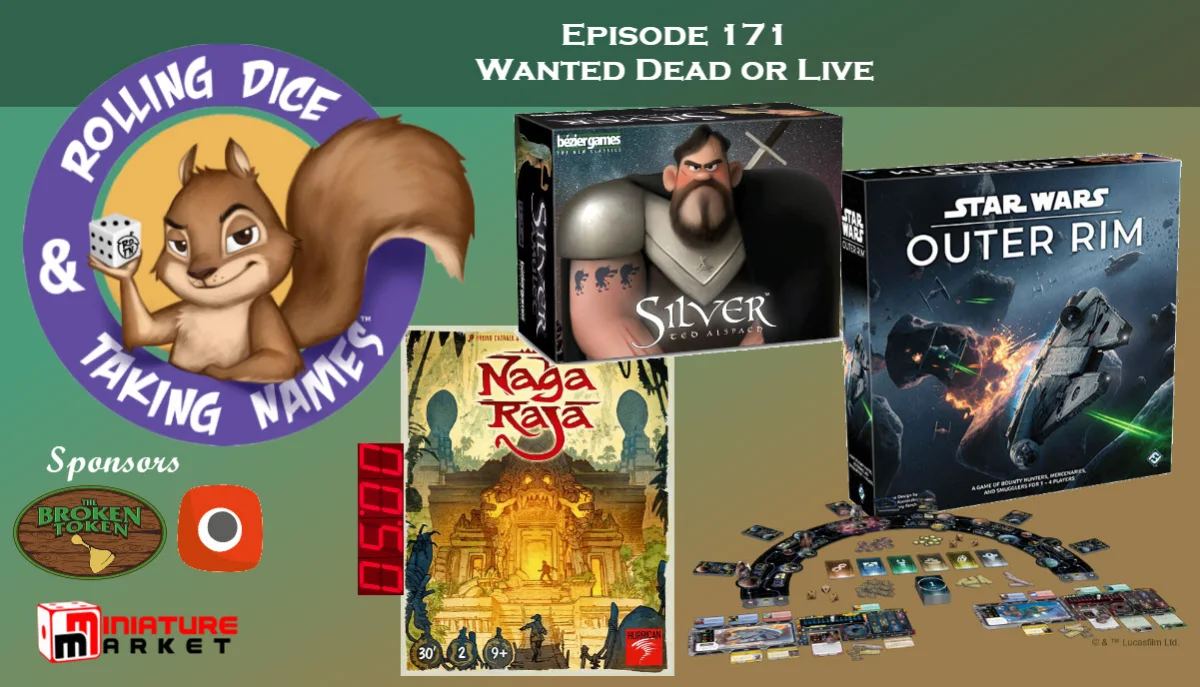
 Three games can leave very different things on the table after a first play: a quick rematch, a fresh plan for next time, or a string of small decisions you’d like to reconsider. This episode of RDTN spends time with all three. Silver offers a familiar card-game shape with more interaction, Star Wars: Outer Rim grows on players as they learn its possibilities, and Nagaraja makes each choice in a two-player contest feel consequential.
Silver adds tension to a familiar card game
Silver, from Bezier Games, starts from a structure the hosts compare to Golf. That familiarity makes it easy to bring to the table, but the card actions and the option to replace two or more matching cards with a single card give players more to consider than the basic comparison might suggest.
Those additions change the feel of a simple card game. Players aren’t only watching their own cards and waiting for a favorable moment; actions and swaps create points of interaction, and the timing of a decision can matter. The result, in the hosts’ view, is a compact game with a useful mix of strategy and tension. It doesn’t ask for a long rules explanation before the table can get started, yet it gives players a reason to pay attention to what others are doing.
That combination makes Silver a practical choice for the gaps that show up during a game night: while someone is running late, between longer games, or at the end of the evening when the group wants another round without a major setup. Its strongest selling point in this discussion may be how readily it invites a second play. A quick game is easy to fit in; a game that leaves players keen to try again can keep the table going longer than planned.
Outer Rim rewards familiarity
For Star Wars: Outer Rim from FFG, the hosts bring in the Scurry to help discuss the game. Their reaction shifted over time: the first play didn’t immediately win them over, but later reflection revealed that they were still learning what the game could offer.
That distinction matters when a game’s appeal rests partly on players understanding their options. After a session, the hosts found themselves looking back at choices and considering how a different tactic might have changed the experience. Those thoughts point to a game that can open up with familiarity: players begin to recognize opportunities they missed, and their plans can become more deliberate as they learn how different decisions shape play.
It’s a familiar pattern for strategy games that ask players to assess several possibilities at once. Early sessions can feel less rewarding when the group hasn’t yet built a sense of which approaches are worth pursuing. Later sessions can bring a more engaging set of questions: when to commit to a plan, when to adjust it, and which earlier decision set up the current position. The hosts’ read is that Outer Rim becomes more compelling as players gain that knowledge. If the first game feels like an introduction, the next one may be where the strategic conversation really starts.
Nagaraja makes small choices count
Nagaraja from Hurrican Games is the episode’s recommendation for players looking to add a two-player game to their collection. The hosts describe it as easy to teach, with decisions that can carry consequences well beyond the moment they’re made. That gap between a straightforward introduction and a demanding set of choices gives the game its particular appeal.
After a play, it’s tempting to revisit earlier moves and imagine a better line. Even a seemingly minor choice can affect what follows, so the game encourages players to stay alert without asking them to learn a difficult rules system first. That makes it a promising fit for pairs who enjoy discussing what they could have done differently, then testing a new approach in another round.
The reviewer compares Nagaraja favorably with The Rose King, a useful point of reference for readers considering a head-to-head game with meaningful decisions. The comparison also captures the reviewer’s enthusiasm: Nagaraja isn’t presented as a daunting puzzle, but as a fun game whose consequences become clearer as you play. For groups with two players available, that combination of approachable rules and room to rethink tactics is the key draw.
Three games, three reasons to return
The episode’s play list moves from Silver’s quick, interactive card play to Outer Rim’s developing strategic possibilities and Nagaraja’s concentrated two-player decisions. Each game offers a different reason to revisit the table: Silver makes another round easy to propose, Outer Rim rewards knowledge gained across plays, and Nagaraja turns reflection on individual choices into fuel for a rematch.
The show notes also point listeners toward the video game Hall of Fame nomination page and Level3B’s Game Canopy project. The episode timeline places Silver at 10:20, Star Wars: Outer Rim at 27:51 and Nagaraja at 1:07:29, giving listeners a direct route to each discussion. For game groups choosing what to play next, the clearest takeaway is to match the game to the evening: a short filler, a strategy game that improves with familiarity, or a thoughtful duel for two.


