Chronicles of Avel Review: A Tense Family Quest with a Clever Backpack
Story by Nick T · 525 readers
Explore, gear up and defend Avel in a family co-op where dice battles, shared equipment and a packing puzzle keep the Beast at bay.
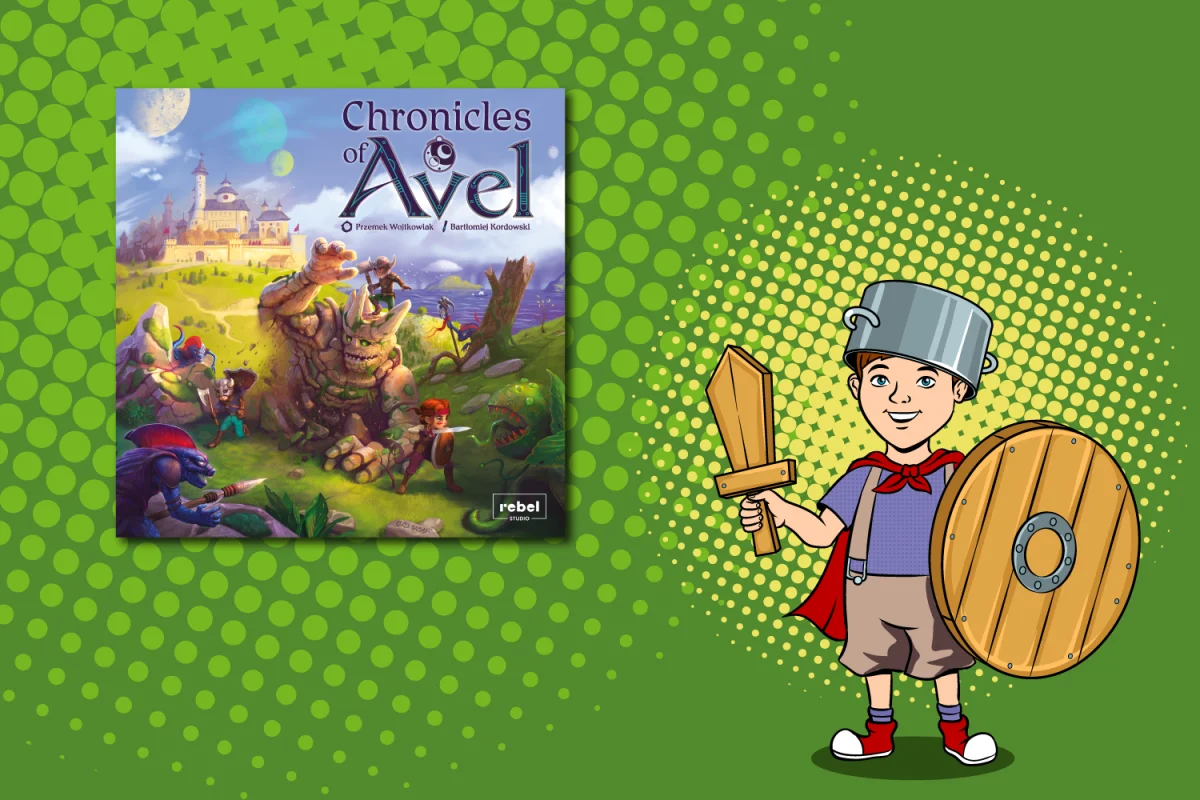
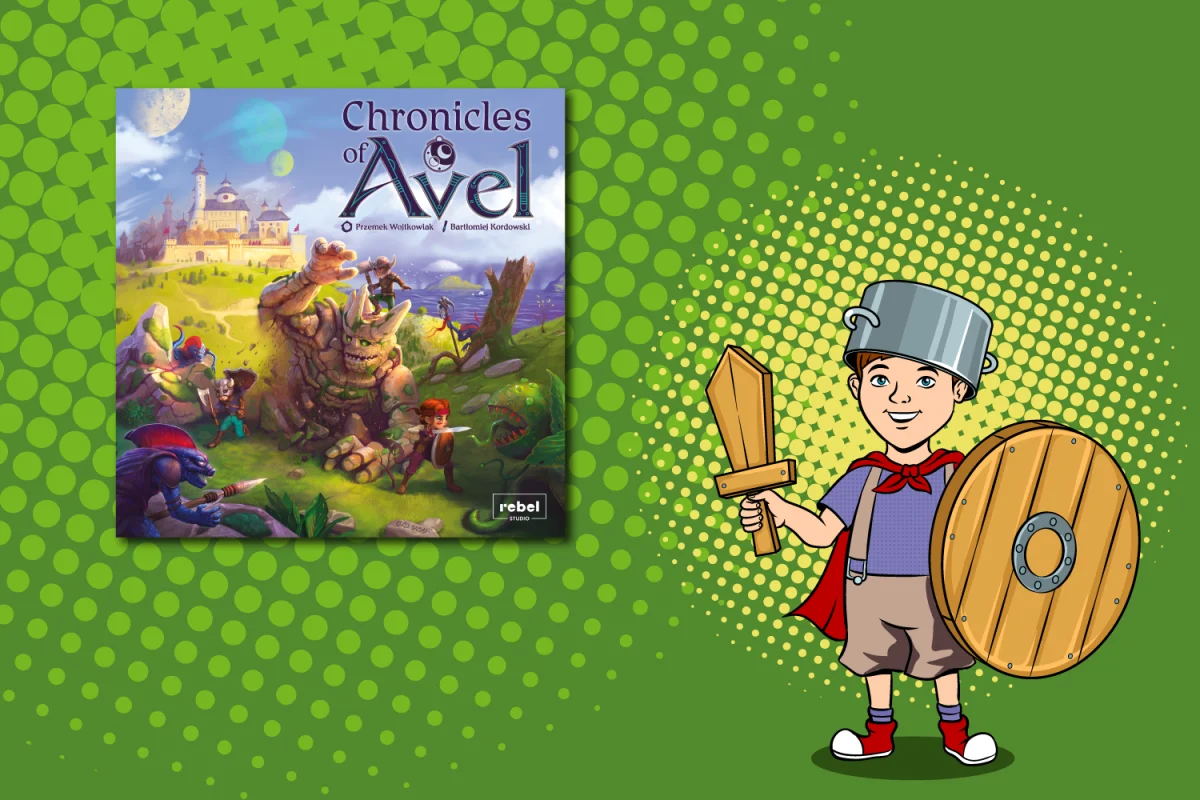
Chronicles of Avel gives a family co-op a satisfying rhythm: explore first, then scramble to defend the castle when the Beast arrives. The dice fights are the obvious draw, but the decisions around equipment, time and what each player can carry are what make the journey work. It’s a strong next step for families who already enjoy cooperative games and want a little more to coordinate.
The game was gifted by Rebel Studio for review; that didn’t affect the reviewer’s opinion. Its standout physical idea is a backpack printed on each player board: equipment and coins have to fit inside the recessed space. That simple limit makes every reward a choice. The game supports one to four players, takes about 75 minutes to play, and lists a 4-minute setup and takedown time. Designer: Przemek Wojtkowiak. Publisher: Rebel Studios. RRP: £42.99. The reviewer recommends it for ages 8+, while the publisher recommends 7+.


Make a hero before game night
The opening task is a welcome excuse to get creative. Each player can colour in an outlined character sheet and design a coat of arms. The box also includes a name picker: roll two dice onto a double-sided card in the lid, then use the symbols to come up with a character name. The reviewer recommends doing this part ahead of the first session, so the group can move straight to the game once everyone has finished their hero.
The main setup starts with selecting the tiles for the player count and laying them out in one of the patterns shown in the rulebook. The chosen layout changes the challenge, giving groups a way to adjust the map’s difficulty. Place monsters as directed, give each player a colour-matched mat and character, and fill the heart spaces with wooden health tokens. Put every player meeple on the castle tile, choose who goes first, and set the dice and tokens within reach.


Explore, prepare, then hold the castle
Chronicles of Avel unfolds in two phases. In the first, players explore the modular map, encounter monsters and gather what they’ll need for the coming fight. Armour and potions improve a hero’s chances in battle; wall sections and traps help shore up the castle. Players have limited room for spare gear and coins, so the backpack matters from the start.
After a set number of turns, a meteor hits the map. The Beast appears alongside additional monsters, and the game shifts into a defence. Every monster moves toward the castle. The group wins by defeating the Beast and clearing the other monsters; if even one reaches the castle tile, everyone loses.
On a turn, a player takes two actions. They can move, use the ability of their tile, rest to recover hearts, or fight a monster. The same action can be chosen twice, which gives players room to focus on a particular need. The central question is how to spend those turns before the meteor falls: collect useful gear, improve the route to the castle, or take a fight that might provide a needed upgrade.
Combat uses dice. The number and types rolled depend on the hero’s upgrades, with armour and potions improving the player’s roll. Monster discs show the dice each creature uses, keeping its side of the fight easy to resolve. Defeating monsters can earn equipment: a player draws it from a bag, so the reward is unknown until it’s pulled.

The pressure comes from what you can’t do
The first phase gives monsters a passive role, so players can move past them without provoking a fight. There’s still a good reason to take them on: victories bring useful bonuses. But every defeated creature may be replaced by another unless players use a special action to block that tile. That ability becomes especially useful when monsters are appearing close to the castle.
This creates a fine balancing act. Fighting early can improve a character, but it can also mean another creature takes the monster’s place. Meanwhile, the timer keeps advancing toward the meteor. There’s rarely enough time to do everything the group would like, so reading the tile layout and agreeing on priorities counts as much as rolling well.
Sharing equipment is part of that teamwork. The item one player wants may be more useful in someone else’s hands, and making that choice for the group’s benefit gives younger players a practical lesson in cooperation. The reviewer also describes the challenge of keeping discussion collaborative when children are at the table: it’s easy for one player to start directing everyone else’s moves. The game works best when planning stays a group activity.
The reviewer’s family found their games close, with a couple of wins or losses hanging on the last roll. They won each game they played, but not without tension. That balance feels well judged for a family co-op: players have a real chance to succeed, while the final turns can still feel uncertain. Tile layouts, the meteor and the Beast’s starting health all offer ways to vary the difficulty.
With four players, a game takes about an hour according to the review’s play experience, while the listed playing time is 75 minutes. The reviewer would have welcomed a fifth player for a family of five, though the box supports up to four. A longer game with another player seemed manageable to them, but no fifth-player option is included.


A backpack with real table presence
The backpack is the game’s most memorable bit of design. Players can keep only the coins and equipment that physically fit flat inside the space on their boards. If an item won’t fit, it has to go. That turns a familiar inventory limit into a hands-on puzzle: rotate and arrange the pieces, decide what to keep, and make room for the next find.
The dual-layer boards hold the heart tokens neatly in place, and the character sheets let players personalise their heroes. The board tiles look attractive once revealed and assembled into the map. Their backs, however, don’t form a continuous pattern while the tiles are face down. The reviewer’s 11-year-old son objected that they “don’t match up.” It’s a small visual quirk, but it stands out during exploration.
The custom dice come in distinct colours and are enjoyable to roll. The meeples have a distinctive shape and include stickers for both sexes; the reviewer generally dislikes stickers, but found the small number here easy to live with. The monster tokens also look good. Assembly was less smooth: the health dial and Beast were tight to put together, and the Beast standee slots scuffed its paper surface.
The rulebook covers the rules and includes an appendix with the setting’s backstory and information about the monsters. The reviewer found there was a fair amount to take in, and recommends reading the rules before teaching the game to children. Their son enjoyed learning about the creatures. One small missed opportunity: a monster-drawing chant appears on page 7, but the reviewer would have liked it on a reference card where everyone could see it during play.


How the family found it
The children’s reactions point to the game’s broad appeal. Max, age 7, enjoyed the art, monsters and character creation, and thought the mini-boss resembled Galactus from Marvel and Fortnite. George, age 11, liked the artwork, working out how to defeat monsters, reading about them and creating a hero. Harrison, age 14, enjoyed choosing different paths toward victory, including focusing on traps or upgrading weapons.
That range of interests is useful in a family game. One player can look for tactical ways to handle monsters while another takes charge of preparation or equipment. The shared objective gives those different priorities a common purpose, and the frequent discussion keeps players involved while someone else resolves a fight. The reviewer’s group even let another player roll the monster dice during an attack to keep the table engaged.


Verdict: a rewarding step up for co-op families
The dice battles would risk feeling repetitive on their own. The preparation phase gives them purpose, asking players to decide which fights are worthwhile and what the team needs before the Beast arrives. The bag draw adds a fun reveal to successful combat, while the backpack makes each new piece of equipment a small space-management decision.
The reviewer sees stronger choices for a family’s first cooperative game, naming Forbidden Island as an easier entry point. For a group that already knows co-op games and wants more to plan, Chronicles of Avel is an appealing next step. Its close finishes, adjustable difficulty and inviting components make it easy to see why the reviewer’s family wanted to return to Avel.
The review lists an overall score of 4.1 and notes that the game was entered into the Board Game Review Hall of Fame. Its key strengths are the backpack puzzle, character creation, dice combat and difficulty options. The main drawbacks are the four-player limit, fiddly assembly for the Beast and health dial, and mismatched tile backs.

This game has been entered into the Board Game Review Hall of Fame.
For other cooperative adventures, the source also suggests Forbidden Island, Horrified, Pandemic and Heroes of Tenefyr.

For players choosing a family co-op beyond the beginner tier, the useful question is whether the table enjoys shared planning as much as rolling dice. Here, both matter: the dice provide the excitement, and the limited time and backpack space give every turn a decision to chew on.