RDTN Episode 209 Reviews Tellstones, Tammany Hall and More
Story by Tony McRee · 679 readers
Episode 209 weighs in on memory games, area control and fresh clan interaction, with Tammany Hall, Tellstones and several expansions on the table.
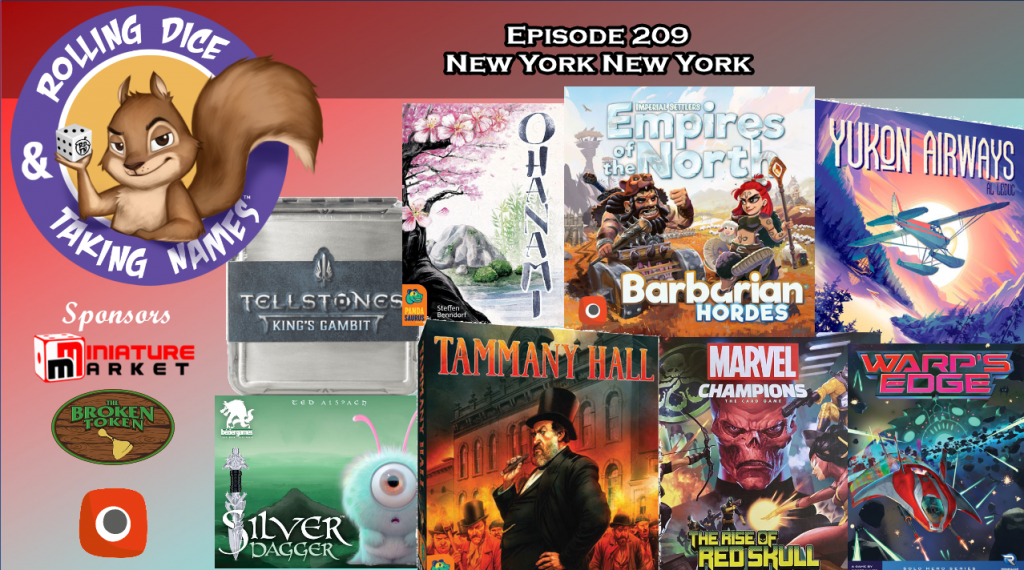
Episode 209 moves across a wide range of tabletop games, but its clearest thread is how familiar mechanisms feel when a group gets them to the table. The hosts discuss memory challenges in Tellstones and Silver Dagger, the social pressure of area control in Tammany Hall, and the added player interaction in Empires of the North: Barbarians. Their impressions are grounded in what happened at their table, including a three-player session that didn’t bring out the backstabbing they associate with Tammany Hall.
Memory games, with different kinds of pressure
Tellstones is the first major review discussed in the episode. Marty points to conversation around the game’s reviews, then brings the focus back to the experience: it’s a memory game built around short sessions and a challenge to short-term recall. The hosts recommend weighing that kind of play against your own tastes. If quick memory games appeal to you, Tellstones may be worth a look; if that particular challenge doesn’t sound enjoyable, the central appeal may not land.
That assessment is personal rather than a claim that the game will work for every group. The hosts say both of their wives enjoy this style of game, a useful reminder that table preferences can vary even among people who play together often. For prospective players, the practical question is whether a compact memory challenge sounds like a fun shared activity. The episode offers that as its main lens for judging Tellstones, rather than relying on review sentiment alone.
Silver Dagger also returns to memory play, but the hosts see the expansion as a return to the Silver line’s roots. They like the direction, and suggest that some of its cards could be brought into the original set to create even more mayhem. That’s a promising kind of expansion for players who already enjoy the base game’s tension: it adds material that appears to intensify the familiar experience instead of steering it somewhere unrelated. The episode doesn’t detail individual cards, so listeners looking for specific combinations will need to hear the full discussion.
Tammany Hall at three players
Tammany Hall is an older game that the hosts only got to play with its re-release. They describe its actions as simple, with a strategy that feels gentle and approachable. That combination helps explain why the game has become a favorite for many players, in their view: a clear set of actions can support thoughtful choices without requiring a sprawling rules framework.
The session also came with a caveat. The group played with three people and didn’t encounter the backstabbing they expected. That doesn’t establish how the game behaves at other player counts, but it does make player count a useful consideration for anyone deciding when to bring it out. The hosts’ impression is that Tammany Hall’s area-control appeal is worth exploring, while the sharpest social friction they anticipated didn’t surface in this particular game.
There’s a memory demand, too: players need to remember what the available actions are. That’s a small but practical point for teaching and play. A group may want to keep the action options visible or take time to get comfortable with them before focusing on strategy. The hosts’ description suggests that the rules are simple in shape, while remembering the choices remains part of playing well.
More interaction in Empires of the North
Empires of the North: Barbarians earns a positive reaction for bringing more interaction to the table. The hosts contrast the clans with a style of play where everyone keeps their head down and handles their own plans. Here, the new clans create more contact between players, which gives the expansion a distinct reason to revisit the game.
For groups that want their turns to matter beyond their own boards or plans, that shift can change the feel of a session. The episode doesn’t spell out the clans’ abilities or describe a full turn sequence, so the takeaway is focused on the experience: the Barbarians clans made the game feel more interactive to these players. That’s the point to listen for if you’re weighing the expansion against a more solitary style of play.
A packed episode beyond the main reviews
The episode’s running order covers more than the games discussed in detail here. The hosts also list Yukon Airways, Marvel Champions: Rise of Red Skull, Ohanami and Warp’s Edge, alongside a segment about The Broken Token and discussion of Toy Hall of Fame nominees. Portal Games also appears in the rundown. These timestamps offer a useful route through an episode that runs past an hour and a half, whether you’re listening for a specific title or settling in for the whole show.
The listed segments begin with Tellstones at 19:00, followed by Silver Dagger at 29:00 and Yukon Airways at 36:00. Marvel Champions: Rise of Red Skull follows at 41:22, with Ohanami at 44:51. Empires of the North: Barbarians starts at 51:44, Tammany Hall at 1:12:04, and Warp’s Edge at 1:27:18. The show also flags a “False start” penalty and asks listeners to pay attention near the end, giving the episode a bit of its own table-talk character.
The most useful takeaway is that the hosts judge each game by the kind of interaction and attention it asks from their group: memory pressure in Tellstones and Silver Dagger, remembered actions and area control in Tammany Hall, and more direct engagement in Barbarians. Those impressions make the episode a good guide to which table experiences might suit your group, while the full discussion has the rest of the lineup and the hosts’ longer reactions. Listeners can also subscribe to the Discord channel.