RDTN Episode 270: Tiletum’s Dice Decisions and Neuroshima Hex: Pirates
Story by Tony McRee · 701 readers
Episode 270 digs into Tiletum’s resource tradeoffs, Neuroshima Hex: Pirates’ moving HQ, and the app-free puzzles of Unlock! Kids.
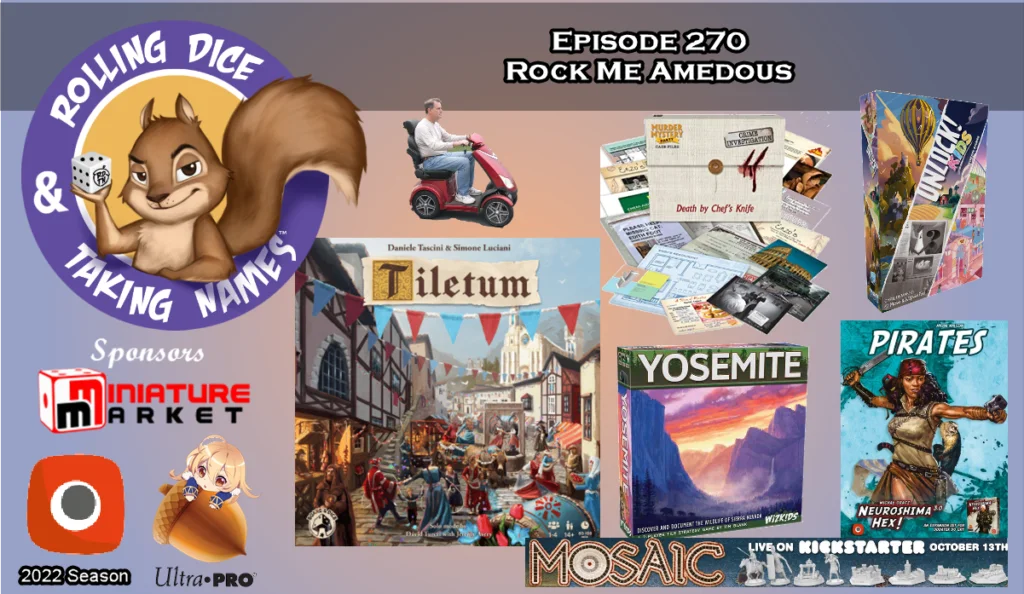
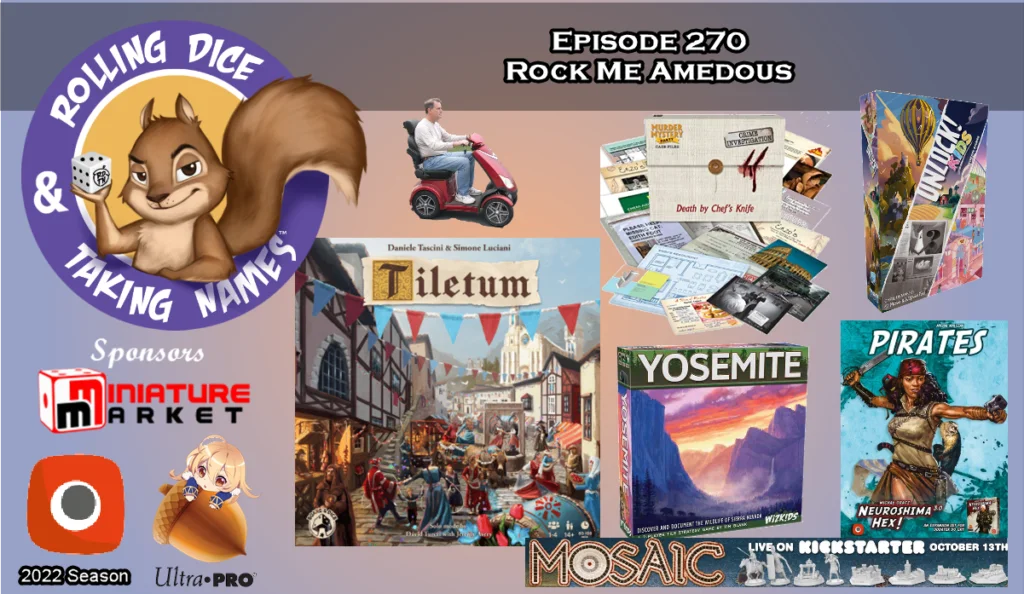
Tiletum anchors this episode with the kind of dice choice that asks you to plan beyond the turn in front of you. The hosts discuss the new Board & Dice game after seeing it at Gen Con and finally getting it to the table. Its central tension, as they describe it, is deciding whether to spend resources to take actions or give up actions to gain resources. That tradeoff makes the game’s choices feel connected: a decision that looks useful now can shape what options remain in a later round.
The episode also looks at a new faction for a longtime favorite. In Neuroshima Hex: Pirates, the HQ moves around the board’s outer edge alongside some units. That changes how players need to think about positioning and about reaching the Pirate base. The discussion rounds out with lighter games, including Unlock! Kids, whose enjoyable puzzles don’t require an app.
Tiletum: choices that reach beyond the current turn
The appeal of Tiletum, in the hosts’ account, starts with its dice selection. Taking a die isn’t simply a matter of choosing an action and moving on; the selection connects action access with resources. Spending to act can leave fewer resources available, while choosing resources can mean passing up an action you might want. The game’s planning comes from weighing those options together.
That decision-making reaches across rounds, too. The hosts describe a scoring round that may tempt players to focus on immediate points, but there are moments when it could make sense to let that opportunity go and prepare for the next one instead. That gives the question more weight than “What can I do this turn?” Players also have to consider whether the current payoff is worth the resources and attention it demands, and what their choices will leave them able to do later.
There’s no promise here of an easy route through those tradeoffs. The hosts call Tiletum a thinker, in keeping with their experience of the “T” games. Their excitement comes from the planning the dice system asks of them, including decisions about future rounds, rather than from a single standout move. For players who enjoy comparing a near-term opportunity with the shape of a later turn, that’s the main reason to listen to the longer discussion.
Neuroshima Hex: Pirates changes the approach
Neuroshima Hex is one of the hosts’ favorite games, so a new faction gives them a chance to see what Portal Games has added to a familiar table experience. The Pirates bring a positional twist: their HQ moves around the outer edge, and some units move with it. That means the base doesn’t stay in one spot while the rest of the board develops around it.
For the player trying to hit the Pirate HQ, that movement calls for a different plan. The hosts describe it as a shift in how players think ahead, rather than a leap into a wholly different level of complexity. They specifically stop short of calling it “3D chess.” The useful takeaway is that this faction asks opponents to track where the HQ can go and consider how their own positioning will work as it moves.
The recommendation is aimed at people who still bring Neuroshima Hex to the table: the hosts think the Pirates are worth considering as an addition to the set. Their interest comes from seeing how the faction’s moving HQ changes the familiar challenge of reaching the base. The episode doesn’t provide a full rules breakdown, but it does make clear where the new faction’s difference lies and why that could refresh play for people who already know the game.
More games and topics in the episode
The hosts also call attention to Unlock! Kids, which they found enjoyable even as older players. They like that it doesn’t need an app, a practical detail that sets this experience apart for anyone who prefers puzzles that can be played without a phone or tablet. The episode offers a reason to give it a listen, though it doesn’t spell out the puzzle structure or individual scenarios.
Other board game segments include Yosemite and a University Games murder mystery item. The schedule also points to a Kickstarter discussion for Mosaic, Renegade Games news, and time spent with Miniature Market and Ultra Pro. These appear in the episode alongside non-game conversation, including football-shaped food, a scooter, an escape room and DIY garage door repair.
Here’s the thread connecting the featured games: each segment focuses on what changes at the table. Tiletum asks players to balance resources, actions and scoring across rounds; Neuroshima Hex: Pirates shifts the target players need to plan around; and Unlock! Kids offers an app-free puzzle experience the hosts enjoyed. For listeners choosing where to start, Tiletum gets the longest discussion, while the Pirates segment is the one to seek out for a concise look at a new faction’s effect on a familiar game.
Episode guide
00:00:33 Intro
00:02:51 Football Shaped Food
00:05:10 Ewin Chair – Code RDTN for 30%
00:15:15 Scooter
00:17:00 Escape Room
00:21:04 DIY Garage Door Repair
00:27:08 Yosemite
00:30:42 Unlock! Kids
00:37:21 Kickstarter: Mosaic
00:41:51 Renegade Games News
00:47:25 University Games: Murder Mystery
00:52:30 Miniature Market
00:53:30 Tiletum
01:28:21 Ultra Pro
01:30:15 Neuroshima Hex: Pirates
01:38:56 Portal Games
01:40:19 Outro
If resource tradeoffs and positional changes are the parts of a game you like to unpack, Tiletum and Neuroshima Hex: Pirates provide two distinct reasons to tune in. Unlock! Kids adds a lighter stop, with the hosts’ app-free play making it an appealing option for a puzzle session.