Heat: Pedal to the Metal, Terra Nova and Dice Theme Park Reviewed
Story by Tony McRee · 486 readers
Three featured games offer distinct table experiences: adaptable racing, a shorter Terra Mystica-style challenge and a largely solitary park-building puzzle.
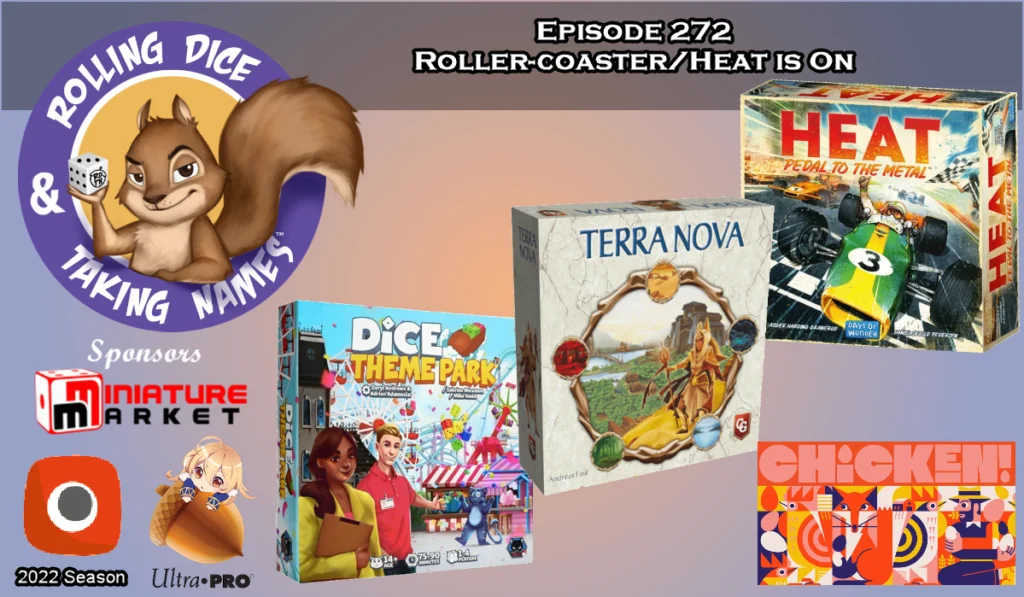
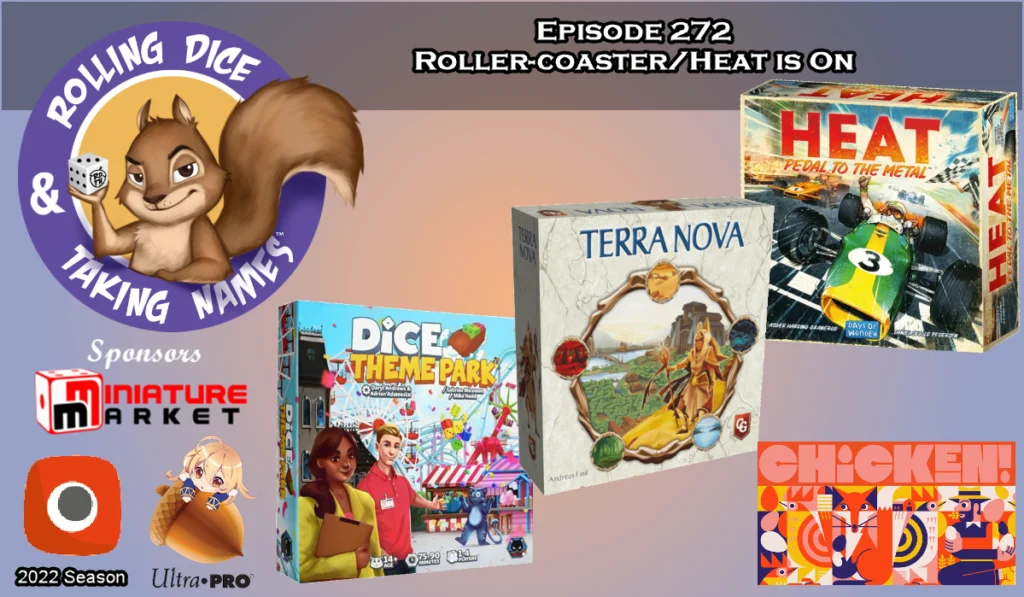
Three substantial game discussions anchor episode 272 of RDTN, each pointing toward a different kind of table experience. Heat: Pedal to the Metal looks ready for repeat plays thanks to straightforward mechanics and variable setups. Terra Nova offers one player a more appealing route into a style of game they usually avoid. Dice Theme Park, meanwhile, puts the focus on improving your own operation while keeping an eye on what other players do with their cards.
Episode guide
The episode moves from introductory material and featured links into its game discussions. These timestamps make it easy to jump between topics:
00:00:37 Intro
00:09:52 Critical Foundation
00:13:29 Chicken
00:17:10 Ultra Pro
00:18:37 Heat: Pedal to the Metal
00:38:45 Village Rails
00:44:46 Portal Games
00:48:42 Terra Nova
01:05:45 Hickory Dickory from PHG
01:08:55 Gametoppers
01:10:05 Dice Theme Park
01:22:47 Miniature Market
01:24:44 One More Gate: A Wakfu Legend
01:26:56 Outro
Heat: Pedal to the Metal keeps the appeal simple
The hosts’ reaction to Heat: Pedal to the Metal starts with a familiar question: will a game that looks promising at Gen Con keep its appeal once it reaches the table? For them, the answer is yes. Its mechanics are simple, and that simplicity is part of the draw. The game doesn’t need a dense set of rules to give players something to think about.
Setup variability also matters to their verdict. Different setups can change the challenge from one play to the next, which gives the game a reason to return to the table after players have learned its basic rhythm. The discussion doesn’t lay out the racing rules in detail, so the clearest takeaway is about the balance they found between accessibility and replay interest: the core is easy to grasp, while the changing setup keeps each session from feeling like a repeat.
That combination also explains why both hosts expect to keep a copy. They usually don’t duplicate games in their collections, but this one is an exception they’re willing to make. For groups deciding what kind of racing game might suit a regular rotation, the episode’s recommendation rests on that practical point: the rules feel approachable, and the variable setup gives players a reason to revisit the race.
Terra Nova offers a different entry point
Tony comes to Terra Nova with a clear point of reference: he doesn’t enjoy Terra Mystica. Marty’s suggestion that Terra Nova might address some of the things Tony dislikes gave the game a specific test to pass. Tony’s verdict is measured but positive: he liked this version enough to play it again.
Two qualities shaped that response. First, the length felt right to him. Second, the challenge landed at a level he enjoyed. His reservations haven’t vanished entirely; he still isn’t a fan of the Power Pool. Yet he also sees that system as a source of the game’s challenge. That tension is useful for players weighing whether the game might work for their group: the element that causes hesitation can also be part of what gives play its demands.
The hosts’ suggestion is especially relevant for groups with players who bounced off Terra Mystica. A different version of a game’s central ideas can change how those ideas feel at the table, and Tony’s experience gives a concrete reason to give Terra Nova a try. The discussion doesn’t claim that every former skeptic will be won over; it shows that a player who wasn’t keen on one game found this one’s length and challenge more inviting.
Dice Theme Park turns attention inward
Dice Theme Park is described as a largely solitary experience, even with other players at the table. The main task is to make your own park produce more points than your opponents’ parks. Direct interaction is limited, so players shouldn’t expect many opportunities to disrupt someone else’s plans.
Still, there’s a reason to pay attention across the table. The hosts call out the game’s distinctive card play, which can affect what you decide to do in a later round. That creates a light connection between individual plans: your park remains your main concern, but another player’s choices may be useful information as you consider what to do next. The interaction is subtle, and that distinction matters for groups who prefer games where progress comes chiefly from managing their own options.
The episode suggests introducing Dice Theme Park to someone after a game such as Sagrada. The comparison is offered as a teaching path, not as a claim that the games play alike in every respect. The practical point is to bring a player from a familiar, visually appealing game into another experience built around personal decisions and producing a strong result. For players who like that kind of focused puzzle, the card play gives them something to watch beyond their own park.
Three different reasons to sit down
Together, the discussions distinguish the games by what they ask players to enjoy. Heat: Pedal to the Metal pairs simple mechanics with setup variety. Terra Nova gives one former Terra Mystica skeptic a challenge and play length that suit him better, while retaining a system he finds divisive. Dice Theme Park puts most of the work into your own park, with other players’ card choices offering a small but useful signal. Those are the episode’s strongest pointers for choosing which one might fit your next game night.