RDTN Episode 282 Pairs New Board Games With a Playful AI Review
Story by Tony McRee · 889 readers
Episode 282 ranges from Bamboo and Atiwa to Beer & Bread, then pokes fun at an AI review that gets several games wrong.
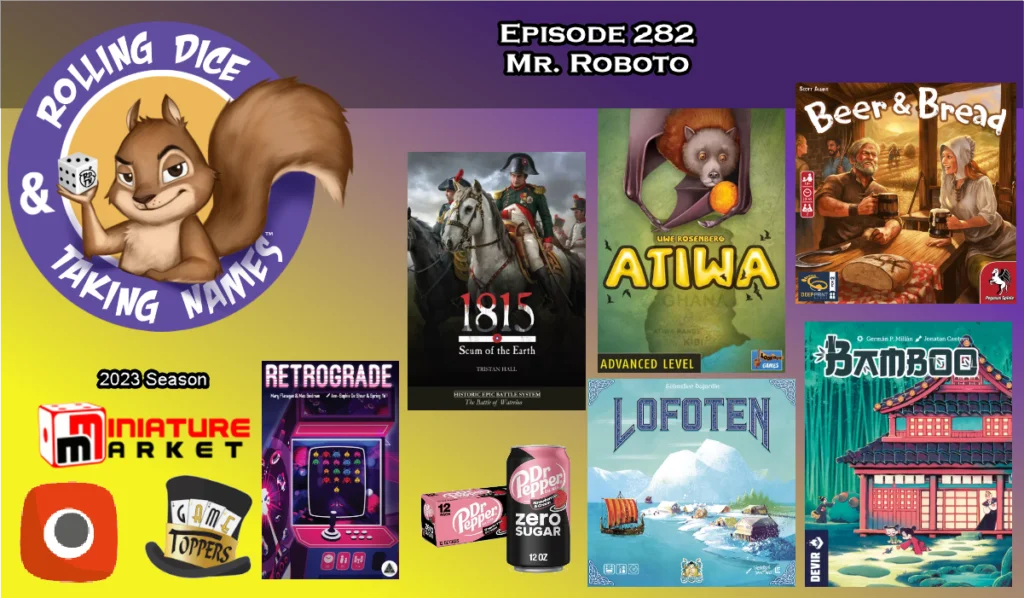
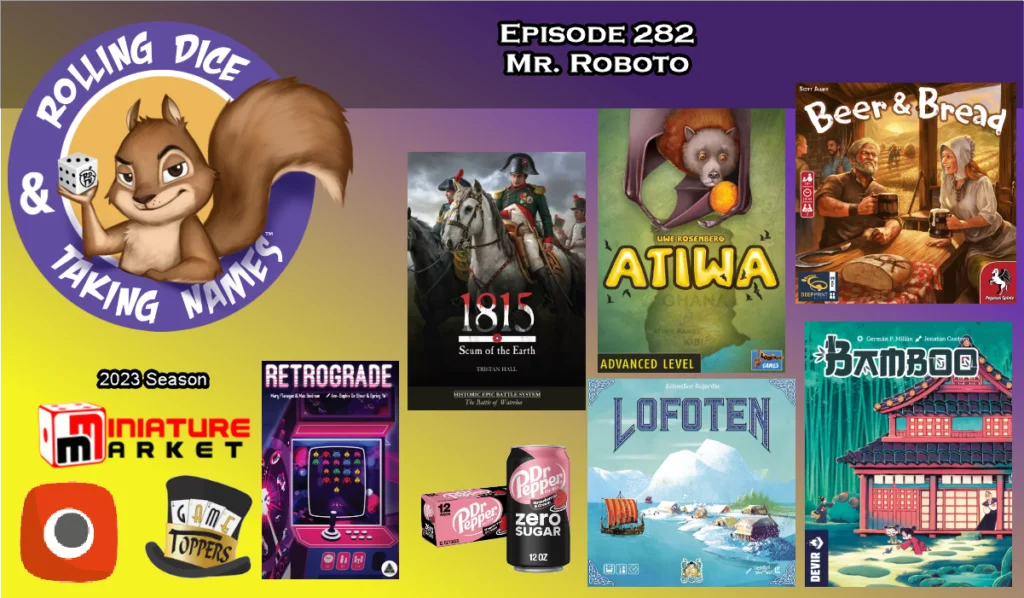
RDTN Episode 282 brings together a varied run of tabletop topics, from game storage and conventions to a set of newer releases. Its most entertaining detour is a deliberately unreliable AI-written review: the generated text mistakes what several games are about, and the hosts’ asides make clear where it missed. That gives this episode two useful threads for players: a tour through the games on the table and a lighthearted look at how confidently a machine can describe the wrong one.
A wide-ranging episode, with a game list at its center
The timestamps place the opening topics before the game discussions: the show starts at 00:01:25, then turns to Portal Con at 00:04:15, DVRs at 00:07:11 and dealing with inserts at 00:09:40. Retrograde comes up at 00:17:39, followed by Tantrum Con at 00:23:47, a Taste Buds segment at 00:26:25 and Game Toppers LLC at 00:32:25.
From 00:34:00, the episode moves through a run of linked game topics: Atiwa, Lofoten at 00:47:10, Bamboo at 00:54:15, Beer & Bread at 01:08:01 and 1815: Scum of the Earth at 01:14:12. The show then shifts to video games at 01:24:56 and closes at 01:34:45. The timestamps and links make it easy to jump directly to an item, especially if you’re looking for one particular title among the broader conversation.
The source doesn’t give player counts, play times, prices or detailed rules descriptions for these games, so those particulars aren’t established here. What it does provide is a sense of the episode’s shape: several segments beyond the game list, followed by a concentrated stretch of tabletop discussion. That mix gives the episode room to move between hobby habits, events and individual titles.
The AI review becomes part of the joke
The blog text says it was generated with ChatGPT, then opens with a familiar limitation: the model can’t taste drinks, but claims it can review games from their mechanics. The hosts immediately puncture that polished setup with a parenthetical aside. The result is less a dependable buying guide than a gag about the distance between smooth-sounding prose and knowing what’s actually in the box.
Atiwa draws the clearest factual miss. The generated review says it couldn’t find a game by that name, attributing the gap to its knowledge cutoff. That’s an awkward opening for a passage presented as a review of the episode’s games. The joke works because the text doesn’t hesitate: it offers a confident explanation for its lack of information, then carries on to titles it thinks it recognizes.
Its description of Lofoten is another conspicuous stumble. The AI portrays it as a game about fishing in Norway’s Lofoten Islands, with players competing to catch fish and score points. The episode’s aside says that account missed the mark. That small correction captures why game coverage needs more than a title and a plausible theme: a review that invents the central activity can send readers away with the wrong picture of play.
Bamboo fares better. The generated text imagines players growing bamboo and feeding a hungry panda, and the hosts’ note grants it a partial hit before correcting the panda detail. The source doesn’t lay out Bamboo’s actual turn structure or scoring, so there’s no basis here for a rules explanation. Still, the contrast is revealing: a description can sound familiar and inviting while mixing an accurate hint with a made-up flourish.
Beer & Bread gets the same knowledge-cutoff response as Atiwa. The hosts’ aside answers that uncertainty with a plain recommendation to get to know the game, calling it solid. That’s the strongest personal assessment in the blog text, even though it doesn’t explain what made the game work for them. Readers looking for the episode’s full discussion can use the 01:08:01 timestamp to hear more.
What the episode offers players
The generated wrap-up says Bamboo and Lofoten seem enjoyable and have distinctive mechanics, while admitting that enjoyment depends on personal taste. But the hosts’ comments undercut that tidy summary: one game description is called a miss, another is only partly right, and two titles are treated as unknown. The more useful takeaway is the comic gap between a generic review template and the concrete knowledge that makes a review worth reading.
For listeners, the timestamp list is the practical feature. Start with the title you’re curious about, then use the surrounding segments to hear the discussion in context. For readers, the AI passage offers a reminder to check whether a review explains how a game actually plays, rather than accepting plausible-sounding details at face value. Episode 282 supplies a handful of game names and a lively frame for them; the linked segments are where to go for the fuller conversation.


