RDTN Episode 322: Vijayanagara, Unmatched: Slings & Arrows and More
Story by Tony McRee · 558 readers
Episode 322 covers spatial puzzles, quick card games, a literary Unmatched set and GMT’s brisk COIN-style Vijayanagara.
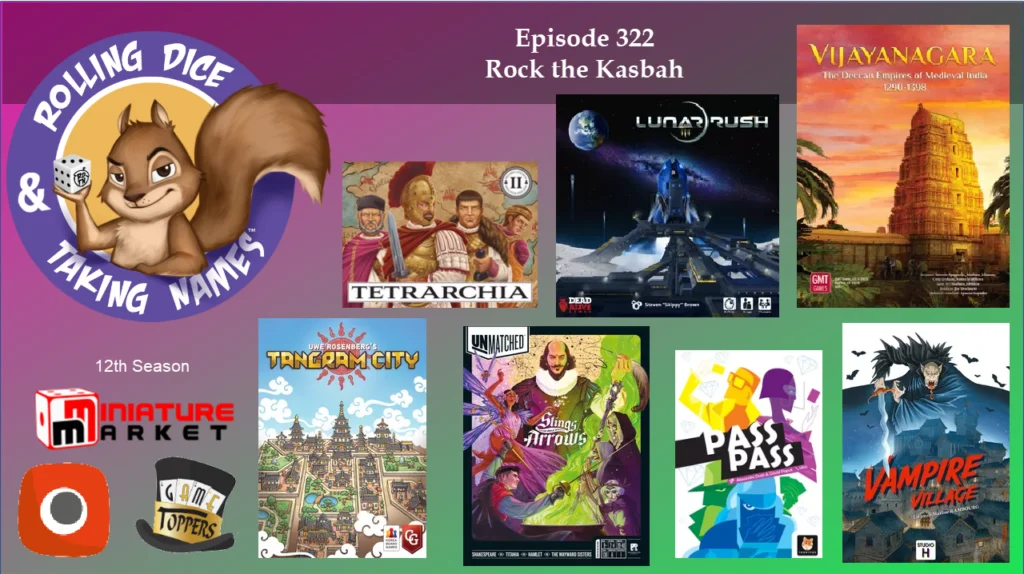
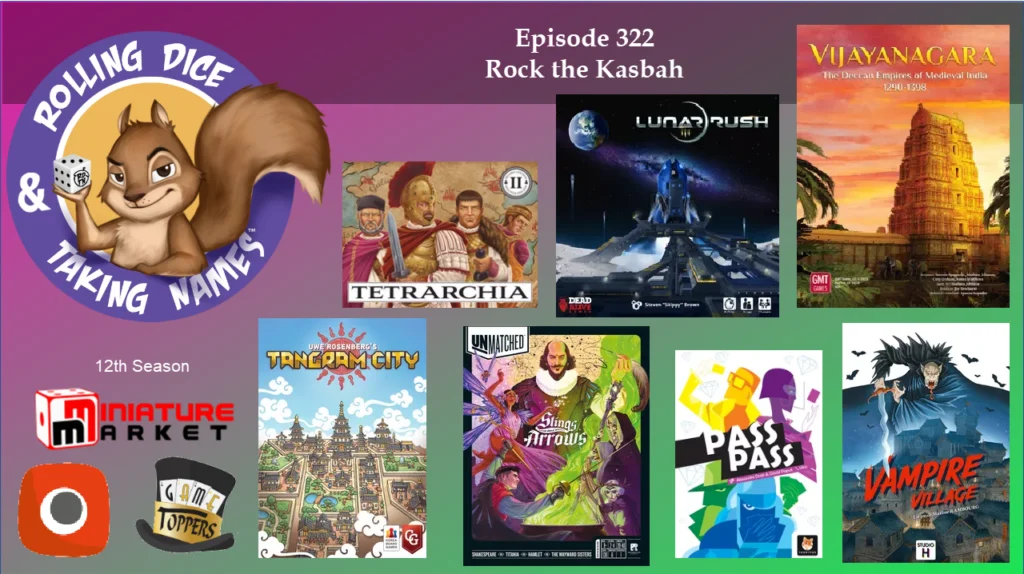
GMT’s Vijayanagara stands out in Episode 322: the hosts describe it as a COIN-style game that moves at a brisk pace while keeping the features fans of the series enjoy. That’s a useful distinction for a strategy game built around competing sides and shifting priorities, since a satisfying decision system still has to keep turns moving. The episode also ranges through spatial puzzling, card drafting and assigning, literary duels, and several other game updates. It’s a sampler, not a rules clinic. That mix makes this a useful listen for players looking for quick impressions of what’s hitting the hosts’ table, with enough variety to help you decide which segment deserves your time.
Spatial puzzles and quick turns
Tangram City gets a personal reaction rooted in spatial reasoning. One host says visualizing how a flat piece will look when folded has always been difficult, even though packing a car and finding one’s way around come more naturally. For them, the game offers a chance to practice that kind of spatial challenge through play. It’s a grounded observation: a puzzle can be appealing precisely because it asks players to work on a skill they don’t find effortless. That kind of personal fit can matter as much as a game’s difficulty rating. A familiar puzzle may feel routine to one player and freshly demanding to another, depending on what kinds of spatial problems come naturally.
Here’s the thing: a game that turns a challenging mental task into a shared table activity can make the effort part of the appeal. The episode doesn’t explain Tangram City’s rules in detail, so listeners won’t get a full picture of its puzzle structure from this reaction alone. Still, the host’s comparison gives a clear sense of the experience they’re discussing: translating a shape in your mind can be demanding even when other everyday spatial tasks feel easy. If you enjoy games that make you pause and reconsider where a piece might fit, that’s a useful clue about why this title caught their attention.
The episode’s quick-playing picks include Vampire Village and Pass Pass. The clearest praise goes to Vampire Village, whose combination of passing cards and then assigning them suits the hosts’ tastes. That sequence gives the game two linked decisions to consider: what to send along, and how to make use of the cards that come back. Card passing often asks players to weigh what they’re giving up against what they expect to receive; a later assignment step can add another layer, since the value of a card may depend on where it’s used. The hosts call it enjoyable, though the source doesn’t provide a full rules explanation or a detailed verdict on how the two stages interact. That limitation matters: the segment offers a positive reaction, not enough information to judge the depth of the decision space.
Lunar Rush also appears in the episode’s running order, alongside a mention of Game Toppers LLC. Those segments broaden the discussion beyond the games the hosts describe in more detail. The timestamps make it easy to jump straight to each topic, whether you’re following a particular title or sampling the episode’s range. For a listener deciding where to start, the guide is especially handy because the episode shifts between game discussions and updates. A timestamp tells you where a topic begins; it doesn’t promise that each segment offers the same amount of detail.
Literary matchups and a historical contest
Unmatched: Slings & Arrows brings classic literature into the asymmetrical dueling series. The hosts enjoyed that choice of theme, which prompted memories of Shakespeare and school plays. That recognition is part of the appeal: familiar literary figures can give a matchup an immediate personality, even for players whose recollections of the original works are hazy. A recognizable source can also give players a quick way into a duel, before they know how each character plays. The source doesn’t name the fighters or describe their abilities, so the discussion stays focused on the fun of seeing literature enter the game. That’s a narrow but clear reaction to its theme.
The most substantial game reaction belongs to Vijayanagara, identified as GMT’s new title. The host’s read is that its COIN-style structure retains the qualities that make those games popular while keeping play moving at a good pace. That balance matters to players drawn to games with competing sides and shifting priorities: a strong theme and layered decisions have to keep the table engaged as turns unfold. In games built around asymmetric sides, players often need to understand both their own goals and the changing pressures created by their opponents. A brisk pace can help that process feel active, though it doesn’t by itself tell us how demanding the rules or decisions are. The episode offers an early impression rather than a detailed account of factions, actions, or scenario rules, but the pace is the point the host chooses to emphasize.
This is more significant than it looks. A positive comment about pace can be a meaningful signal for listeners who like the COIN family’s political and historical framing but hesitate over long, intricate turns. It’s not proof that Vijayanagara will suit every group, and the episode doesn’t supply enough detail to make that call. It does identify the quality the host found notable: the game seems to keep its movement without shedding the features fans expect. For players weighing whether to listen further, that’s a sharper starting point than a broad claim that the game is simply good.
Tetrarchia rounds out the featured tabletop titles. The episode also includes a brief update on Star Wars Unlimited. These are signposted as separate segments, giving listeners a quick route to the topics without suggesting that every item receives the same level of review. That distinction helps set expectations: a mention in an episode guide can indicate a change of subject, while a detailed reaction gives more to evaluate. And yet, even short updates can be useful when you’re following several parts of the hobby and want to know what the hosts have on their radar.
Episode guide
Use these timestamps to find each segment, then choose the discussion that matches what you’re curious about. The list moves from spatial play through literary and card game topics before reaching the episode’s longer reaction to Vijayanagara. If you’re working in this space as a player or game master, the guide also makes it easier to compare how the episode handles different kinds of tabletop releases. Start with a title you already know, or jump to a game whose format you’re considering. A quick route through the list can save time, but the surrounding conversation may still add useful context.
- 00:03:00 Tangram City
- 00:10:51 Lunar Rush
- 00:23:32 Game Toppers LLC
- 00:26:00 Unmatched: Slings & Arrows
- 00:34:30 Vampire Village
- 00:46:16 Pass Pass
- 00:51:44 Miniature Market
- 00:52:57 Vijayanagara
- 01:05:27 Tetrarchia
- 01:11:36 Portal
- 01:12:39 Star Wars Unlimited update
What the episode’s range tells us
The episode’s most compelling contrast is between a personal puzzle challenge and a brisk strategy game built around a historical setting. Those aren’t comparable experiences, but placing them in the same roundup shows how varied the hosts’ table time is: one segment turns on the feel of manipulating shapes, while another highlights pace within a more layered strategic system. If either spatial play or COIN-style pacing is your kind of table experience, those segments are good places to start.
There’s a practical lesson in the way the episode is presented, too. A roundup can help players sort through a broad set of releases, but short impressions work best as invitations to investigate further, not substitutes for rules explanations or full reviews. The hosts give listeners a few distinct reasons to pay attention: a puzzle that presses on a personal weakness, a card game built around passing and assigning, a literary theme with immediate recognition, and a historical strategy game praised for its pace. That’s enough to identify what might fit your table. The next question is whether the actual rules and play experience back up those first impressions.