Glimmermark’s winter brings twelve nights of supernatural hunts, with distinct masters, terrifying hounds and dangerous rules for anyone outdoors.
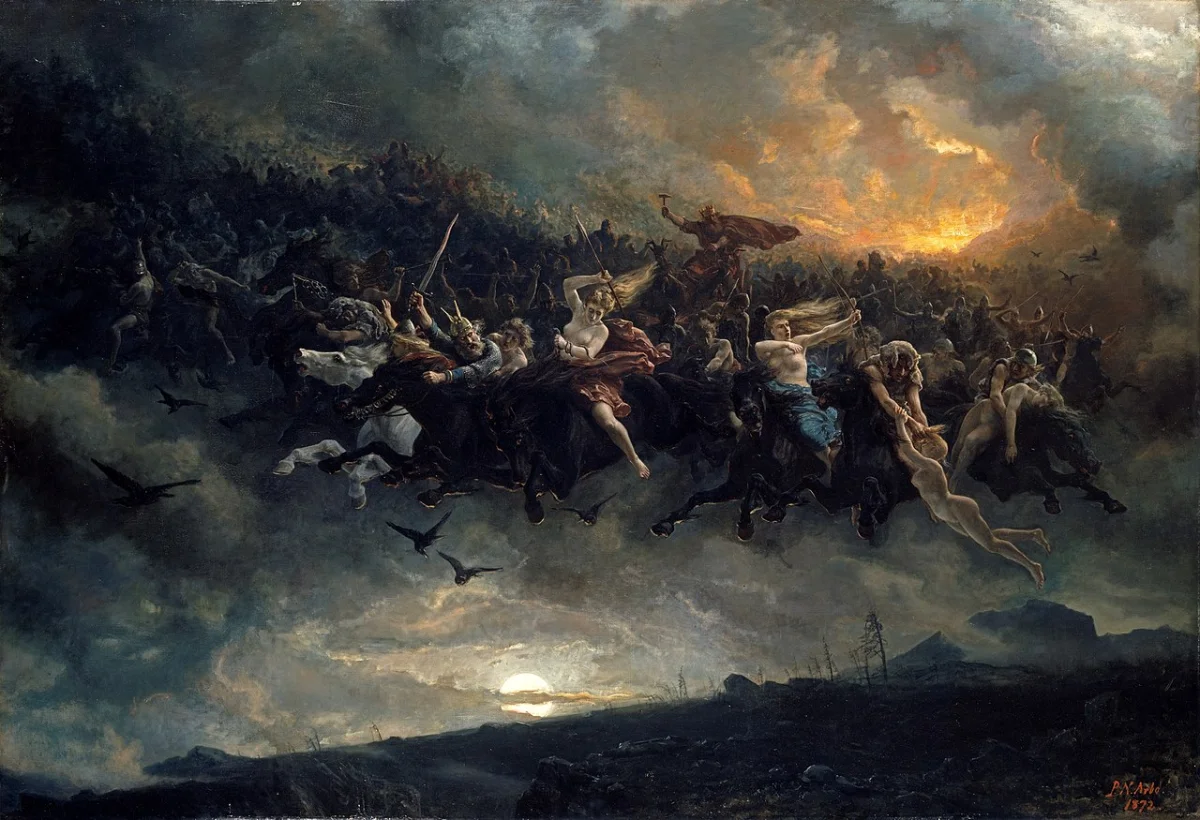
For twelve nights each winter, Glimmermark’s wilderness belongs to the Wild Hunt. The danger shapes the calendar: when the hunt rides, people stay indoors, and even a routine trip beyond the settlement can make someone its quarry.

Glimmermark’s game pauses for the next two weeks, with no wilderness expeditions or dungeon trips. The game follows a 1:1 calendar, so a week in real life passes as a week in the setting. That quiet spell has an in-world reason: the nights are cold and long, and the Wild Hunt scours the land between the winter solstice and the first day of the next month. The setting’s year begins in midsummer, so this period doesn’t mark its year’s end.
A folk tradition with more than one face
The Wild Hunt appears in folklore from across western, northern and eastern Europe, and perhaps India. Its timing and details vary. Many versions place it in the twelve days between Christmas and Epiphany, though the tradition may reach back to pre-Christian winter solstice observances. A mythic leader rides with a company of spirits, people, hounds and other creatures, pursuing prey across the land.

Dungeons & Dragons brought the Wild Hunt into Deities & Demigods in 1980, in its Celtic Mythos section. That version, centered on Cernunnos and fey origins, became familiar in later D&D editions and Pathfinder. The author appreciates the interpretation, but finds its Celtic-only framing too narrow: German folklore offers a rich tradition of its own. For readers who want to explore those stories, Jürgen Hubert’s website translates German folklore, including lesser-known tales, into English.
When the hunt rides
Glimmermark’s people mark the solstice with drinks and bonfires. Fires spread across the dark landscape, from human settlements to non-human ones, lighting the night before the gods and spirits call the hunt. Stay inside after dark and you may hear hounds barking overhead. Venture out, and you may become the game.
The supernatural event lasts twelve days, beginning the day after the winter solstice and ending with the start of the new year. Any wilderness encounter rolled at night during that stretch becomes an encounter with a Wild Hunt, either selected in advance or determined by the accompanying table.
Each region has its own account of who leads the riders. An ancient compact seems to let gods and other entities hunt during these days, provided their quarry is abroad. Different hunts may meet, but they generally leave one another alone unless their leaders share a deep feud.
The prey depends on the master. Some hunts treat anyone abroad on a winter night as suspect; others target the dead, particular peoples or less obvious categories. Every company has a Master of the Hunt, whose identity shapes the other riders. The hounds, however, are constant: at least 1d20 dark, fearsome creatures able to track a target for hundreds of miles. Some tales say they are the spirits of dogs that died unjustly; similar stories are told of the steeds.
Witnesses face dangers too. Staring at the apparition too long calls for a Save vs. Spell and may draw someone into the host. Meeting its gaze for too long can be taken as a challenge. The recommended response is to drop to the ground and look away.
Ten masters and their quarry
The Horned One. Stag-headed, shadowy and fiery-eyed, this master appears where druids hold sway. The party includes the entity and 2d20 dark hounds, with a 25% chance of additional, lower-HD stag-headed figures. It pursues clerics who make blood sacrifices and necromancers, especially those at level 12 or higher, though it can detect the blood and decay around any practitioner.
The Lord of Frenzy. This one-eyed rider travels on an eight-legged horse with 1d12 Valkyries and 2d20 spectral warriors who died a straw death. The host hunts giants and dragons. Warriors slain in battle are carried away by the Valkyries.
The Old Ruler. A spectral king or queen from ancient times rises with 1d12 of their finest knights to drive invaders from the land. Locals have only about a 50% chance of escaping the attack, since few places have been continuously inhabited for long enough to be familiar to the ruler.
The Fey. A renowned fey lord or lady rides with 1d10 fae warriors and 1d20 faerie goblins. Their purpose is hard to discern. They appear to kill those with CHA under 7 and abduct those with CHA of 17 or 18 when they can.
The Lone Hunter. A spectral undead hunter in black has only a pack of wolf-like dark hounds for company. Once a skilled hunter of at least level 9, this figure sinned against their chosen deity and now must hunt evil-doers during the twelve days. They do not speak, but can gesture. Players who help them meet their quarry allotment might free them from the bond and receive suitable treasure.
The Pale Rider. A skeletal rider on a white horse leads about 2d20 skeletal warriors. They gather the souls of the dead, along with those who should be dead, and bring them into the ride.
The Dragon Slayer. Ancient-looking warriors follow a bare-chested, bareheaded leader in pursuit of dragons, wyverns and other large, serpent-like creatures. Meaningful aid in a fight may earn a minor treasure from the dragon’s hoard.
The White Host. A cleric in silver armor leads 2d100 spirits on spectral horses across the sky. Their radiance turns or destroys undead as if wielded by a level 9 cleric.
The Wild Huntress. This company is made up mostly of female warriors led by a beautiful huntress dressed in leather and furs. The source leaves their quarry unspecified.
The Devil. Or at least one devil: this rider brings 1d10 fiends and hunts oath-breakers, though the company will gladly take anyone it encounters. Unlike the other hunts, it generally stays on the ground and can enter settlements, while avoiding sanctified holy places.
The table gives game masters a set of sharply different encounters for the same winter threat. The key detail at the table is that leaving shelter can bring any of these hunters down on a character—and their rules for judging prey are far from consistent.
===END===