Sky Team Review: A Tense Two-Player Flight to the Runway
Story by Nick T · 313 readers
Sky Team turns silent dice placement into a rewarding two-player landing challenge, with varied airports, tactile components and plenty to replay.

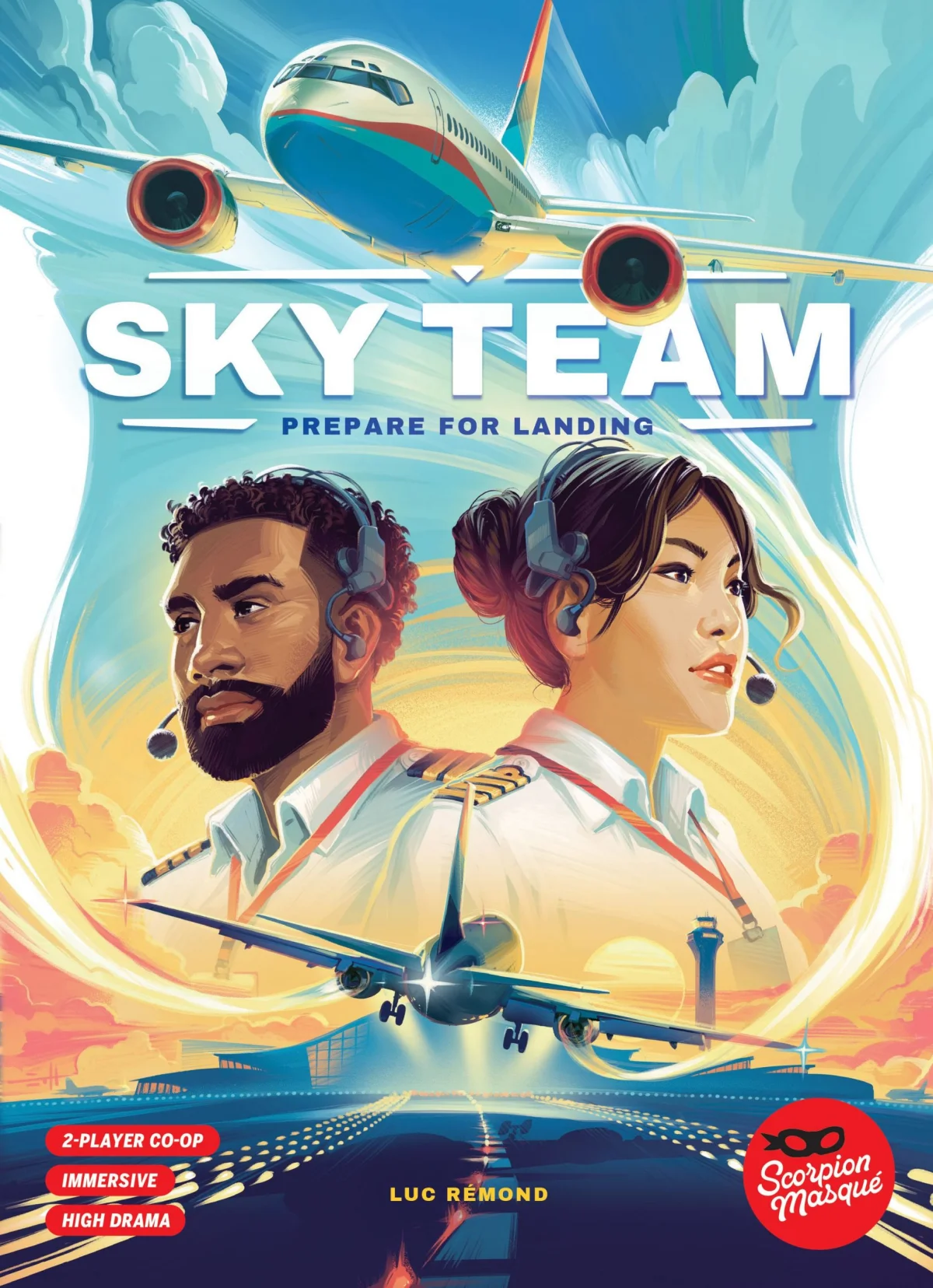
Sky Team was gifted by Coiledspring Games; that hasn’t affected this review.
Sky Team finds its tension in what its two players can’t say. You and your partner are trying to bring a passenger plane down safely, but once the dice are rolled, conversation gives way to careful placement and a shared read of the board. It’s a quiet, thoughtful kind of pressure: a poor roll can undo a tidy plan, and there’s little room to correct course once the round is underway.
That constraint gives this cooperative game a clear identity. The rules make the cockpit feel busy, while the table stays quiet. Between rounds, you can discuss priorities and agree on a plan; during the dice placement itself, even a sigh or a gesture can give away information. Players who enjoy reading a partner’s intentions will find that restriction engaging. Those who want constant conversation may need a few plays to settle into it.

©boardgamereview.co.uk
At the table: prepare the cockpit
The first setup takes a little folding and sticking, but the reviewer found the process clear and straightforward. After that one-time job, preparing a session is quick. The recommended seating arrangement puts players side by side, though sitting opposite one another works too, provided each player can reach their side of the board.
One player takes the pilot’s blue dice and the other takes the co-pilot’s matching dice and screen. Together, you fill the shared board with switch tokens, choose an airport, adjust the board to its requirements and place the plane tokens on the approach track. The airport selection matters: each location changes the landing puzzle, so the same basic cockpit has to handle different demands.


©boardgamereview.co.uk
Dice, switches and a narrow approach
A round starts with a short conversation about the plan and any hazards to keep in mind. Both players then roll their dice behind their screens. From that point until the next round, players take turns placing dice according to the board’s rules, relying on the information they can see and the plan they discussed.
Two actions are essential. The players use dice to manage the plane’s axis; the difference between the dice values determines its tilt. They also control the engines, which affects the plane’s progress toward the runway. The remaining dice can go toward flaps, landing gear, brakes or the radio, which helps clear other planes from the approach. Coffee tokens add another useful option: they let players adjust a die’s value by one later, giving the team a chance to smooth out an awkward roll.
Success asks the team to bring several pieces together. Clear the approach track, set the switches to green, keep the plane level and make sure its speed is lower than the braking value. Each landing is a compact coordination problem: the team has a limited number of dice, and a choice that helps one part of the cockpit can leave another short.


©boardgamereview.co.uk
Learning to read your co-pilot
The restricted communication is the game’s biggest adjustment. Players can map out an approach between rounds, but dice don’t always cooperate, and a plan can unravel as soon as the screens come down. Rerolls are valuable, and using them well can make the difference between recovering from a difficult hand and watching the landing slip away.
There’s a reasonable question about the theme: why can’t the pilot and co-pilot simply talk? The reviewer wasn’t bothered by the mismatch, reading the silence as a way to represent the compressed attention of the landing sequence. Whether that explanation works for your group will depend on how much you want the mechanics to follow cockpit communication. In practice, the limitation creates a useful rhythm: plan openly, act quietly, then talk through what happened.
That rhythm also makes repeated attempts appealing. When a landing fails, the team can regroup and try again almost at once. The airports introduce different challenges, and some are much harder than others. The game identifies the tougher scenarios so players can build toward them as they gain experience. Later landings ask you to weigh concerns such as fuel against steep banks that restrict what each die can accomplish.
The reviewer found that Sky Team works best with a regular partner. You can play with different people, but familiarity helps the pair understand each other’s habits and intentions. It’s a focused two-player game, and that close partnership feels like its natural home. The silence may also be a challenge for younger players: the reviewer found that a 16-year-old could manage the quiet, but resisting gestures and other nonverbal clues took more effort.


©boardgamereview.co.uk
A tactile cockpit with room to grow
The physical board does a lot of work for the theme. Switches, a rotating axis dial, orange and blue dice, wooden planes and coffee tokens give players satisfying pieces to handle as they manage the landing. The reviewer also liked the rulebook’s structure: one section gets players ready for their first flight, while another introduces the extra elements associated with different runways.
Sky Team is available to play on Board Game Arena, where setup is easier and keeping quiet comes naturally. Still, the reviewer preferred seeing the board and its components in three dimensions. That table presence helps make the many small cockpit decisions feel connected to the landing they’re meant to achieve.
Verdict
The basic turn pattern repeats, and playing too often may make that loop feel familiar. The changing airports help keep it fresh, though, and the reviewer says that even after a failed landing, the urge to try again is strong. For players who usually prefer competitive games, Sky Team offers a compelling change of pace: the challenge comes from coordinating with one other person against the demands of the board.
The reviewer rates Sky Team 4.4 overall and praises its theme, two-player cooperation, range of airports and components. The main drawbacks are the strict communication limits, the possibility of repetition and the fact that it’s designed for exactly two. Its best moments come between rounds, when partners work out what went wrong and decide how to tackle the next stretch of runway.
Designed by Luc Rémond and published by Scorpion Masqué, Sky Team plays two players in 20 minutes, with setup and teardown taking two minutes. The reviewer recommends it for ages 10 and up; the publisher’s recommended age is 14 and up. The listed RRP is £29.99. The reviewer also reports a current price of £21.00. The game has been added to the  Board Game Review Hall of Fame.
For another quiet cooperative puzzle, the review suggests The Mind, The Crew: Mission Deep Sea, Yukon Airways and Similo. Sky Team is the pick here for pairs who want a shared challenge with a clear objective, tactile play and a fresh landing puzzle waiting in the next airport.


