Lobby Snacks Preview: A Trick-Taker Where Winning Can Cost You
Story by Ryan Gutowski · 427 readers
Lobby Snacks pairs open prize cards and flexible plays with a spending limit that can turn a strong round into a bust.
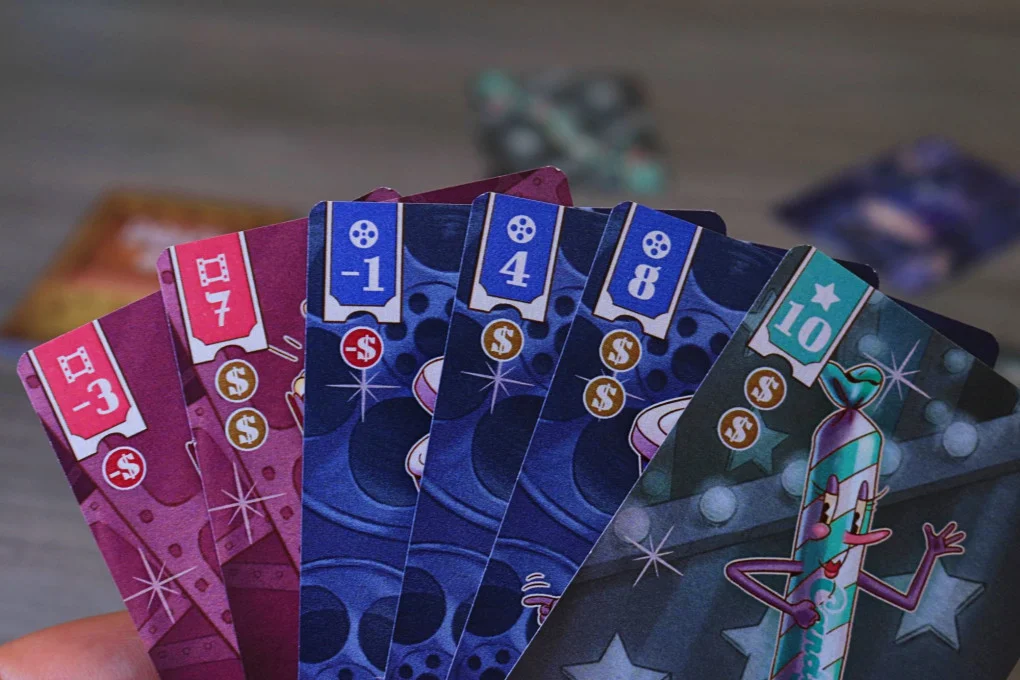
Lobby Snacks gives trick-taking a lively bit of table tension: the player who wins the most may also be the one who scores nothing. Designed by Paul Salomon and Taylor Reiner, this theater-themed card game is headed to Kickstarter from 25th Century Games. Its central idea is easy to grasp, but the choices around each trick ask players to watch both their cards and their growing bill.
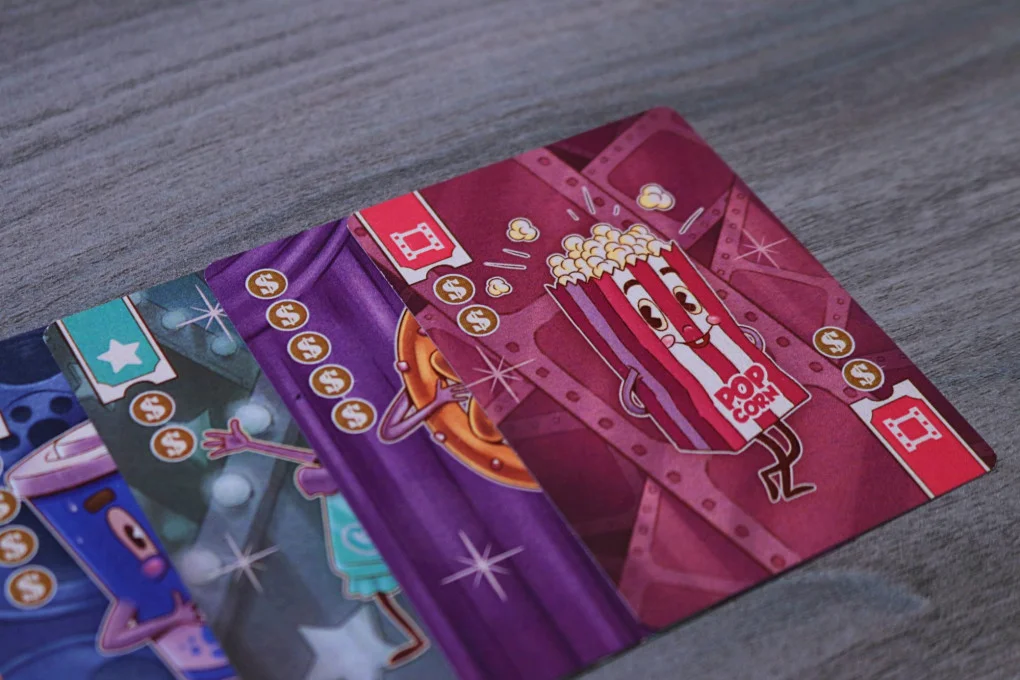
The nostalgic theater setting comes through in the presentation, and the title practically invites players to hear “Let’s all go to the lobby” in their heads. That familiar mood sets up a game with a less familiar approach to taking tricks: players aren’t required to follow the suit that was led. You can choose to compete for a trick, duck out, or steer an opponent toward a prize they may not want.
Prizes Set the Round’s Course
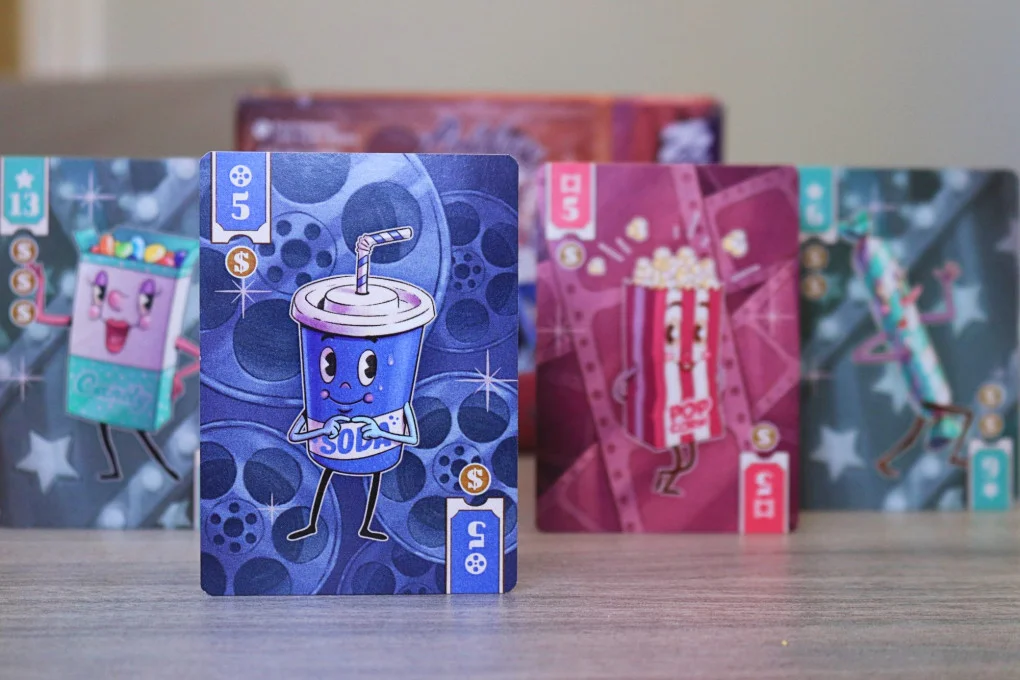
The game has three suits: candy, popcorn, and drink. Card values range from -5 to 13, and the cards also carry dollar signs. Those money icons matter as much as card strength, because players track what they spend while collecting the prizes that make up their score.
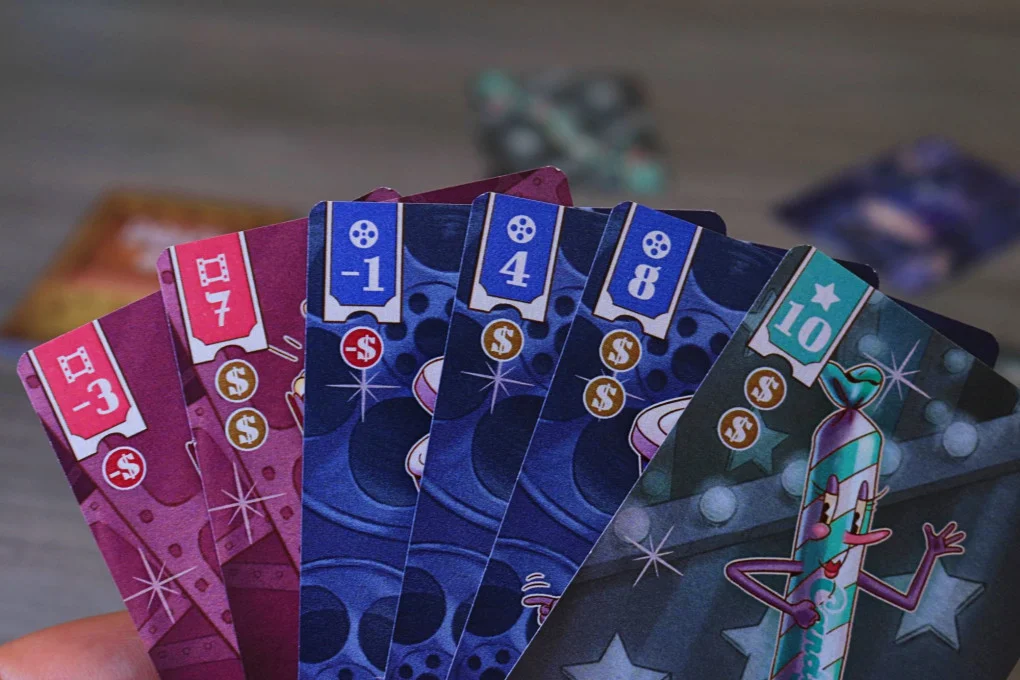
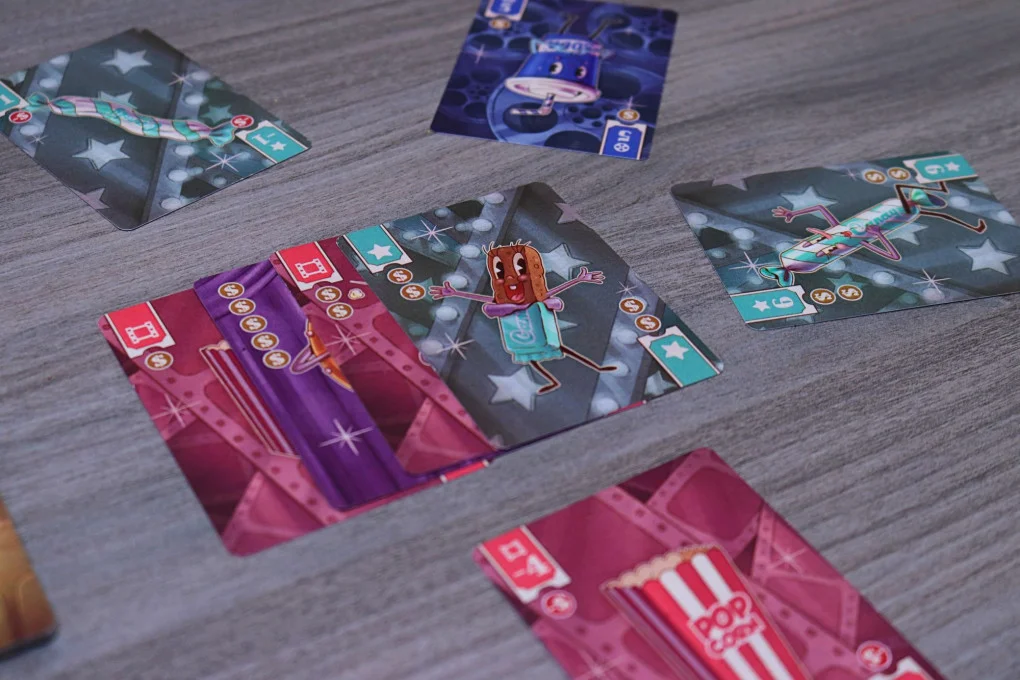
At the center of the table, prize cards show how many tricks are available in the round. They also establish the trump suit and display dollar signs that contribute to a player’s score if they win them. Since the prizes are visible, players can consider what’s coming before committing to a play. That open information gives the round a planning element: a powerful card might be better saved for a prize worth pursuing, while a weaker card can help avoid an unwanted win.
The lead player chooses any suit. Each other player may follow that suit or play a card from another suit. The highest value in the lead suit wins unless a trump card takes the trick; the highest trump wins instead. Because there’s no obligation to follow suit, players have more control over the outcome than in many familiar trick-takers. A hand isn’t simply a matter of playing the strongest matching card. Players can deliberately shape who takes the trick.
Every Win Adds to the Tab
When a player takes a trick, the cards they used to win go into their spent pile. The prize card and the other players’ cards from that trick go into the winner’s score pile. The distinction is the game’s key pressure point: winning adds prizes to your potential score, but your own winning cards also contribute to your spending total.
At the end of each of the three rounds, players count the money icons in their spent piles. Whoever spent the most is the “big spender” and scores none of the cards in their score pile for that round. Everyone else scores points equal to the money icons in their own score pile. So a round can turn on restraint as much as on winning. Taking one more trick might secure a valuable prize, but it could also push you past your opponents’ spending totals.
This makes the negative cards more than a novelty. Playing one can help you lose a trick on purpose and leave an opponent holding cards with negative money values. That kind of play connects the card values, the prize row, and the spending race: the aim isn’t simply to win the most, but to shape the final totals while collecting worthwhile prizes.
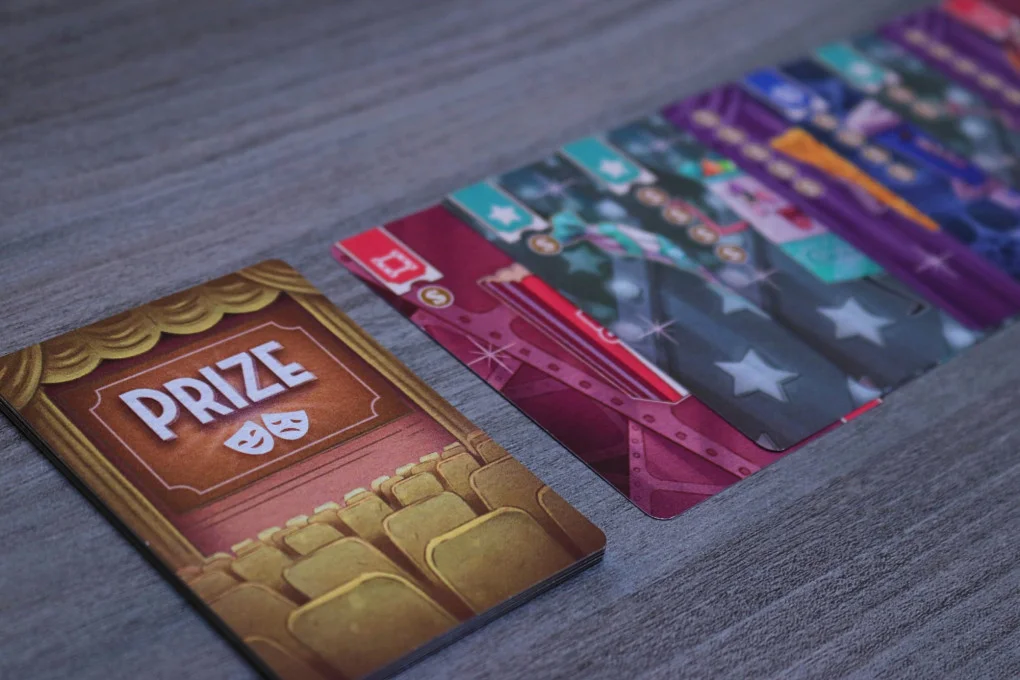
The visible prize line gives players useful clues, but it also makes timing matter. Players can weigh the current trump suit against the prizes still on offer, keep track of who appears to be spending heavily, and decide whether a trick is worth its cost. That creates room for table reading without hiding the basic arithmetic: players can see the money icons as they accumulate and adjust their plans during the round.
A Way Back After a Costly Round
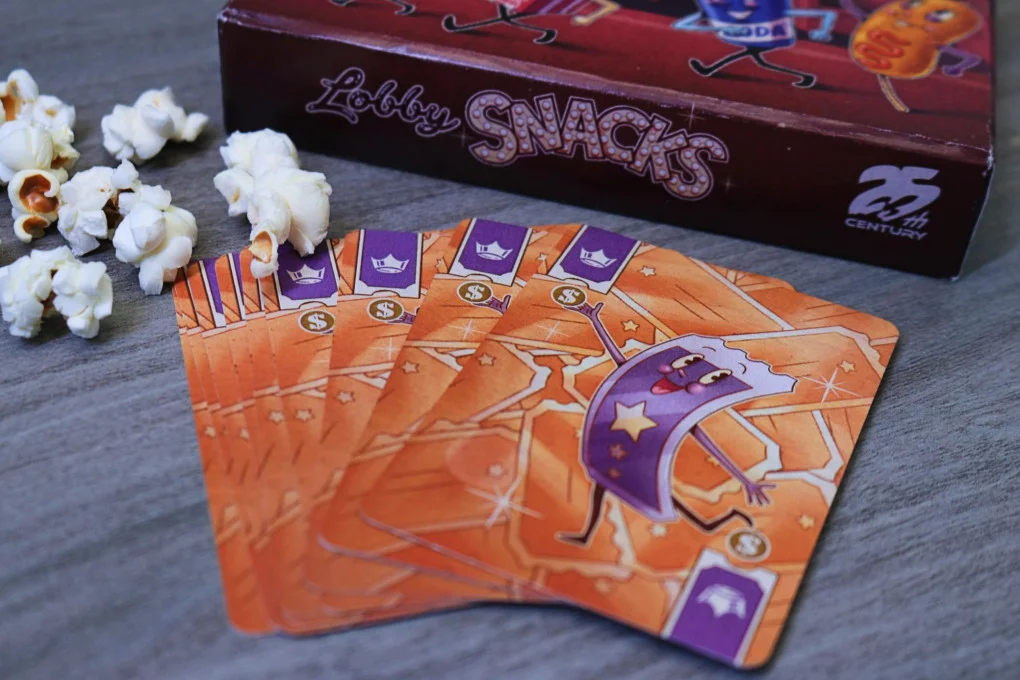
A big-spender result can sting, especially if you’ve built a strong score pile. The next round offers a small recovery tool: players receive one reward card for every X on their score sheet. A reward card outranks every trump suit, and the first one played in a round wins its trick. It carries only one dollar sign, so it can secure a prize without adding much to the player’s spending total.
The reward cards give a player who fell behind a reliable way to claim a trick, while the limited number available keeps that advantage tied to earlier results. Their predictable strength also changes what others can plan around: everyone knows that a reward card can take a trick, so choosing when to use one becomes a visible part of the round’s decisions.
Ties for the highest spending total can make the end of a round especially rough, with both players earning big-spender status. That possibility reinforces the game’s push and pull: players have to judge not only how much they can spend, but how their totals compare with the rest of the table. Sometimes the safer play is to let someone else take the lead, even when you have a card that could win.
A Fresh Angle on Familiar Table Play
Lobby Snacks enters a busy field of trick-taking games with a clear identity. Its flexible card play gives players direct influence over who wins, while the spending limit complicates the usual urge to capture tricks. The art direction supports the theater setting, and the open prize cards make each round feel like a puzzle players can revisit as the table changes.
This preview is based on a prototype provided for coverage; the components and rules may change. For players who enjoy reading the table and weighing a win against its cost, the game’s most promising feature is how often the right choice may be to lose a trick on purpose. Lobby Snacks is expected to arrive on Kickstarter in April; the Kickstarter page is the place to follow its launch details.
Read more about One Board Family’s preview policies.