AstroPaws Preview: Card Powers and Shifting Planet Rules
Story by Ryan Gutowski · 321 readers
AstroPaws pairs shared card decks with changing planet rules, creating a quick contest of timing, tactical moves and table talk for two to four players.
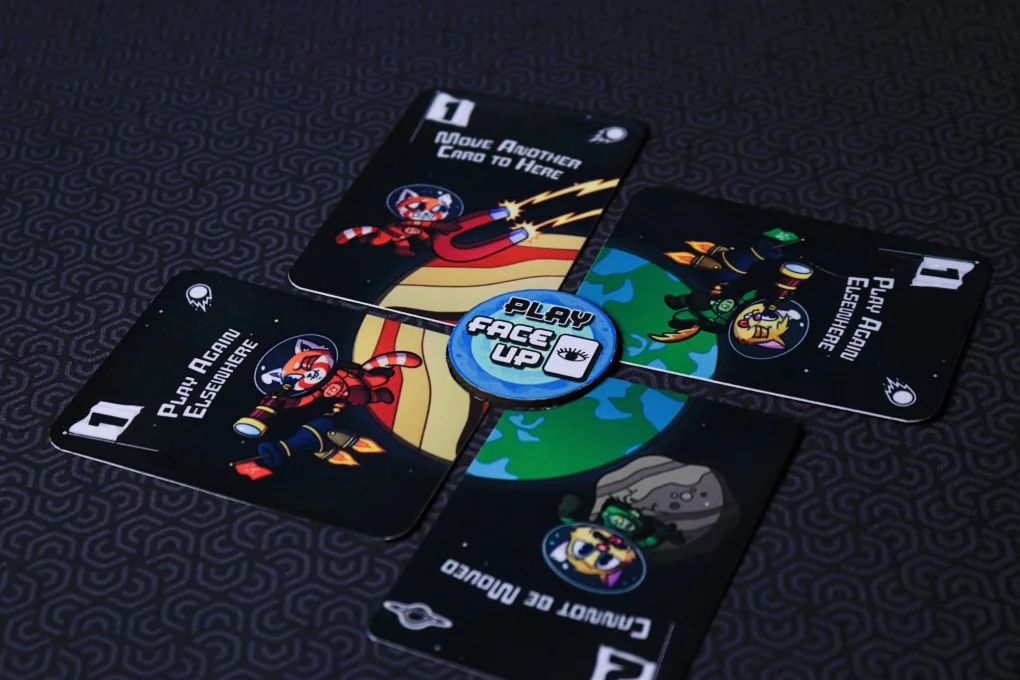
AstroPaws makes its planet-spanning contest turn on a neat tension: players know the cards in their own deck, but the rules for scoring each planet can change just as they commit to a play. This two to four player card game from MaKa Games gives players a shared framework to learn, then asks them to watch the board, time their card powers and adapt when a planet core flips.
Three cards, one decision
Each player begins with a thirteen-card deck tied to an animal character. The available types are corgi, cat, otter and fox, with red panda listed as an expansion character. Players keep three cards in hand and play one around a planet core on the table. Their aim is to place cards that meet that core’s scoring rule when its surrounding spaces fill.
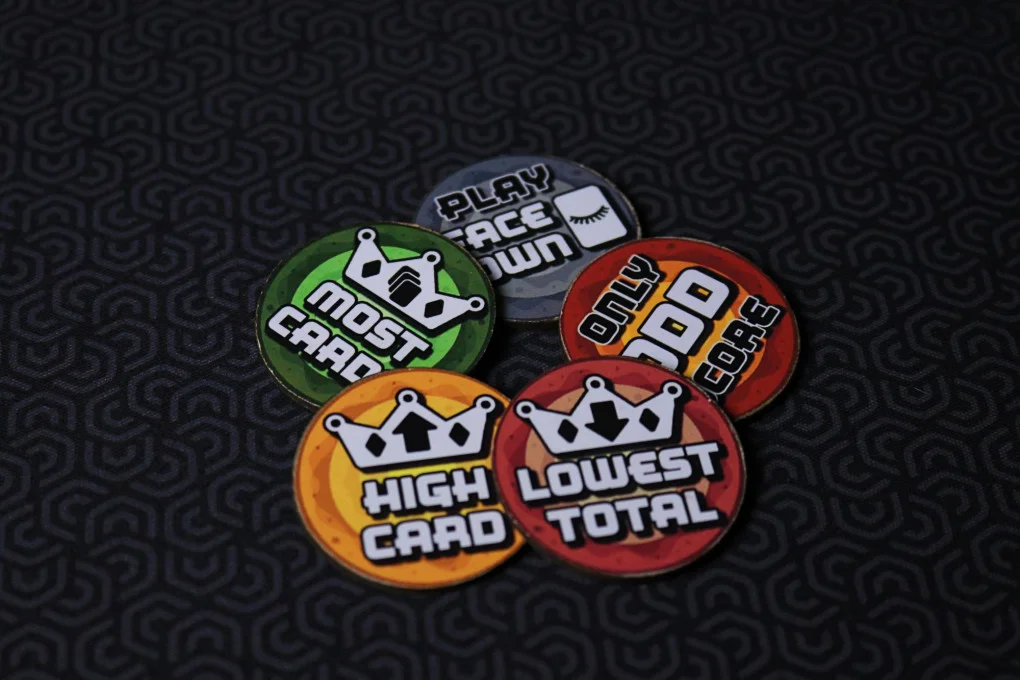
A planet scores once four cards surround its core. The token sets the test: “Fewest Cards” rewards the player whose cards meet that condition, while “High Card” asks players to compare the numbers on their cards. The winner earns two points, and the runner up earns one. After scoring, the core flips to show a different rule. A “High Card” side, for example, can give way to “Low Card.”
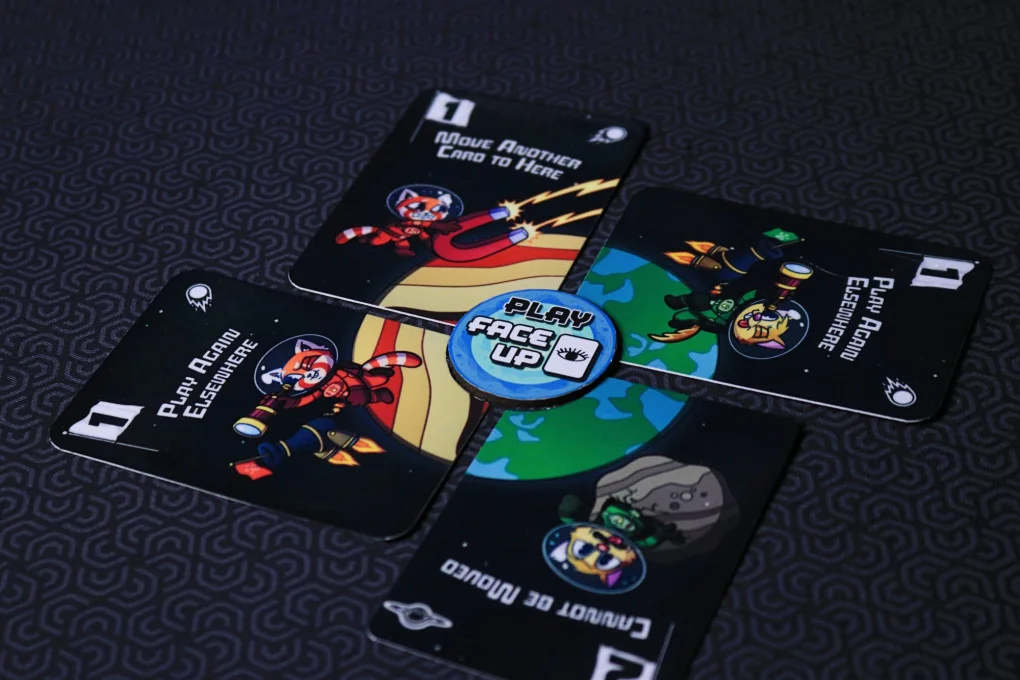
That flip gives each planet a short life as a puzzle. A strong position under one rule may become awkward under the next, and a player can’t assume that a card’s value will remain useful until scoring. The changing criteria also give players a reason to keep an eye on cores that are close to filling: the next rule is part of the decision, even before it takes effect.
Some cards add an immediate action when played. They can move a card to another planet, flip a planet core or replace a core with a different one. Those effects give players ways to revise the board after cards are already in place. Moving a card can change who leads at a planet; flipping a core can reshape the contest there; swapping a token can alter the condition everyone is trying to satisfy.
Known decks, shifting plans
Players draw back up to three cards at the end of each turn. Since each animal’s deck contains thirteen cards, planning means weighing the cards still available against the opportunities already on the table. The review describes the decks as identical in size, making timing and card use central to the contest. Knowing what your own deck contains can inform a plan, while deciding when to commit a particular card is where the tactical choices emerge.
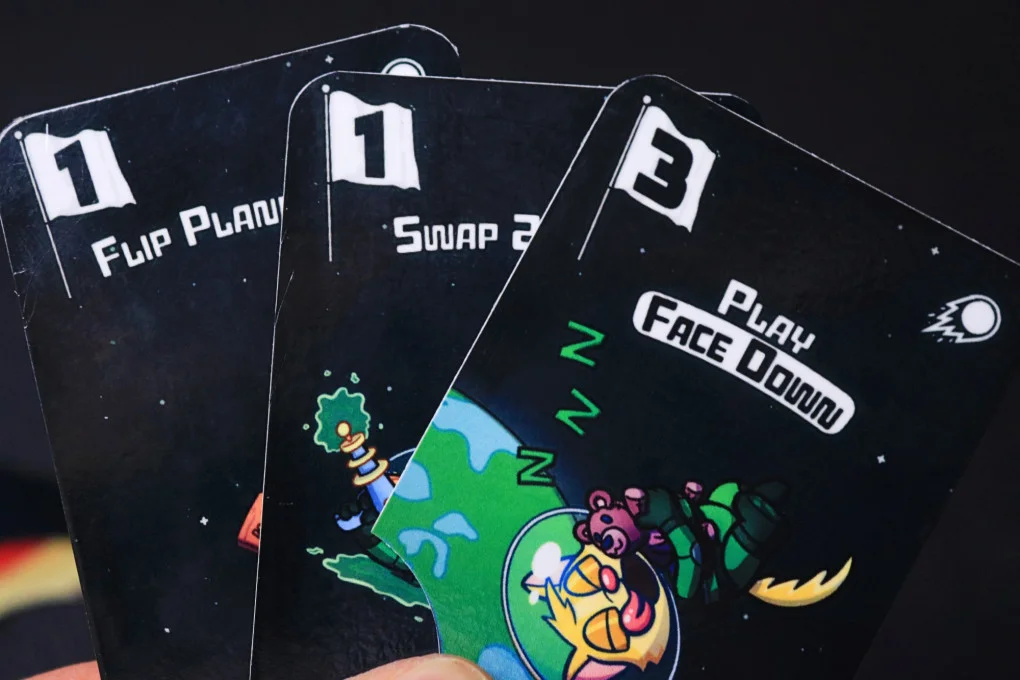
Some planet rules add another wrinkle: a core may call for face-down cards or score only even or odd cards. Players then have to consider both the card’s number and the conditions around the planet. A card that looks strong by value may not suit an odd-only test, while a face-down play changes what opponents can read from the board. The core token tells players which comparison matters, and its reverse side can prompt a fresh assessment after a score.
The last round begins when a player draws the final card from their deck. That gives the game a clear approaching end point without requiring players to track a separate round count. As decks run low, choices about whether to contest a planet, shift a card or use an action become tied to the remaining time in the game. The preview doesn’t specify a separate final scoring procedure beyond the points earned from planets, so the details of end-of-game scoring may be clearer in the finished rules.
A compact game with visible interaction
The preview puts play time at twenty to twenty-five minutes and describes the rules as approachable, with enough strategy to keep turns consequential. The interaction comes directly from shared planets and card effects: a move can change the cards competing for a core, and a flip can alter what counts as a winning position. That gives the table plenty to watch without making the game’s basic turn hard to follow.
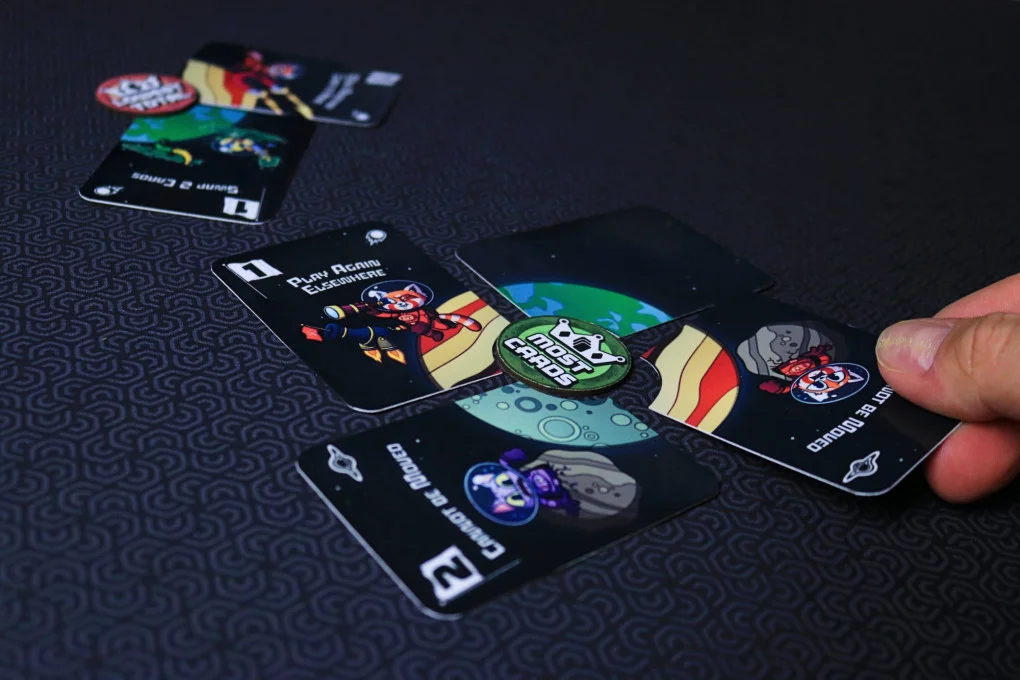
The card design supports that shared board. Each card has a notch in its lower half so it fits around a planet core, placing the cards in a ring rather than in an ordinary pile. The point value appears on a flag in the upper-left corner, making it easy to check numbers when a core calls for a comparison. It’s a small physical detail, but it helps the scoring area read as a set of linked contests.
For families looking for a short card game with direct player interaction, the preview suggests AstroPaws has a strong table hook: players can follow the changing planet rules and see how each play affects a shared objective. The key question for a finished edition will be how its card actions and scoring cases are explained across all the core types; those details will determine how smoothly players move from learning the rules to reading the board.
AstroPaws is listed on Kickstarter through July 16, 2026. The Kickstarter page is the source for current availability and project details.
This preview used a prototype provided for coverage. Its components and rules may change before the finished game. Read more about One Board Family’s preview policies.
The original AstroPaws preview appeared at One Board Family.


