Port Leviathan Brings Zombie Whalepunk to d20 Fantasy
Story by Jeff C · 930 readers
Port Leviathan is a 137-page d20-compatible setting of pirate pulp, strange shops, unusual monsters and a city built in the corpse of a whale god.
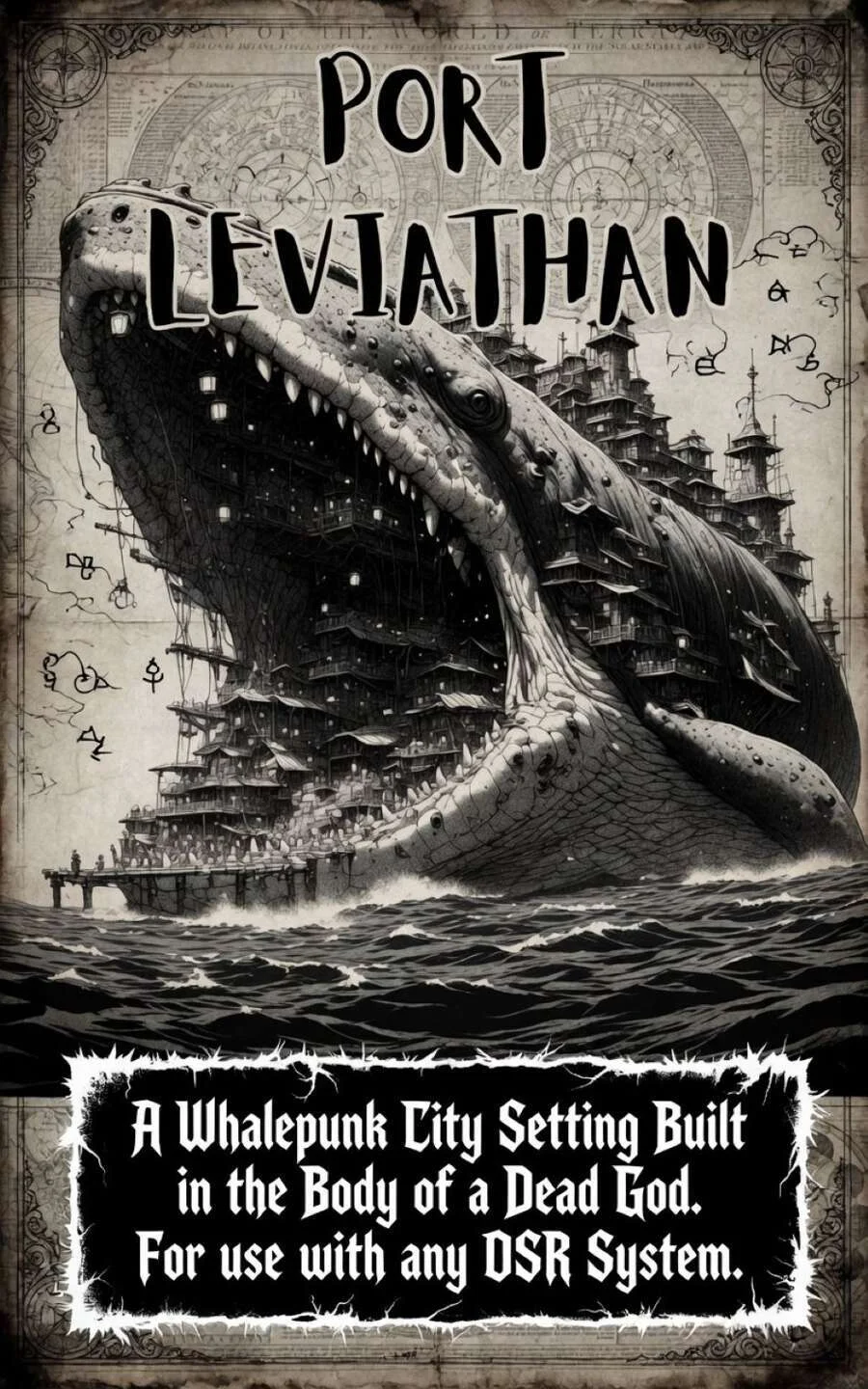
Port Leviathan builds its fantasy city on an unsettling foundation: the corpse of a dead whale god. That image sets the tone for a 137-page setting that mixes pirate pulp, whalepunk and body horror, with goblins, zombies and other strange elements in the same place. Created by Mike, known as The OG GM, it’s designed to work with most d20 systems.
The premise gives a game master a strong answer to a useful table question: what makes this city feel different from the next fantasy port? Here, the city’s very ground carries a supernatural history. A dead god’s body suggests an environment shaped by something immense and uncanny, while the pirate and zombie themes point toward a setting that can swing between pulpy adventure and grisly horror.
The description promises two new classes, dozens of encounters, unusual monsters, strange cults, unusual shops and a zombie work force. Those elements offer several ways to bring the setting to the table. A group might meet the city through a shop or a local encounter, then uncover its stranger factions and creatures as play expands. The zombie laborers also give the setting a distinctive everyday detail: the undead aren’t limited to frightening set pieces, but are part of how this place functions.
A city with room for different kinds of trouble
Port Leviathan’s ingredients suit a game master who wants a setting that can support more than one kind of session. Pirate material gives a clear route into travel, rivalries and bold schemes. Weird cults and strange monsters create openings for investigation or danger. Shops and encounters can supply smaller, more immediate points of interest between larger adventures.
That range matters in a city-based setting. A memorable premise gets players through the door, but recurring places, people and problems help make a city playable over time. Dozens of encounters can give a game master material to draw on as the group explores, while unusual shops offer a natural way to introduce local character. The description doesn’t spell out how those pieces connect, so the game master can judge how much structure the book provides and how much they want to build at the table.
The body-horror angle also gives the setting a particular texture. The dead whale god isn’t simply a backdrop in the description; it’s the foundation beneath the city. That lets a group approach Port Leviathan with a question already hanging over the place: what does it mean to live, work and seek adventure on the remains of something divine? The source doesn’t give a specific answer, leaving room for a table to decide how prominent that mystery should be.
Rules compatibility and table fit
The setting is compatible with most d20 systems, which makes it easier to consider alongside an existing fantasy game. The author plans to run it with Ruttigers Almanac, citing its d20 compatibility. That’s one possible fit rather than a requirement; groups can look at the rules they already use and decide how the setting’s two new classes and other material sit alongside them.
For a game master, the practical first step is to pick the system and check how its character options handle new classes. Next, decide whether the campaign’s focus will sit on the city itself, the surrounding pirate adventures or the horror beneath the premise. Then choose a small number of encounters, shops or monsters to introduce early, so players can get a feel for the place before its full assortment of oddities arrives. These are adaptable preparation choices, not details supplied by the setting description.
The new classes may be a draw for players who like character options tied closely to a setting’s tone. Their names and mechanics aren’t included in the available description, so it’s too soon to say what roles they fill or how they change character building. The same goes for the encounters, creatures and cults: the list makes the book’s range clear, while the actual contents will determine how easily a game master can put each piece to use.
Where to find it
Port Leviathan is available on DriveThruRPG through the link above. Purchases made through that affiliate link may provide a small commission to support the blog, YouTube channel and the author’s content creation. The publisher, listed price and player count aren’t stated in the source description.
The creator of this post also says they shared ideas during Port Leviathan’s development and thanks Mike for the work. Their enthusiasm comes through, though prospective readers will want to weigh the setting’s promised contents and tone against what their group enjoys. If a city built on a dead whale god, with pirates, goblins and zombie laborers, sounds like fertile ground for your next d20 game, the book’s mix of encounters, classes and setting details is the place to start exploring.