Scrap Metal Terrain Adds Flexible Cover to an Ork Town
Story by Wudugast · 624 readers
Two finished scrap heaps wrap up this year’s Season of Scenery, with more ork town terrain planned for Orktober.

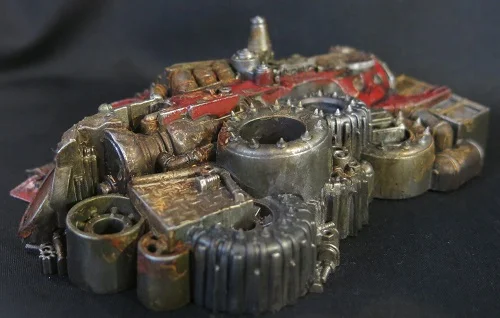
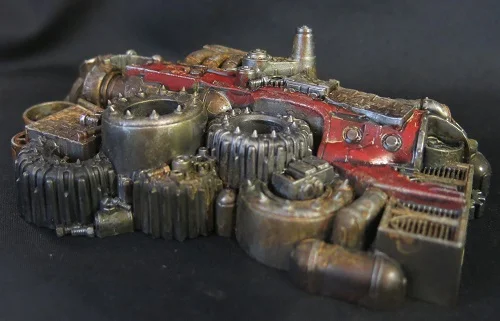
Two heaps of scrap metal bring this year’s Season of Scenery project to a close, and they look ready for work well beyond an ork table. The pieces come from the ork scenery range Games Workshop has released in recent years, which gives them an obvious home in an ork town. Their fairly general junkyard look also makes them useful wherever a tabletop needs a couple of battered piles of metal.
Season of Scenery provided the deadline for finishing these two pieces. That timing matters: terrain projects can easily keep expanding as one more building, scatter piece or finishing touch gets added to the workbench. These heaps are a compact way to bring a project to a stopping point while leaving the wider ork town unfinished and ready for another round.
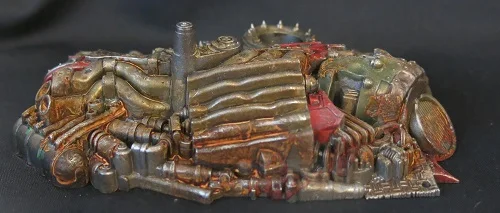
Junk with more than one job
Their strongest practical feature is that they don’t need to stay in one setting. The ork origins give the scrap heaps a natural place among the rest of the town terrain, but the subject is familiar across miniature games: discarded metal can suggest a workshop, a neglected industrial corner or a makeshift barricade. The pieces are described as generic enough for Necromunda, too, and the same broad idea suits other tables that need a heap or two of junk.
That flexibility gives a painter room to decide how much visual attention the terrain should get. A scrap pile can help establish a rough, lived-in setting, while also giving miniatures something substantial to move around. When placing pieces like these, it’s useful to consider the table from the players’ point of view: will the heaps mark a route, break up an open stretch, or help make a cluster of buildings feel connected? Their role can come from where they sit as much as from the details on the models.
For a game master or terrain builder, that’s a useful quality in small scenery. A single piece can return to the table in different arrangements, and a pair can be used together or separated to fill gaps across a layout. There’s no need to assign every heap a fixed story. One game might place them beside a structure; another might use them to suggest a rough boundary or a place where unwanted materials have collected.
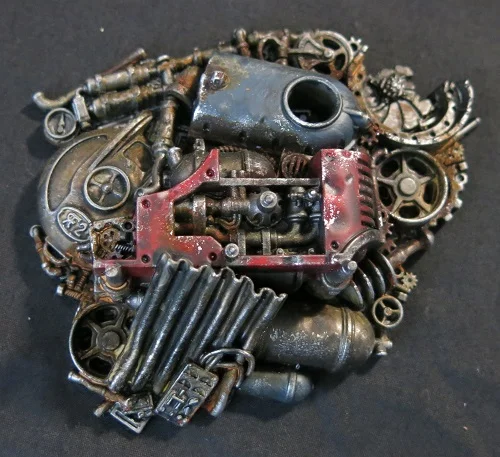
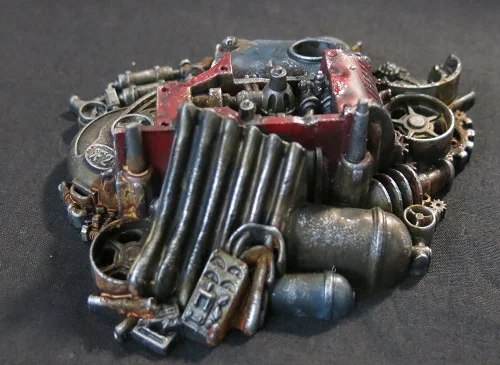
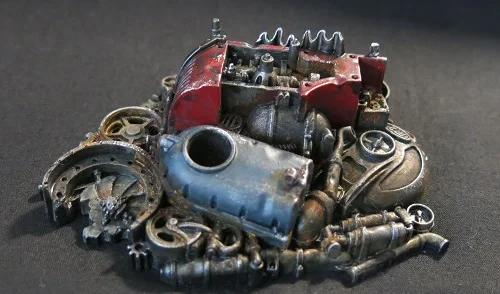
A third piece may join the set
There’s a third heap from the same set, painted a few years ago and currently somewhere among the storage boxes. The painter was happy with it the last time it was seen, though its finish may now look out of place beside these newly completed pieces. Repainting it is one option if it turns up.
That decision gets at a familiar terrain question: should every piece match, or should a collection show the different moments when it was made? Bringing the older heap into line with the two newer ones could make the group feel more unified when they appear together. Keeping its earlier finish could instead give the table a little variation. Either choice has a practical payoff, and there’s no rush to settle it before the model is found and compared with the others.
The two finished heaps also make a handy reference point if the third does get refreshed. Matching the group can mean repeating the broad finish and visual character rather than copying every mark exactly. For scenery used across several layouts, a shared look helps separate the pieces from unrelated terrain while still leaving each one distinct. That’s especially useful when a collection grows in stages, as this ork town has.
The ork town carries on
Finishing these pieces doesn’t close the book on the terrain project. The Season of Scenery window ran out before more work could be completed, but Orktober is coming up as another reason to return to the town. That gives the next batch of scenery a natural place in the calendar, without requiring these two heaps to be anything more than a satisfying stopping point for now.
For painters building a setting piece by piece, this is a sensible rhythm: finish a small group, put it to use, then pick up the larger project when time allows. These heaps already have a clear first destination among the ork scenery, with Necromunda and other junk-strewn settings as easy alternatives. If the third piece turns up, it may round out the set; if not, the town still has two new heaps of scrap ready for the table.