Stephen Fabian’s Dungeons & Dragons Art Deserves a Closer Look
Story by Thomas Denmark · 546 readers
From Ravenloft’s gothic mood to vivid color work, Stephen Fabian brought distinctive storytelling to fantasy art. His illustrations reward a fresh look.

Stephen Fabian’s illustrations give fantasy worlds a texture that’s easy to recognize and hard to forget. His work in the second edition Ravenloft hardcover is a fitting place to see why: the images carry a strong sense of gothic unease while keeping the fantastic creatures and settings grounded in a world that feels lived in. Fabian’s contribution to fantasy roleplaying deserves more attention from players who know the books as well as from readers who collect fantasy art.
Fabian became a professional artist at 44, after losing his job. Self-taught, he went on to build a substantial career in fantasy and science fiction illustration. In 2006, at age 76, he received a World Fantasy Award for Lifetime Achievement. Those milestones make his path unusual, but the work itself is the better reason to remember him: it shows a confident eye for composition, atmosphere and visual storytelling.
A natural fit for Ravenloft
My first clear memory of Fabian’s art comes from the Ravenloft hardcover for second edition AD&D. The book’s gothic horror setting suits his strengths. His compositions can make a scene feel uneasy before you’ve worked out exactly what’s happening in it; figures, architecture and shadow all help tell the story. That makes the art more than decoration. It gives a game master a visual cue for the mood a scene might carry at the table.
That quality matters in a setting built around horror. A picture can suggest a threat without spelling it out, leaving room for the game master to decide what the characters notice and when. Fabian’s images offer that kind of invitation. A strange silhouette or an imposing structure can spark a description, a question or a whole encounter. Players can read the picture in their own way, while the game master uses its details to guide the scene.
For me, the late-1980s and early-1990s setting books from TSR remain particularly strong examples of the publisher’s work. The Ravenloft book stands out among them because its artwork and subject matter feel so well matched. The illustrations help establish the tone without requiring the reader to settle for a single interpretation of every scene. That blend of atmosphere and ambiguity is useful in a roleplaying book: it leaves the table with room to make the setting its own.
Fantasy with a swords-and-sorcery edge
Fabian’s art also carries a classic swords-and-sorcery character. The figures and scenes have a physical, dramatic quality that feels at home beside stories of peril and strange magic. His work invites comparison with artists whose images became closely associated with early fantasy roleplaying, including Dave Trampier. I can imagine Fabian’s work being remembered with similar affection if more of it had appeared during TSR’s earlier period, before the era associated with Larry Elmore, Jeff Easley, Keith Parkinson and Clyde Caldwell.
That’s speculation about how readers might have encountered him, but the underlying point is visible in the pictures themselves. Fabian could arrange a scene so its parts feel connected: the viewer’s eye moves through the image, picking up details and relationships rather than stopping at a single striking figure. That kind of visual storytelling gives an illustration staying power. It can still suggest something new after a reader has returned to the page many times.


Color and collections
Much of Fabian’s published art is black and white, and those images make excellent use of contrast and line. The color examples, though, add another dimension. Their hues can make a scene feel richer and more immediate, while preserving the same attention to composition that defines the monochrome work. I’d have welcomed more color pieces from him; the examples here make a strong case for seeking out the ones that exist.


Readers who want to spend more time with Fabian’s work can look for Stephen Fabian’s Ladies & Legends, available in hardcover and softcover. It’s one of the treasures in my art book collection. I wasn’t immediately taken with it when I first encountered the book, but the illustrations have grown on me with each return. That slow discovery feels appropriate for an artist whose pictures reward careful looking.
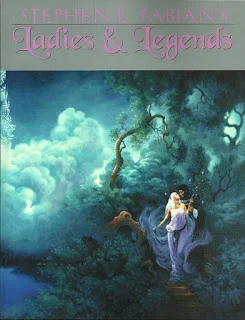
Fabian’s career is a reminder that a roleplaying book’s art can keep working long after the rules have left the table. It can shape a reader’s sense of a setting, give a game master a prompt for the next scene and make a familiar genre feel personal. Revisit his Ravenloft illustrations, or spend time with Ladies & Legends, and the case for his place in fantasy art becomes clear: his images have a voice of their own.


