RDTN Episode 103 Packs Four Game Reviews Into an Hour
Story by Tony McRee · 670 readers
Episode 103 covers Empires: Galactic Rebellion, three miniature games and a broad mix of tabletop topics, with a closer look at Empires’ endgame.
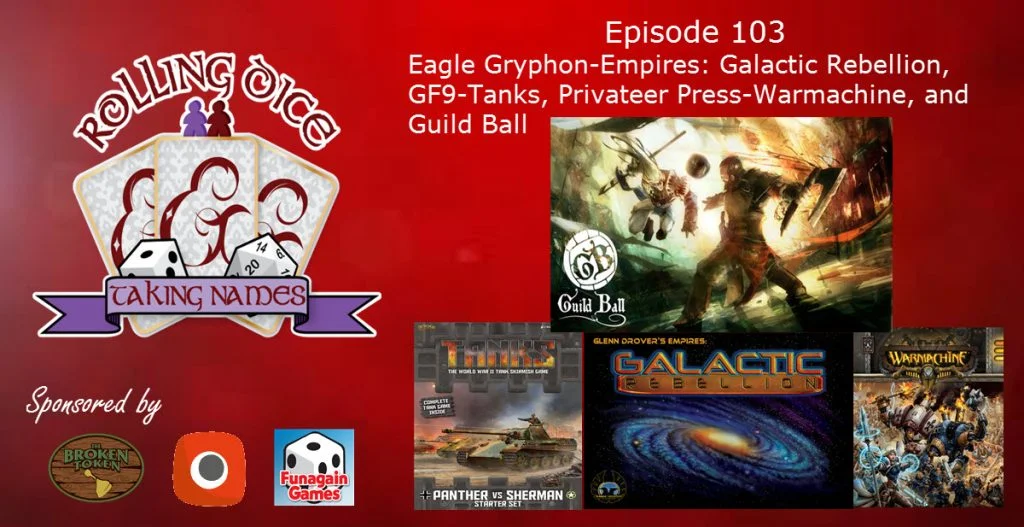
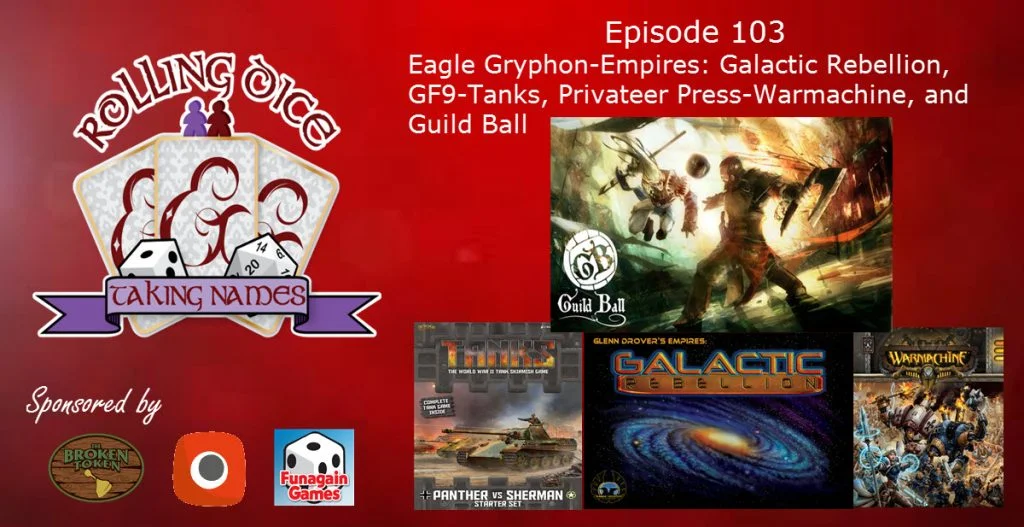
Four game reviews in a show just over an hour give RDTN Episode 103 a brisk pace, while leaving room for side discussions and listener feedback. The featured games span a board game and three miniature titles: Empires: Galactic Rebellion, Tanks, Guild Ball and Warmachine. For listeners curious about miniature games, the episode aims to offer enough perspective to help them decide what to investigate next. It also makes space for a central question about Empires: whether its unpredictable final scoring is an exciting twist or a frustrating interruption.
Empires saves a scoring surprise for the end
The hosts come away positive about Empires, including the version received through its Kickstarter. Their main reservation is the final battle, which can alter who holds the planets and how many Victory Points those planets contribute. The result, as they describe it, is a late equalizing effect: a player who seemed secure can lose control, while another player may gain it through a favorable draw.
That uncertainty is the design feature most likely to divide a group. Players who enjoy a dramatic change in the closing moments may find the scoring finish energizing. Those who prefer their earlier decisions to determine the result more directly may be less comfortable with a late draw changing control. The hosts enjoyed the twist, but they flag the possibility that other players won’t. That’s useful context for groups weighing whether the game’s ending will suit their table.
They also stress the value of cubes and of collecting more of them during play. Their own early sessions didn’t include as much battling as they now think they should have. They expect that to change as players become more familiar with the game. That observation points to a practical first-play lesson: the group’s initial approach may not reveal the full shape of the game, especially if players hold back from a major part of its interaction. Subsequent plays can show how cube gathering and battles affect the contest before the final scoring turn.
Three miniature games, three starting points
The episode’s miniature game segment covers Tanks by GF9, Guild Ball and Warmachine. The hosts acknowledge that this category won’t appeal to every board gamer, but frame the discussion as an introduction for people considering a first step. Rather than presenting miniature games as one uniform experience, the segment gives listeners a chance to hear about three distinct titles and follow up on the one that sounds most appealing.
The listed timestamps make it easy to sample each conversation: Tanks begins at 36:05, Guild Ball at 40:16 and Warmachine at 44:55. That sequence also gives listeners a practical way to use the episode. Someone primarily interested in tactical miniature play can jump directly to those sections, while a listener comparing the games can hear all three in one sitting. The linked Guild Ball and Warmachine videos provide further starting points for seeing those games in action.
A wider tabletop conversation between reviews
The reviews sit within a broader run of short topics. The show opens at 00:37 and reaches Broken Token at 06:00, followed by Empires at 07:00. “Flying Squirrels” starts at 12:45, before the episode moves through Fantahzee, Take That but not that and Arcane Academy. Later stops include Ascension Ipad Dreamscape, the Toy Hall of Fame, Firefly Legendary and Strike Project, with the rebuttal, fall television thoughts and Portal Games also on the running order.
That variety gives the episode a conversational shape: listeners get the main game discussions alongside smaller subjects and changing topics. It also explains how four reviews fit into a show that runs only a little over an hour. The episode doesn’t linger on every item in the list; its timestamps let listeners choose the sections that matter most to them and return for the rest later.
Listener input on pint glasses
One segment asks listeners to share ideas about pint glasses through a survey. The hosts make clear that they’re testing whether the idea is useful and welcome candid responses. It’s a small but direct invitation for listeners to shape a possible show related item, with no assumption that the project should go ahead.
Episode 103’s most useful takeaway is its honest account of a game that won the hosts over while still carrying a potentially divisive finish. If Empires sounds promising, pay attention to how your group feels about chance affecting late planet control—and give battles and cube collection time to become part of your approach. For anyone exploring miniature games, the three review segments offer a compact place to start.