RDTN Episode 113: Mare Nostrum, Guadalcanal and a Table Full of New Games
Story by Tony McRee · 834 readers
Episode 113 weighs three very different tabletop experiences, from strategic empire building to a dice-driven card game, then rounds up new games and accessories.
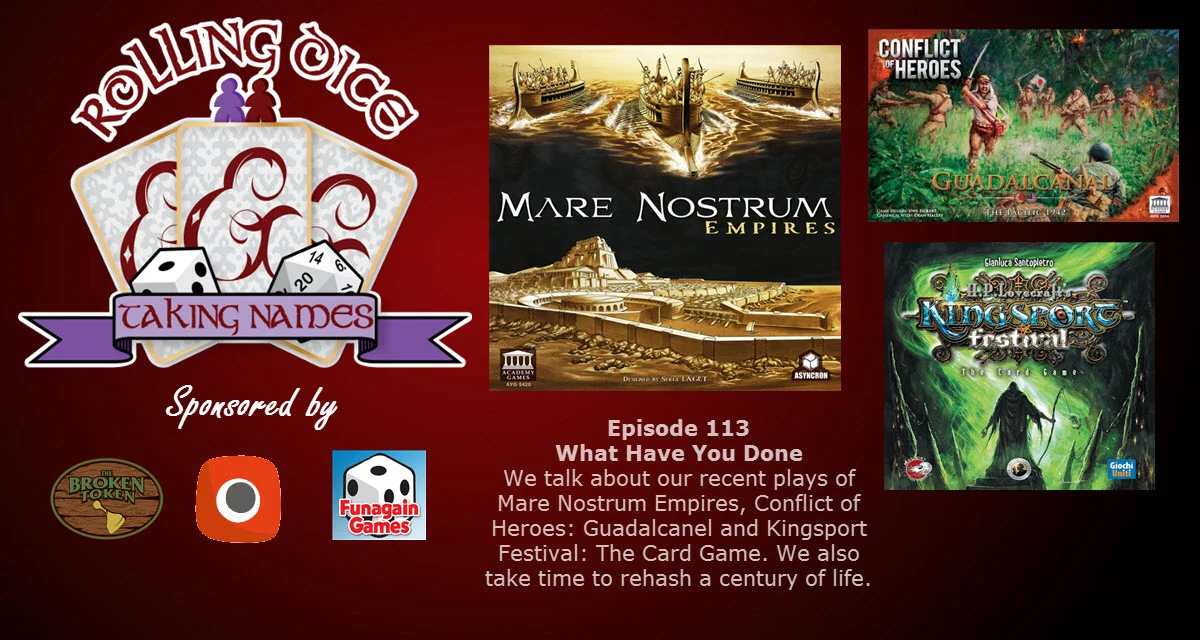
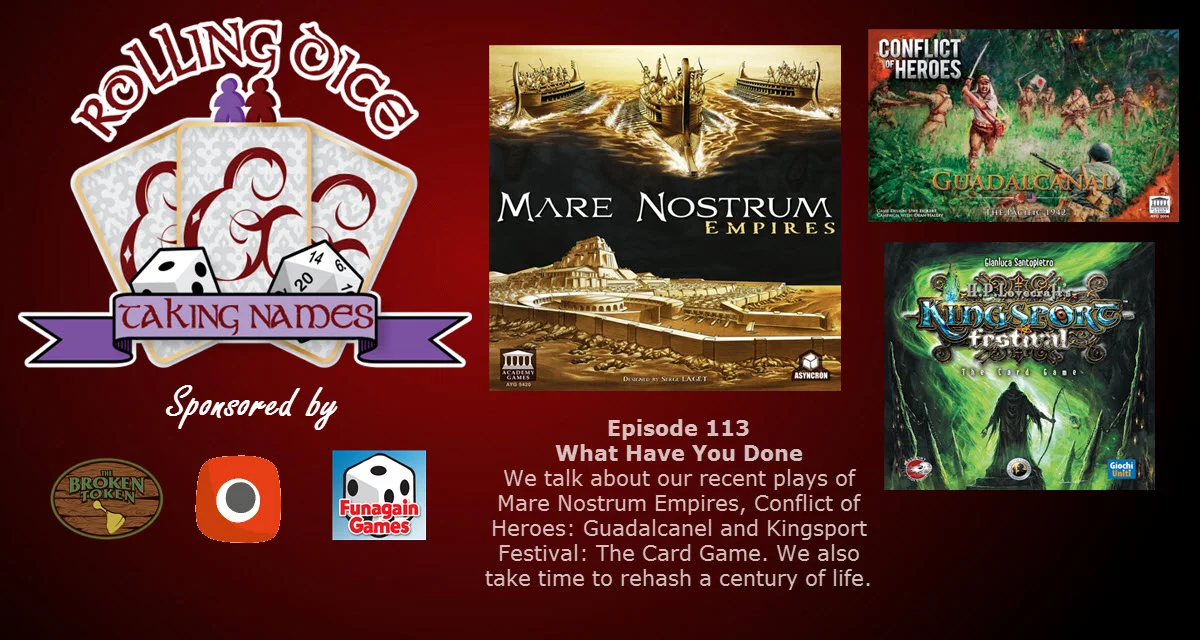
Episode 113 of Roll Dice Take Names is a reminder that games can earn a return trip for very different reasons. Mare Nostrum: Empires left the hosts thinking about what they could have done better; Conflict of Heroes: Guadalcanal surprised them with how approachable its battlefield information was. Kingsport Festival: The Card Game was a less immediate hit, with slow turns and uncertain interaction at the table.
Empire building that invites another play
The hosts had wanted to play Mare Nostrum Empires for weeks before they finally got it to the table. Published by Academy Games, it made a strong impression: once the game ended, they found themselves replaying decisions in their heads and feeling they could have played better. That postgame reflection is a useful sign of what appealed to them. The session left enough room to reconsider choices, and enough interest to make them want another go.
The episode doesn’t lay out the game’s rules or identify a single moment that turned the tide. Its recommendation is more personal: the pleasure came from thinking through the experience after play, then wanting to test those thoughts at the table. For groups that enjoy talking over their decisions and seeing what they might change next time, that response may be more telling than a quick verdict.
A first step into chit-based wargaming
Conflict of Heroes: Guadalcanal was another game the hosts had been keen to try. They were looking for a first experience with a chit-based wargame and hoped this one would be easy to approach while offering more to discover across its missions. They report that it met that expectation: the small chits were easy to read, with the relevant data visible at a glance, and the game included guides they found useful.
That clarity matters in a game built around battlefield information. When players can read what they need directly from the pieces and consult handy guides, less attention goes to decoding the table and more can go to considering the situation. The hosts don’t describe particular tactics or mission outcomes, so there’s no basis here for a detailed account of how each scenario plays. Their practical takeaway is simpler: the game felt accessible enough to encourage them to explore further.
It also made a strong case for its place in their rotation. After the session, they had two games competing for future table time: this one and Mare Nostrum: Empires. That’s a good problem for a group trying to decide what to play next.
Kingsport’s slower turns leave questions
Kingsport Festival: The Card Game, from Passport Games, produced a more mixed reaction. The hosts didn’t consider it a bad game, but they noticed substantial downtime. They weren’t sure whether that came from everyone repeatedly reading the cards, a lack of interaction between players, or some combination of the two.
They also wondered whether repeated plays would help. Familiarity with the cards could speed decisions, and the hosts speculated that card text might be reducible in a way that made play move faster. That’s their impression rather than a confirmed description of how the game changes with experience, so another session could sharpen the picture. One detail stood out in the meantime: despite its card-game label, dice are used on every turn.
The group still wants to play it again. That makes the review less of a dismissal than an open question: will familiarity ease the pauses, and will another play reveal more interaction than they noticed the first time?
More games and accessories in the episode
The episode also looks beyond games already played. Cosmic Run: Rapid Fire, designed by Steve Finn of Biblios, is described as a two-player dice version of Cosmic Run, which had come out the previous year. The segment offers that connection as its main point of interest; it doesn’t provide rules details or a verdict from a played session.
The hosts also discuss an expansion for Champions of Midgard, one of their favorite games from 2015. The expansion adds a fifth player, among other content, and was being offered through a Kickstarter project at the time of the episode. They give no price or funding figure.
For roleplaying groups, Dungeon Dealer is a deck of cards intended to help set up a dungeon quickly. The hosts say it could be a reason to bring the Lord of the Rings RPG to the table. The project had ended, but the hosts noted that the deck could still be ordered from the developers’ site.
Finally, Zen Bins offers organizers for Star Wars Destiny decks, with the stated aim of making tournament storage and carrying easier. The episode’s full segment list also includes a Stop Thief update, a birthday segment, Portal Games and The Broken Token.
Episode 113 listening guide
The supplied timestamps place “The Birthday” at 2:05, Portal Games at 32:54, Conflict of Heroes: Guadalcanal at 33:50 and Kingsport Festival: The Card Game at 46:31. The Broken Token begins at 51:25, followed by Mare Nostrum: Empires at 52:25. The later segments are the Stop Thief update at 1:07:24, the Champions of Midgard expansion at 1:08:50, The Dungeon Dealer at 1:10:25, Zen Bins at 1:11:45 and Cosmic Run: Rapid Fire at 1:14:15; the outro starts at 1:17:10.
For listeners choosing a place to start, the two table reports offer the clearest contrast: one game prompted strategic second-guessing, another made a first try at chit-based wargaming feel inviting, and the card game left the group curious whether a second play would flow better. That curiosity is the thread tying this episode together.