RDTN Episode 120 Puts Lorenzo il Magnifico and Century: Spice Road on the Table
Story by Tony McRee · 557 readers
Episode 120 weighs Lorenzo’s tight resource choices against Century’s forward planning, with Honshu, Element and an Emerson Matsuuchi interview attempt also on the rundown.
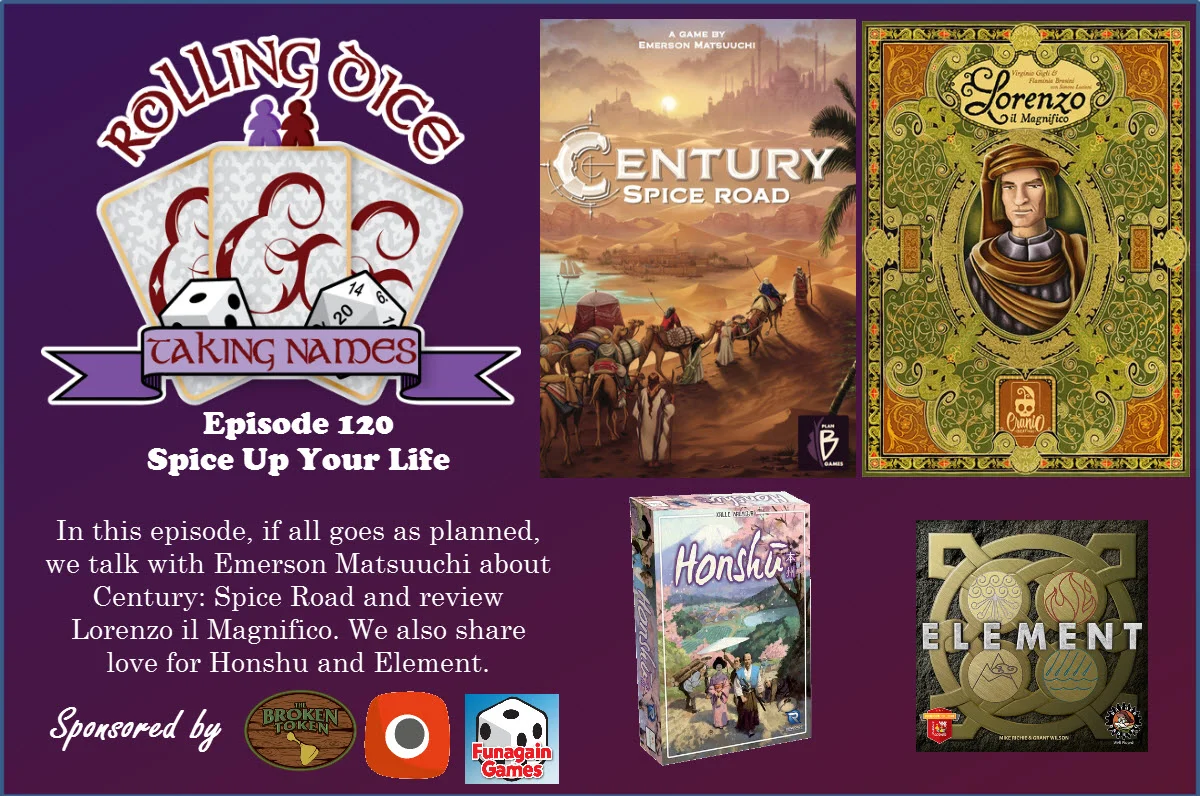
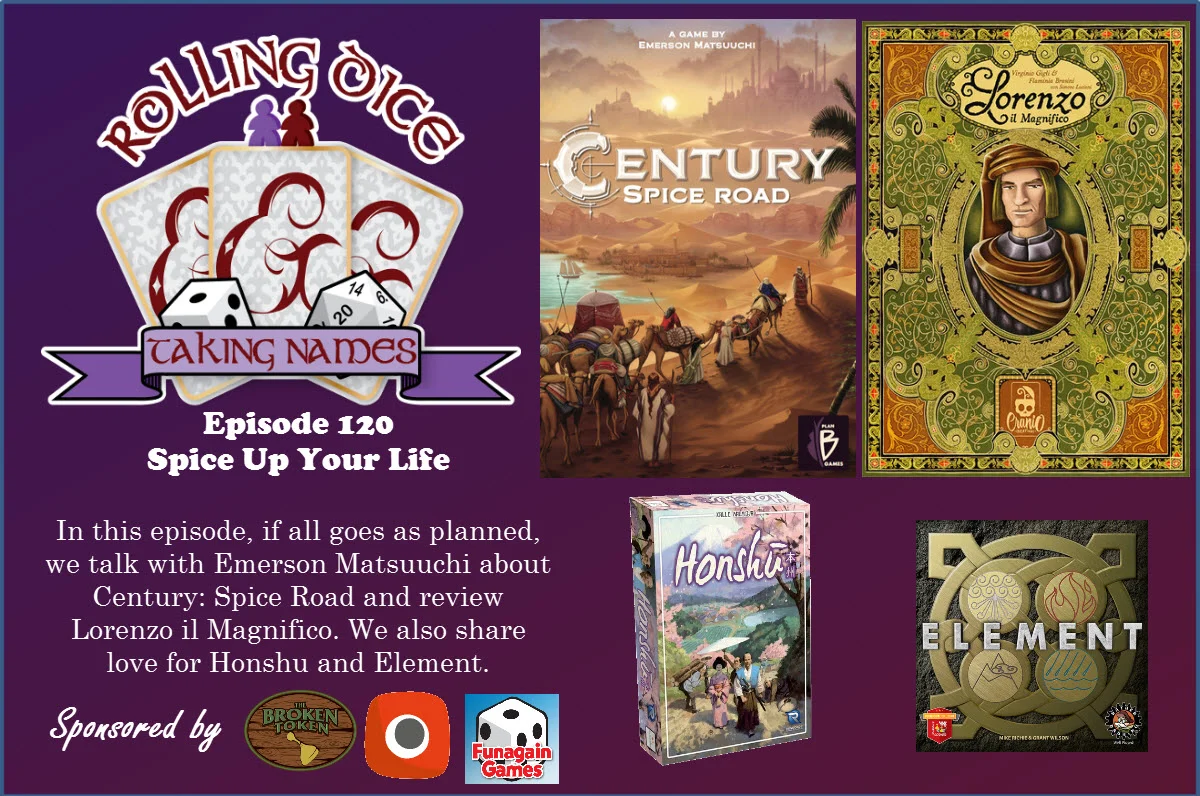 The clearest takeaway from RDTN Episode 120 is how differently two games can make players think ahead. Lorenzo il Magnifico puts pressure on each move through scarce resources: players can have a plan in mind, then discover that the resources they need won’t stretch far enough. Century: Spice Road, meanwhile, creates a more fluid planning puzzle, where a route several steps ahead can change as other players take the options you were counting on.
That distinction matters because the episode’s hosts don’t describe either game as simply difficult to learn. Lorenzo is presented as approachable at the rules level, yet demanding when it comes time to choose what to do. The challenge is in making a plan that fits the resources available, then recognizing when the plan no longer works. As the hosts put it, players often knew what they wanted to do, only to realize they couldn’t do it. Those moments came up repeatedly during the session.
Lorenzo makes every resource count
The hosts’ recommendation is clear: give Lorenzo il Magnifico a try. They stop short of saying it will replace another eurogame in a player’s collection, and that restraint feels right for a discussion centered on one group’s experience. What they can point to is a particular kind of tension: resources are tight enough that spending them carelessly can close off useful options.
That scarcity shapes the decisions from turn to turn. A player may have a preferred action, but the real question is whether the resources on hand allow it. If the answer is no, they need another route. The resulting frustration isn’t described as long stretches of analysis paralysis; instead, it comes from reaching for a move and finding that the pieces of the plan don’t add up. That’s a useful distinction for players deciding whether this sort of eurogame pressure appeals to them. The tension comes from constraints on action, rather than from an inability to choose among too many possibilities.
It also gives the game a learning curve beyond the rules explanation. Knowing what actions are available is one thing; learning to keep enough resources in reserve to carry out a plan is another. Players who enjoy adapting when a move falls out of reach may find that pressure engaging. Those who prefer a looser approach to spending will likely notice the limits quickly. The episode offers an invitation to try the game, while leaving the question of long-term collection space open.
Century rewards a plan that can change
The discussion of Century: Spice Road pushes back on describing it as “Splendor 2.0.” The hosts acknowledge why people make the comparison, but argue that Century should be judged by what it brings to the table. Their experience focused on planning four or five steps ahead and feeling as if they were in a constant race with the other players.
The catch is that a carefully imagined sequence may not stay available. Other players are moving too, so the group advises keeping alternate moves in mind instead of relying on one ideal path. That creates a distinct rhythm: think ahead, watch the changing choices, then adjust when the next step you expected is gone. The episode doesn’t claim that no one ever plans ahead in Splendor; it simply says that the feeling at their table was different.
For players comparing the two, that description offers a practical point of reference. The hosts found Century’s turns encouraged an active search for backup plans, alongside the longer sequence each player was trying to build. That combination of planning and adjustment is the main reason they resist the shortcut comparison. Their account is a table impression, not a claim that one game supersedes the other.
The episode’s other stops and a missed interview
The rundown includes Beasts of Balance, Train Heist, Honshu and Element, each listed with a timestamp. It also marks time for Warhammer 40k, a Street Masters video, The Broken Token, Rank Em’, Portal Games and Funagain. Those listings give listeners a useful map of the episode, while the detailed play discussion in the article centers on Lorenzo and Century.
An interview with Emerson Matsuuchi had been planned, but internet problems on his end prevented the recording. By the time he had a reliable connection, Tony had left for vacation, so Marty led the discussion instead. The hosts acknowledge the technical trouble directly and explain why the planned conversation didn’t make it into the episode.
The next episode was set to be the show’s first Tabletop Showcase, with Eric Lang returning to discuss his CMON game The Godfather: Coreleone’s Empire. Episode 120’s useful starting point, though, is already on the table: listen for how Lorenzo’s resource limits and Century’s shifting plans create pressure in different ways, then decide which style sounds more like your group.
===