Ignacy Trzewiczek on Alien Artifacts, Plus Dragonfire, Nmbr 9 and More
Story by admin · 402 readers
RDTN Episode 127 ranges from first impressions of Dragonfire and Hafid’s Grand Bazaar to Portal Games, Alien Artifacts and Nmbr 9.
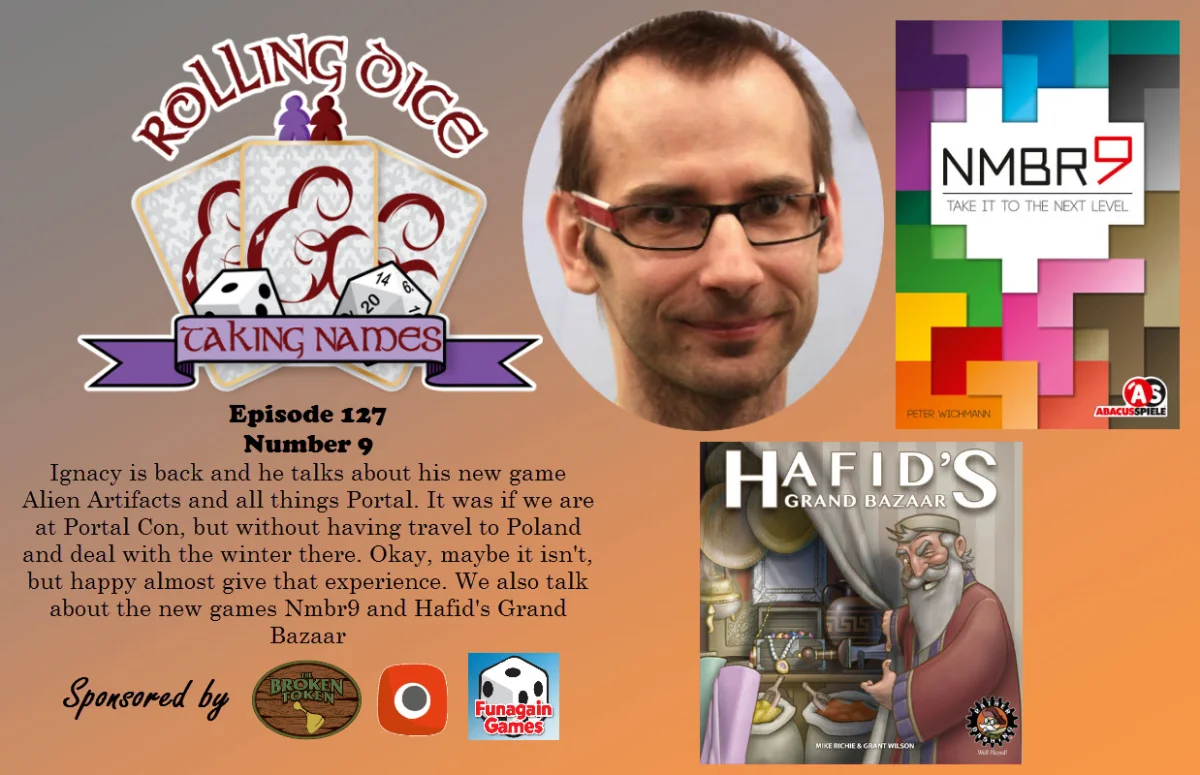
Portal Games founder and designer Ignacy Trzewiczek is the main draw of RDTN Episode 127, joining the show to discuss the upcoming Alien Artifacts and other titles in development at his company. The conversation also looks back at the reception of First Martians, considers Trzewiczek’s workload, and surveys Portal Games’ upcoming releases. That range matters: a release preview can tell listeners what’s coming, while questions about reception and workload offer a glimpse of the decisions and pressures behind a publisher’s schedule. It’s a broad visit with room for both the games and the practical work of making them.
The episode gives listeners several ways into that conversation. Before the interview, the hosts share their first experiences with Dragonfire, published by Catalyst Game Labs, and Hafid’s Grand Bazaar, from Rather Dashing Games. Later, the show’s “5 Minute Initiative” turns to Nmbr 9, published by Z-Man Games. These shorter encounters put the longer interview in context: the episode moves between games listeners may be encountering now and questions about how publishers decide what to bring to players next.
From first plays to a designer interview
The running order makes this a useful episode for listeners following several corners of the hobby at once. Dragonfire comes up at 3:00, with Hafid’s Grand Bazaar at 15:08. The Portal Games discussion begins at 30:55, and the interview with Trzewiczek starts at 31:30. The segment on Alien Artifacts follows at 49:35, giving the episode a central thread: first impressions lead into a closer look at what a publisher and designer is working on next. The timing also helps listeners decide whether they want the full tour or a direct route to one subject.
That order gives the interview room to move beyond a single product. The hosts ask about how players received First Martians at 43:00, then turn to Alien Artifacts and other Portal Games topics. A discussion of the Stronghold expansion appears at 1:05:35, followed by Trzewiczek’s current workload at 1:08:15 and upcoming Portal Games titles at 1:11:55. Taken together, those topics offer a broader view than a standalone preview: they connect audience response, development work and the company’s plans. The episode doesn’t provide a full account of those processes, but it does make space for the questions around them.
There’s no reason to treat the episode as a rules teach or a full review of every game mentioned. Its value is the mix of first impressions, short-form coverage and a longer interview. The hosts flag what they’ve played, while Trzewiczek brings the perspective of someone involved in designing and publishing games. That difference in perspective is useful; a player’s first impression and a designer’s account answer different questions. Listeners can use the timestamps to jump to a topic or follow the show as a varied conversation.
A varied table of topics
The schedule includes more than the headline games. A segment on Mint Delivery begins at 12:45, while a discussion of stroopwafels arrives at 24:05. At 28:15, the hosts mention Play Like A Pirate Day. Those stops give the show the loose feel of a hobby podcast, where games sit alongside the rituals, jokes and interests that accumulate around a regular group. The pivots may not suit a listener looking only for focused product coverage. They do, however, show the format’s willingness to let the conversation wander.
There are distinctly personal detours, too: a “PayPal Horror Story” at 1:00:35, a squirrel onesie question at 1:11:05, and a Gen Con cookie story at 1:16:20. These moments make the episode sound less like a tightly edited interview package and more like a group of hobbyists sharing the same room. A change of pace can help a long show breathe, though it also means listeners should expect the advertised games to share airtime with material that’s more anecdotal than analytical. That loose texture is part of the episode’s character.
After the Nmbr 9 segment at 1:22:40, the episode continues with Necromunda and Company of Iron at 1:31:20, RPG preparation at 1:32:55, and FunAgain Games at 1:35:00. That late run makes the show’s range explicit: board games, roleplaying, miniatures and gaming anecdotes all share the same space. It’s a reminder that hobby coverage often crosses categories, even when the depth of each segment varies. Here, the timestamps make that breadth easy to navigate.
Why the interview’s wider lens matters
For players choosing where to start, the most direct route is to pick a game or topic from the rundown. Start at 3:00 for Dragonfire, 15:08 for Hafid’s Grand Bazaar, 49:35 for Alien Artifacts, or 1:22:40 for Nmbr 9. If you're working in game design or publishing, the discussion of First Martians’ reception, Trzewiczek’s workload and upcoming titles may be the more useful stretch, since those subjects point beyond a single box on a shelf.
Here’s the thing: the interview’s value depends on whether listeners want that wider view. A preview can introduce a title, but questions about reception and workload hint at the tradeoffs that shape a release slate. This is more significant than it looks. The episode doesn’t settle those questions, and the rundown alone can’t tell us how the games played or how the company’s plans will unfold. Still, it gives listeners a reason to connect current releases with the work behind future ones (and this is the part most people overlook). That said, the clearest strength here is variety, not sustained analysis of any one game.
A broad hobby show. One useful thread. That’s the link between what’s being played now and the design and publishing choices shaping what comes next. If you want a focused review, the rundown suggests you should look elsewhere; if you want a sampler with a substantial designer interview at its center, the episode offers a practical set of entry points.