Forbidden Desert Review: A Tense Family Co-op with a Sandstorm to Beat
Story by Nick T · 576 readers
Forbidden Desert builds on Forbidden Island with shifting tiles, dwindling water and a tougher escape, making it a strong family co-op for up to five.
This game was gifted by Coiledspring Games; that did not affect our opinion.
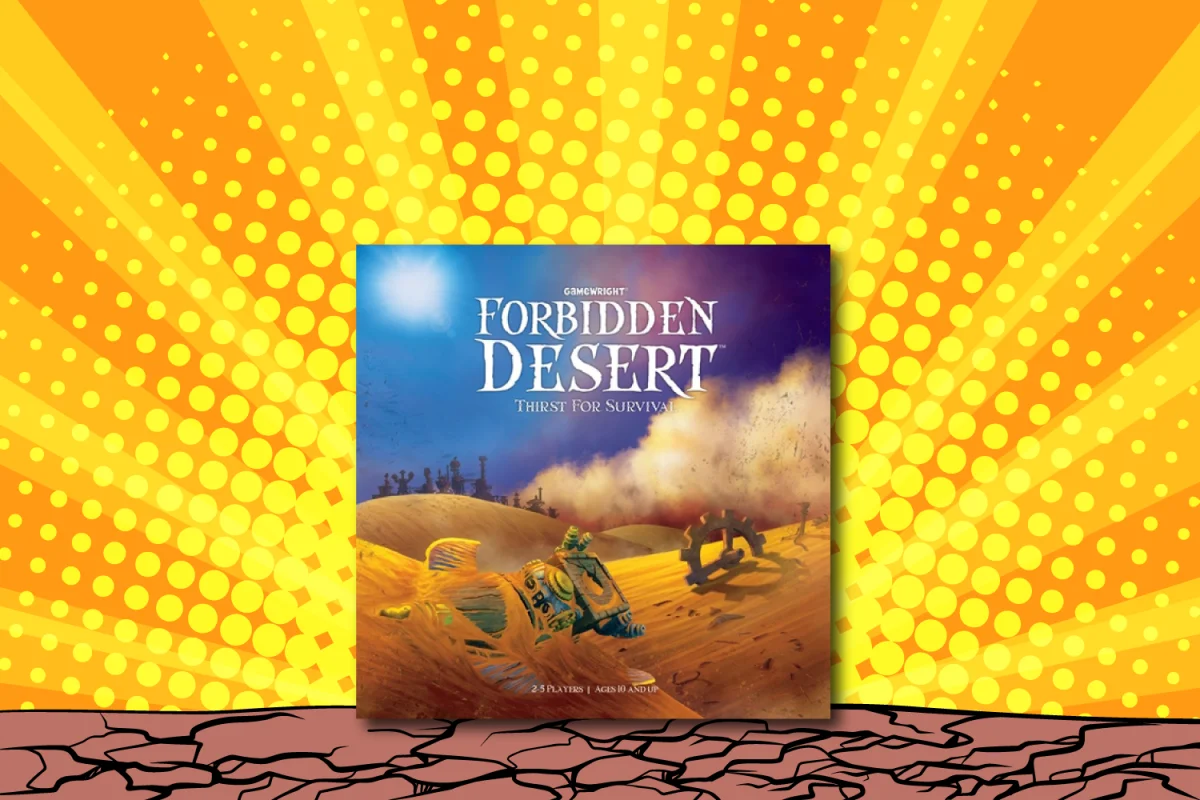
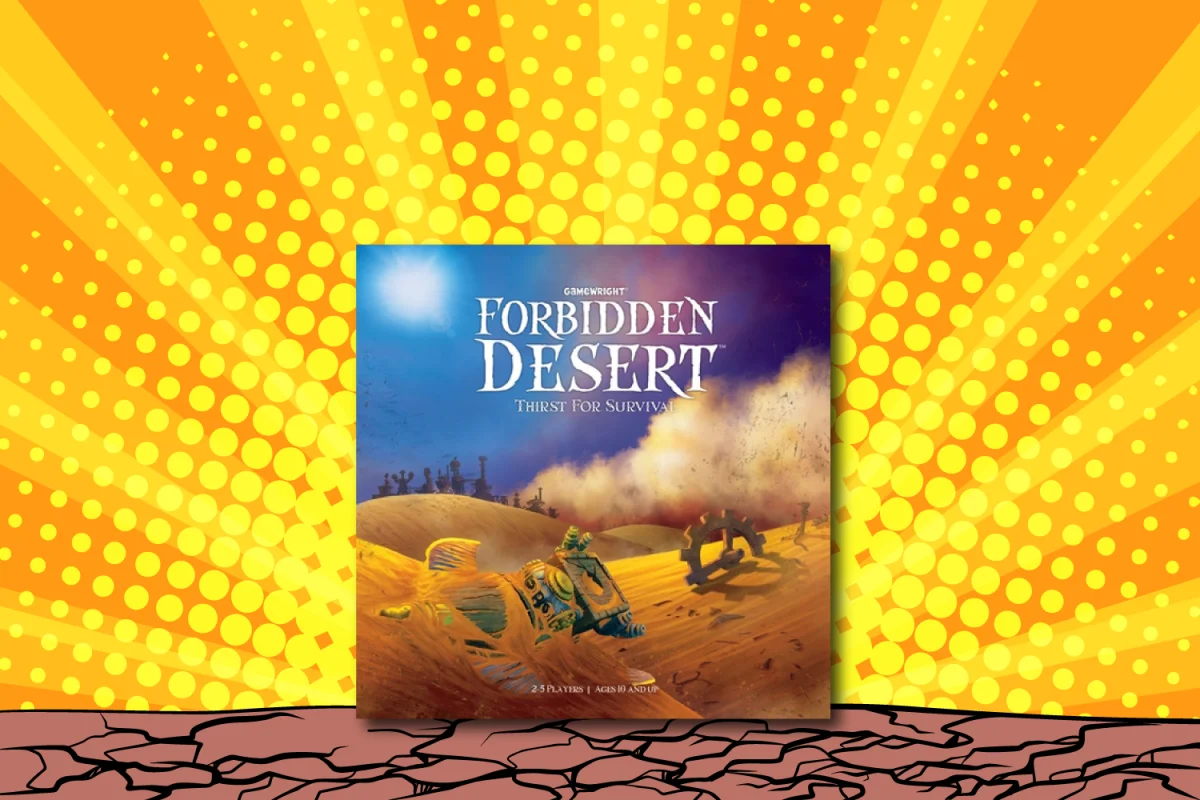
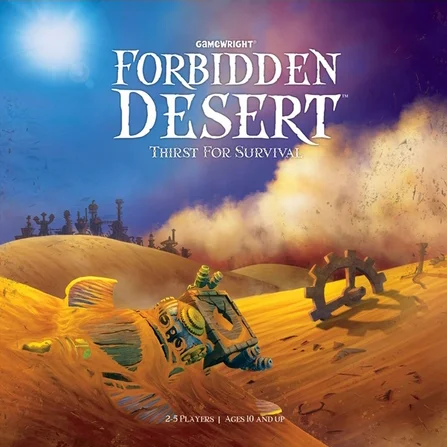
Forbidden Desert takes the cooperative race of Forbidden Island and makes the terrain itself a bigger threat. Players search a shifting grid for the parts of a buried flying machine, while sand piles up and the heat drains their water. The result is familiar enough for families to grasp quickly, but its tighter resources and more unpredictable board make each escape feel hard won.
Designed by Matt Leacock and published by Gamewright, the game supports 2 to 5 players and lasts about 25 minutes. The publisher’s recommended age is 10+, though the reviewer found that children as young as 6 can join when playing with older players. Setup and tidying take about 2 minutes. The listed RRP is £26.99.
The story picks up after the escape from Forbidden Island: a helicopter crew spots a legendary craft in the desert, then crashes in a sandstorm. With the phone out of action and water running low, the group has to find the machine and get away. That premise gives the search a clear purpose, and the race against the weather keeps the table focused.


A shared search against the storm
The board uses 24 tiles arranged in a five-by-five grid, leaving the middle space empty. Eight tiles begin with sand markers on them. Players receive randomly assigned characters, each with a special ability, and take turns spending four actions. The available choices are moving across tiles that aren’t too buried, clearing sand, excavating a cleared tile, or collecting one of the four machine parts.
Excavation reveals what lies under a tile. Some locations provide clues: find two clues for the same part and the group can work out its position on the grid. Then someone has to reach it and collect it. Other tiles uncover useful equipment, such as solar shields that protect against the sun or jetpacks that help players cross the board. Tunnels also offer shelter and can shorten routes, though their usefulness depends on where they appear.
Players can hand over equipment or share water for free when they’re on the same tile. That small rule supports quick coordination: a player who’s better placed to reach a clue can take the needed gear, while someone in danger of running dry can ask a teammate for help. Since everyone wins or loses together, the group has to balance exploring with keeping the whole team safe.
After each player’s turn, Sand Storm cards shift tiles into the open space and add sand to the affected locations. Sun Beats Down cards force anyone without shelter to spend water. Storm Picks Up cards make future storm draws heavier, so the pressure can build as the game goes on. Once the team has all four components, every player must reach the Launch Pad and escape aboard the flying machine.
There’s one route to victory, but three ways the desert can win: any player runs out of water, the group runs out of sand markers, or the Sand Storm meter reaches its death symbol. The rising threat is easy to understand, yet the team often has to decide which problem deserves attention first. Clearing sand can open paths and prevent the supply of markers from running out, but spending turns on that leaves fewer actions for clues and parts.


More tactical, and a little more luck-driven
The character abilities can change the group’s priorities. The Water Carrier is especially helpful, giving the team a better way to manage its most fragile resource. Random character assignments mean players may need to adapt their plan from one session to the next. The modular layout and adjustable difficulty add further replay value without changing the basic goal.
Compared with Forbidden Island, this one feels like a modest step up in difficulty. Both games share a cooperative structure and a race to collect important objects before the board turns against the players. In Forbidden Desert, though, the location of the parts, the character roles and the shifting sand all contribute more uncertainty. Luck has a stronger hand, so even sound planning can be thrown off by the next storm card.
That mix makes it a useful next step for families who already know the earlier game, and an accessible introduction to cooperative play for groups ready for a bit more pressure. The reviewer suggests that younger players can take part below the publisher’s recommended age when experienced adults are at the table. It can also set the stage for other cooperative games, including Forbidden Sky and Matt Leacock’s Pandemic titles, which the reviewer describes as more demanding options.
As with many team games, there’s a risk that one confident player will start directing everyone else. The shared puzzle invites discussion, but players will get more out of it if the group makes room for each person to weigh in. And the game can sting when the team loses late: running out of water or watching the storm reach its final marker can undo a long stretch of careful work.

Components and presentation
The rules are clear and concise, which helps the group get into the action quickly. The wooden player pawns are plain beside the flying machine, which is the standout component. Individual player cards with water markers are useful at a glance, while the Sand Storm meter’s base makes it easier to handle.
Tyler Edlin’s tile artwork has a frustrating job: much of it starts face down, then sand markers cover more of it as play continues. The cards lean toward function over looks, and the reviewer prefers the appearance of Forbidden Island. That said, the desert’s changing surface tells the story of the game as it unfolds, even if it hides much of the art along the way.
The game comes in a tin. Everything fits inside, but the reviewer would prefer a cardboard box for easier stacking and fewer worries about dents or a lid coming loose. Its size and shape also don’t match the other boxes in the series, which may bother players who keep their games arranged together.


Should it join your shelf?
Forbidden Desert is a strong family cooperative game with an engaging central problem: find the parts, manage water and sand, then get everyone to safety. It asks for more tactical planning than its predecessor, while leaving enough uncertainty to keep the search lively. Its main drawbacks are the luck involved, the possibility of one player taking over the discussion, and artwork that’s often covered during play.
Whether you need both games depends on what your group wants. Forbidden Island remains the reviewer’s preferred first choice for its accessibility, easy play and artwork. But Forbidden Desert supports five players, brings a tougher challenge, and gives a family another setting for the same shared, nail-biting style of play. The reviewer’s sons preferred its extra difficulty, and the reviewer did too, even while judging the earlier game the better starting point.
For groups that want to increase the pressure further, the reviewer would reach for a Pandemic title. For a family that wants a compact cooperative game with more bite than Forbidden Island, this is a worthwhile addition rather than an essential purchase.
Watch the Forbidden Desert unboxing video.
At a glance
Players: 2 to 5
Recommended age: 10+ from the publisher; the reviewer suggests 6+ with older players
Playing time: 25 minutes
Setup and takedown: 2 minutes
Designer: Matt Leacock
Publisher: Gamewright
RRP: £26.99
The review gives the game an overall score of 3.7. Its stated strengths include family play, player interaction, cooperative play, and room for five. Its drawbacks include random pawn assignment, the sting of losing, the luck involved and the risk of a dominant player at the table.
Related games and buying links
If you enjoy this style of cooperative challenge, the reviewer also points to Forbidden Island, Forbidden Sky, Flash Point and Pandemic.
Buy Forbidden Desert from Out Of Town Games
Buy Forbidden Desert from Amazon
The reviewer says they were gifted the game by Coiledspring Games and that this did not affect the review. The site may receive a small commission from purchases made through its affiliate links, including Amazon and Board Game Prices. Read the disclosure policy.